


Building a new home starts with one big question: how much does it cost per square foot to build a house? The answer depends on your location, home size, land condition, labor rates, material choices, permits, utility connections, and the level of finishes you choose. While many homeowners use a square-foot estimate to plan their budget, the real cost of building a house includes hard costs, soft costs, land preparation, and unexpected expenses. In most U.S. markets, a realistic cost-per-square-foot estimate is a planning range, not a final quote.
This guide will outline the average cost of a house per square foot, the factors that impact cost, the cost difference between home sizes, and whether it is more affordable to build or purchase a home. You will also discover what costs are frequently not included in builder quotes, how construction loans operate, and how to make a more accurate new home construction budget before you sign on the dotted line for land, plans, and builder.
Quick Answer: How Much Does It Cost Per Square Foot to Build a House?
A common national planning range for building a house is about $150 to $400 or more per square foot, but the real number can be lower or higher depending on location, design complexity, labor availability, materials, and finishes. This estimate usually applies to the construction of the home itself and may not include land, site preparation, utility connections, permits, design fees, loan costs, landscaping, or contingency funds. For a reliable budget, homeowners should separate hard construction costs, soft costs, land costs, and post-construction expenses instead of relying on square footage alone.
Key Takeaways
- The cost per square foot to build a house is a useful starting estimate, but it is not a complete project budget.
- Regional labor rates, material availability, local permits, land conditions, and design complexity can significantly change the final price.
- A complete new home budget should include hard costs, soft costs, land costs, utility connections, site preparation, and a contingency reserve.
- Larger homes may have a lower cost per square foot because fixed expenses are spread across a larger finished living area.
- Custom homes, luxury finishes, difficult lots, and complex rooflines usually increase the total cost and the per-square-foot number.
- Builder quotes may exclude land, design fees, financing costs, landscaping, utility taps, permits, or owner-selected upgrades, so every quote should be reviewed carefully.
What Does Cost Per Square Foot Mean?
Cost per square foot is a straightforward method to estimate home construction by dividing the total building cost by the completed living space. For instance, if it takes $500,000 to construct a house that’s 2,000 square feet, then the cost is $250 per square foot. This is a helpful number to compare early budgets, but it is not the complete financial picture on its own.
The worst error is assuming that all square feet are equal. Even if two homes are the same size, one home can be more expensive than the other due to kitchens, bathrooms, foundations, mechanical systems, and roof structures. That’s why a square-foot estimate should always be used in conjunction with a detailed line-item budget. If you are planning a higher-end build, reviewing the cost to build a custom home can give you a more realistic idea of what affects the final number.
What Is Included in the Cost to Build a House?
Hard costs, soft costs, and land or site costs are typically the three main components of a complete home-building budget. By knowing these categories, homeowners can avoid unexpected costs once the project has begun.
| Cost Category | What It Includes | Why It Matters |
|---|---|---|
| Hard costs | Foundation, framing, roofing, windows, doors, plumbing, electrical, HVAC, insulation, drywall, flooring, cabinets, paint, fixtures | These are the physical construction costs of the home. |
| Soft costs | Architectural plans, engineering, permits, surveys, legal fees, builder fees, loan fees, inspections, insurance | These costs support the project but are not for physical materials. |
| Land and site costs | Land purchase, clearing, grading, soil testing, driveway, utility connections, septic or sewer, well or water tap, drainage | These costs can change dramatically based on the lot condition. |
| Owner costs | Appliances, window coverings, furniture, landscaping, fencing, moving costs, and temporary housing | These are often excluded from builder quotes but still affect your total budget. |
What Is the Average Cost Per Square Foot to Build a House?
The cost of constructing a house depends on numerous factors, but many homeowners start with a general guideline of $150 to $400+ per square foot. In an affordable market, entry-level or production-style homes may be at the bottom end, and custom homes, luxury finishes, high-priced areas, or challenging sites may be at the high end.
This range is not a confirmed quotation. The home plans, specifications, location, land details, and finish selections will be required by a builder, architect, or lender to make a more accurate estimate. The more specific the plan, the more valuable the budget.
| Build Level | Typical Cost Range | Best For | Important Note |
|---|---|---|---|
| Entry-level / builder grade | $150–$220+ per sq ft | Simple layouts, basic finishes, efficient designs | Land, permits, utilities, and site work may be separate. |
| Mid-range custom or semi-custom | $220–$320+ per sq ft | Better finishes, flexible layouts, and family homes | Costs vary strongly by region and builder scope. |
| Luxury / high-end custom | $320–$400+ per sq ft | Premium finishes, complex architecture, custom features | High-end markets can exceed this range. |
Factors That Affect Cost Per Square Foot to Build a House
Location and Regional Construction Costs
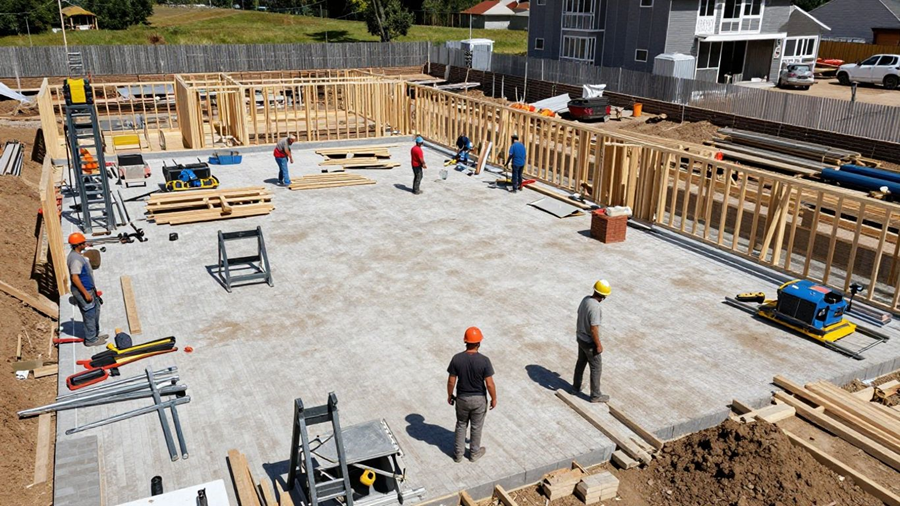
The location of your construction project affects almost all of your budget line items. The actual cost may vary due to labor costs, permit fees, insurance, availability of materials, weather conditions, and local building codes. The price of a house in a high-cost coastal city may be significantly higher than the price of a comparable house in a lower-cost rural or suburban market.
The cost of rural land is not necessarily less when the entire project is taken into account. Material delivery may be longer, septic systems may be required, well systems may be needed, private roads may be longer, utility runs may be longer, or more site preparation may be necessary. For example, homeowners planning in Texas may want to compare local numbers with this guide on the cost to build a house in Texas.
Land Costs and Site Preparation
The cost of the land is just one component of the cost of the site. The lot might require a survey, soil test, grading, drainage, tree removal, driveway installation, retaining walls, or erosion control before construction.
Another key consideration is utility access. If the lot is not already connected to public water, sewer, gas, electric, and internet, the cost of connecting to these services may be high. A well, septic system, propane tank, or long electrical run may be necessary on rural properties. If you are buying land and planning to build later, this loan to buy land and build a house guide is a useful next step.
Labor Costs
One of the biggest expenses in constructing a home is skilled labor. The total cost is influenced by carpenters, framers, electricians, plumbers, HVAC contractors, roofers, drywall crews, painters, and finish carpenters.
Labor costs increase if there is a high demand in the local area or if there are few skilled trades. There can also be overhead, loan interest, rental fees, and project management expenses.
Material Costs
Lumber, concrete, steel, windows, roofing, insulation, cabinets, flooring, and plumbing fixtures can all vary due to supply chain, fuel costs, tariffs, and local availability.
The budget can easily be increased by upgrading materials. High-end windows, specialty siding, stone countertops, custom cabinets, designer flooring, and fixtures can take a project from mid-range to luxury pricing.
House Size and Layout
While the size of the house is important, its layout is equally important. A home with only one roofline, no bump-outs, no vaulted ceilings, no odd angles, and no structural complexity is generally less expensive to construct than a home with all these features.
The cost per square foot of smaller homes can be higher because the cost of the expensive fixed systems, such as kitchen, bathroom, HVAC, utility connections, permits, and foundation work, is distributed over a smaller number of square feet.
Quality of Finishes
Finishes affect both the look and the final cost of a new home. Builder-grade finishes help control the budget, while custom cabinetry, premium appliances, hardwood flooring, designer lighting, stonework, and upgraded bath fixtures increase the total price.
| Build Level | Typical Cost Range | Best For | Important Note |
|---|---|---|---|
| Entry-level / builder grade | $150–$220+ per sq ft | Simple layouts, basic finishes, efficient designs | Land, permits, utilities, and site work may be separate. |
| Mid-range custom or semi-custom | $220–$320+ per sq ft | Better finishes, flexible layouts, and family homes | Costs vary strongly by region and builder scope. |
| Luxury / high-end custom | $320–$400+ per sq ft | Premium finishes, complex architecture, custom features | High-end markets can exceed this range. |
Cost Per Square Foot to Build a House by State (2026)
Hard construction costs only — excludes land, permits, and design fees.
| State | Cost Per Sq Ft | 2,000 Sq Ft Estimate | Key Cost Note |
|---|---|---|---|
| Alabama | $125–$175 | $250,000–$350,000 | One of the lowest-cost states nationally |
| Arkansas | $130–$180 | $260,000–$360,000 | Among lowest nationally; NW Arkansas runs higher |
| Tennessee | $140–$195 | $280,000–$390,000 | Nashville metro adds 15–25% above statewide average |
| Texas | $145–$200 | $290,000–$400,000 | Austin runs 20–30% above statewide average |
| Georgia | $150–$210 | $300,000–$420,000 | Red clay soils add foundation cost; Atlanta metro runs higher |
| Florida | $155–$215 | $310,000–$430,000 | Coastal counties add 8–12% for hurricane code compliance |
| Illinois | $155–$220 | $310,000–$440,000 | Chicago metro runs 20–35% above downstate Illinois |
| Pennsylvania | $160–$225 | $320,000–$450,000 | Frost depth, stormwater, and radon requirements add cost |
| Maryland | $175–$260 | $350,000–$520,000 | Highest in SAM’s network — DC metro labor and Bay watershed requirements |
Alabama — $125 to $175 per square foot
One of the most affordable states to build in the country. Non-union labor, moderate building codes, and mild climate keep costs low. Coastal Baldwin and Mobile counties add 8–12% for hurricane wind mitigation.
Huntsville sees higher pricing due to construction demand near Redstone Arsenal. Veterans building in Alabama benefit from a 100% disabled veteran property tax exemption with no income cap. VA loans in Alabama covers state-specific program details.
Arkansas — $130 to $180 per square foot
Consistently among the two or three cheapest states to build nationally. Right-to-work labor market, straightforward permitting in most jurisdictions, and lower land costs keep the baseline affordable. Northwest Arkansas — Fayetteville, Bentonville, Rogers — runs 15–20% above the statewide average due to corporate relocation-driven population growth. Mountain lots in the Ozark and Ouachita ranges add site work cost on sloped terrain. VA loans in Arkansas covers state-specific details.
Tennessee — $140 to $195 per square foot
Below the national average statewide, with no state income tax reducing cost-of-living pressure on labor rates. Nashville metro has seen significant construction cost inflation, expect 15–25% above statewide averages in Davidson and Williamson counties.
The Clarksville and Fort Campbell corridor sees pricing pressure from consistent military family demand. East Tennessee mountain and hillside lots add site work costs. VA loans in Tennessee covers state-specific program details.
Texas — $145 to $200 per square foot
Slightly below the national average, with strong builder competition across major metros. No state income tax, right-to-work labor market, and no statewide residential builder license requirement keep soft costs low. Austin is the most expensive Texas market 20–30% above statewide averages in Travis and surrounding counties. Dallas-Fort Worth and Houston run 10–15% above statewide. Gulf Coast builds add wind mitigation and flood zone requirements. The cost to build a house in Texas guide covers regional pricing across the state’s major markets.
Georgia — $150 to $210 per square foot
Near the national average statewide. Red clay soils throughout central and north Georgia require site-specific foundation engineering that can add $5,000–$15,000 above standard slab costs. Atlanta metro runs 15–20% above rural Georgia. Coastal Savannah and Brunswick builds add hurricane wind mitigation requirements. Lots in FEMA flood zones near the coast require elevation compliance. VA loans in Georgia covers state-specific program details.
Florida — $155 to $215 per square foot
Near the national average statewide but significantly higher in coastal counties where Florida Building Code hurricane requirements apply. Impact-resistant windows, hurricane straps, and engineered roof-to-wall connections add 8–12% to construction costs in coastal counties. South Florida CMU (concrete block) construction costs more upfront than wood frame but performs better in major wind events. Monroe County (Florida Keys) is among the most expensive build environments in the country due to island logistics and elevated flood requirements. VA loans in Florida covers state-specific program details.
Illinois — $155 to $220 per square foot
At or slightly above the national average statewide, with significant variation between Chicago and downstate Illinois. Northern Illinois frost depth requirements (42–48 inches) extend foundation costs compared to southern states. Snow load engineering requirements add structural cost in Lake and Cook counties. Chicago city limits add permitting complexity — plan review runs 60–90 days under the Chicago Building Code rather than the standard IRC. Union labor rates in the Chicago metro run 30–50% above downstate Illinois. VA loans in Illinois covers state-specific program details.
Pennsylvania — $160 to $225 per square foot
Slightly above the national average driven by cold-weather building requirements, regulatory complexity, and higher labor costs in Philadelphia and Pittsburgh. Statewide frost depth of 36 inches requires extended foundation footings. Pennsylvania’s Chesapeake Bay watershed stormwater management obligations add $5,000–$20,000 per project.
Radon-resistant construction features are required statewide by the Pennsylvania UCC. Mine subsidence zones in western Pennsylvania may require engineered foundations. Philadelphia metro runs 20–30% above western Pennsylvania. VA loans in Pennsylvania covers state-specific program details.
Maryland — $175 to $260 per square foot
The highest-cost state in SAM’s licensed network. DC metro labor rates are among the highest on the East Coast outside New York. The Chesapeake Bay Critical Area Act imposes restrictions on lots within 1,000 feet of tidal waters — adding permitting complexity, buffer zone compliance, and lot coverage limits.
Maryland Forest Conservation Act requirements may add replanting or fee-in-lieu costs on wooded lots. Stormwater management under Chesapeake Bay watershed obligations adds $5,000–$20,000 per project. Montgomery and Prince George’s counties run 25–40% above western Maryland and the Eastern Shore. VA loans in Maryland covers state-specific program details.
Cost Per Square Foot to Build a House by Home Size
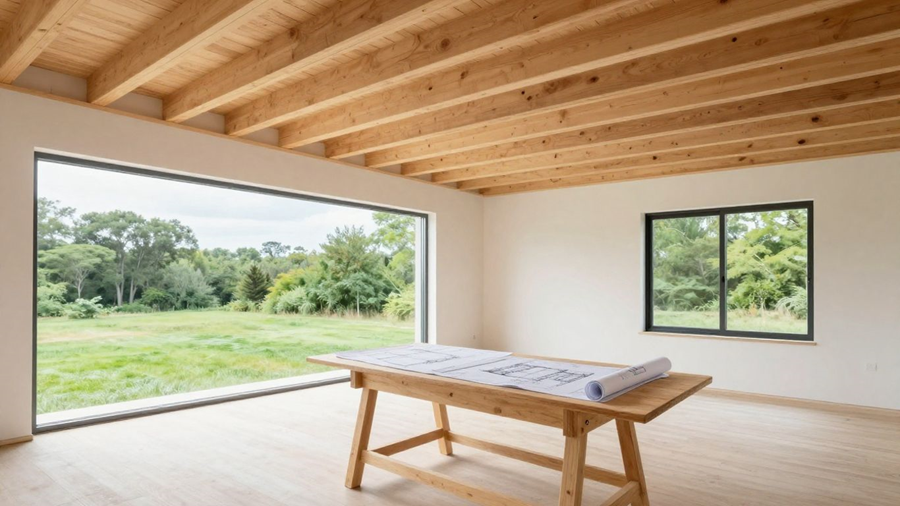
Home size is one of the most important budget drivers, but bigger homes do not always cost more per square foot. Larger homes can benefit from economies of scale because fixed costs are spread across more finished living area. Smaller homes may be less expensive overall, but the per-square-foot number can be higher.
| Home Size | Est. at $150/sq ft | Est. at $250/sq ft | Est. at $400/sq ft |
|---|---|---|---|
| 1,000 sq ft | $150,000 | $250,000 | $400,000 |
| 1,500 sq ft | $225,000 | $375,000 | $600,000 |
| 2,000 sq ft | $300,000 | $500,000 | $800,000 |
| 2,500 sq ft | $375,000 | $625,000 | $1,000,000 |
| 3,000 sq ft | $450,000 | $750,000 | $1,200,000 |
1,000 Sq Ft House Cost
The per-square-foot cost of a 1,000 sq. ft. home might be more expensive, but the total cost of the home may be lower, due to the fact that the fixed costs are spread over a smaller area. When the home is compact, costs for foundation, kitchen, bathroom, HVAC, electrical, and utility remain.
Ideal for small families, guest homes, accessory dwelling units, and minimalist layouts. Use simple designs, keep the roofline simple, and avoid luxury finishes to keep costs under control.
1,500 Sq Ft House Cost
For small to medium-sized families, a 1,500 square foot house can be a good choice. It can typically accommodate 2 to 3 bedrooms, 2 bathrooms, and a functional open living space without being too costly to maintain.
This size can provide a good balance between affordability and livability. The number of bathrooms, the size of the kitchen, the roof design, whether or not there is a garage, and the finish level all affect the budget accuracy.
2,000 Sq Ft House Cost
A 2,000 square foot plan size is a standard size for a home since it offers sufficient space for families and some cost efficiency. Fixed costs are distributed over a larger area, which may result in lower average costs per square foot than in very small homes.
The final cost will still be largely dependent on local prices, layout, finishes, and site conditions. A basic 2,000 square foot layout may be much less expensive than a more intricate custom layout of the same size.
2,500 Sq Ft House Cost
A 2,500 square foot house typically provides more room for extra bedrooms, a bigger kitchen, a home office, or more living space. The roofing, framing, HVAC capacity, and finish choices are more significant to the total budget at this scale.
It is important for homeowners to examine soft costs, allowances, and change order policies prior to the start of construction. If the house is larger, it can absorb upgrades quickly, and a detailed specification sheet is a must.
3,000+ Sq Ft House Cost
Custom features like larger garages, media rooms, guest suites, home offices, outdoor living areas, or premium finishes are often found in homes of 3,000 sq ft and larger. All of these features can increase the overall cost and cost per square foot.
Professional planning, detailed architectural drawings, and experienced project management are important for large custom homes. A contingency reserve is particularly significant because a small percentage change can mean a significant dollar change.
Regional Cost Differences to Consider
Building costs are highly local. Even within the same state, a suburban lot, rural parcel, and city infill project can produce very different budgets. Use national averages only for early planning, then request local estimates from builders who work in your area.
| Region / Market Type | Common Cost Pressure | Budget Note |
|---|---|---|
| High-cost urban areas | Labor, permits, impact fees, and limited access | Expect higher soft costs and tighter building logistics. |
| Suburban areas | Land availability, builder demand, and HOA requirements | Often offers a balance of access and buildability. |
| Rural areas | Utility runs, septic/well, material delivery, road access | Land may be cheaper, but site work can be higher. |
| Coastal or storm-prone areas | Wind codes, flood zones, insurance, and elevation requirements | Engineering and code compliance can raise costs. |
| Cold-weather markets | Insulation, foundation depth, snow loads, heating systems | Climate requirements can affect structure and mechanical systems. |
Custom Home vs Standard Layout: How Design Changes the Budget
A standard or production-style layout is usually more cost-efficient because the builder can repeat proven plans, order materials predictably, and reduce design time. A custom home gives more control but often requires more design work, engineering, approvals, specialized labor, and custom materials. Before choosing a builder, it helps to review how to choose a home builder so your budget and expectations are clear from the start.
| Build Type | Best For | Cost Impact | Main Trade-Off |
|---|---|---|---|
| Production / standard plan | Budget-conscious buyers | Lower to moderate | Less customization |
| Semi-custom home | Buyers wanting some flexibility | Moderate | Limited structural changes |
| Fully custom home | Unique lifestyle needs or luxury design | Higher | More design time and a higher risk of changes |
Hidden Costs Often Missing From Builder Quotes
Some builder quotes focus on the house structure and basic finishes, but they may not include every expense needed to complete the project. Before signing, ask what is included, what is excluded, and what is only an allowance. This is also where understanding basic construction loan requirements can help you avoid financing surprises.
· Land purchase and closing costs
· Soil testing, survey, grading, and clearing
· Driveway, sidewalk, drainage, and retaining walls
· Water, sewer, septic, well, gas, electric, and internet connections
· Permit fees, impact fees, utility tap fees, and inspection fees
· Architectural design, engineering, and legal costs
· Construction loan fees and interest during construction
· Landscaping, fencing, decks, patios, and outdoor living areas
· Appliances, window treatments, furniture, and moving costs
· Change orders and contingency funds
Simple House Building Cost Calculator
Use this simple formula for early planning only. It does not replace a builder’s quote, but it helps you understand how square footage and price range affect the total budget. For a more practical estimate, compare your early numbers with a construction loan calculator.
Estimated construction cost = Finished square footage x estimated cost per square foot.
Example: 2,000 sq ft x $250 per sq ft = $500,000 estimated construction cost
Then add land, permits, site work, utilities, financing costs, design fees, landscaping, and a contingency reserve. Many homeowners use a 10% to 20% contingency range, but the right reserve depends on project complexity and risk.
Is It Cheaper to Build or Buy a House?
Building and buying have different financial profiles. Buying an existing home can be faster and more predictable, while building offers more control over layout, energy efficiency, finishes, and long-term customization. If you are still deciding between both options, this guide on whether to buy it or build it can help you compare the trade-offs.
Advantages of Building
- You can choose the floor plan, finishes, layout, and energy-efficient systems.
- The home can be built to current building codes and modern performance standards.
- You may reduce future renovation costs by designing the home correctly from the start.
- New materials, systems, and warranties may lower early repair needs.
- You can choose the lot, orientation, and features that fit your lifestyle.
Advantages of Buying
- You can usually move in sooner than with a new construction project.
- The total price may be easier to compare because the house already exists.
- Established neighborhoods may offer mature landscaping, schools, and amenities.
- You avoid many construction risks such as delays, weather setbacks, or change orders.
- You can inspect the finished property before closing.
| Question | Building May Be Better If… | Buying May Be Better If… |
|---|---|---|
| Timeline | You can wait for design, permits, and construction. | You need to move quickly. |
| Customization | You want control over layout and finishes. | You can accept an existing layout. |
| Budget risk | You have contingency funds for changes. | You want fewer construction unknowns. |
| Location | You found a buildable lot you like. | You want a specific established neighborhood. |
How Construction Loans Affect the Budget
A construction loan is different from a regular mortgage because the house is not finished when the loan begins. Lenders usually release money in stages, called draws, as construction progresses. Inspections are commonly required before each draw is released.
With a construction-only loan, the balance usually must be paid off or refinanced after the home is completed. With a construction-to-permanent loan, the loan converts into a regular mortgage after construction is finished, which can reduce the need for a second closing. Inspections are commonly required before each draw is released, so it is important to understand how construction loans work when you own land.
| Loan Type | How It Works | Best For |
|---|---|---|
| Construction-only loan | Short-term loan used during the build; usually paid off or refinanced after completion. | Borrowers who want separate permanent financing or plan to sell another property. |
| Construction-to-permanent loan | Starts as a construction loan and converts into a mortgage after completion. | Borrowers who want one application and one closing process. |
| Renovation loan | Combines purchase or refinance with renovation costs for an existing home. | Fixer-uppers or major home improvements. |
How to Estimate Your New Home Construction Budget
1. Choose the location and confirm whether the land is buildable.
2. Define the target home size, number of bedrooms, bathrooms, garage size, and must-have features.
3. Select a realistic finish level: entry-level, mid-range, or luxury.
4. Request early estimates from local builders using the same plan and specification list.
5. Separate hard costs, soft costs, land costs, and owner costs.
6. Review utility access, site work, permit requirements, and local code requirements.
7. Add a contingency reserve for overruns, delays, or change orders.
8. Discuss financing options with a lender before signing a construction contract.
How to Reduce the Cost Per Square Foot When Building
- Choose a simple rectangular layout instead of a complex custom footprint.
- Limit roofline complexity, vaulted areas, and unusual structural features.
- Use standard window and door sizes where possible.
- Prioritize upgrades in high-value areas such as insulation, windows, HVAC, and durable flooring.
- Avoid late design changes after pricing and construction begin.
- Get a detailed specification sheet so allowances are clear.
- Compare builder quotes using the same plans and scope of work.
- Build on land with easier utility access and fewer site-preparation issues.
Use a contingency fund instead of stretching the base budget too thin.
Common Budget Mistakes to Avoid
| Mistake | Why It Causes Problems | Better Approach |
|---|---|---|
| Using only the cost per square foot | It ignores land, soft costs, utility connections, and site work. | Build a full line-item budget. |
| Assuming builder quotes include everything | Many quotes exclude permits, landscaping, appliances, or utility taps. | Ask for included and excluded items in writing. |
| Choosing upgrades too late | Late changes create change orders and delays. | Finalize selections early. |
| Underestimating site work | Poor soil, slope, trees, or access can raise costs. | Get surveys and soil testing early. |
| Skipping contingency funds | Unexpected issues are common in construction. | Set aside a realistic reserve before starting. |
Conclusion
The cost per square foot to build a house is a helpful starting point, but it should never be the only number used to plan a new home. The final budget depends on location, land conditions, labor, materials, design complexity, finish quality, permits, utility connections, financing, and site preparation.
To build with confidence, separate hard costs, soft costs, land costs, and owner expenses before signing a contract. A detailed plan, accurate specifications, local builder estimates, and a contingency reserve will give you a much clearer picture of what your new home will actually cost.
Frequently Asked Questions
Does square footage include the garage?
Usually, cost-per-square-foot calculations focus on heated and finished living space, but builders may price garages, porches, basements, and outdoor living areas separately. Always ask what square footage is included in the quote.
How does soil quality affect building costs?
Poor soil, steep slopes, drainage problems, or unstable ground can require extra engineering, grading, foundation work, or retaining walls, which can raise costs before vertical construction begins.
Are construction loans different from regular mortgages?
Yes. Construction loans fund the building process and often release money in stages as work is completed. A construction-to-permanent loan can convert into a regular mortgage after the home is finished.
Does weather impact building timelines?
Yes. Heavy rain, snow, extreme cold, storms, or supply delays can slow site work, framing, roofing, and inspections. Delays can also increase labor, rental, and financing costs.
Are permits included in builder quotes?
Sometimes, but not always. Permits, impact fees, inspection fees, and utility tap fees may be listed as soft costs or passed through separately. Confirm this before signing.
Can I act as my own general contractor?
It may be possible in some areas, but it requires strong knowledge of trades, scheduling, codes, permits, inspections, insurance, and budgets. Mistakes can quickly become expensive.
What are soft costs in construction?
Soft costs are non-physical project expenses such as architectural design, engineering, permit fees, legal fees, lender fees, inspections, surveys, and construction loan interest.
Why do smaller homes sometimes cost more per square foot?
Smaller homes still require kitchens, bathrooms, utilities, foundations, mechanical systems, permits, and design work. Because those fixed costs are spread over fewer square feet, the average per-square-foot cost can be higher.
What is the biggest hidden cost when building a house?
Site preparation and utility connections are often among the biggest surprises. Clearing, grading, septic, wells, long driveways, drainage, and utility extensions can add a high cost.
How much contingency should I budget for a new home build?
Many homeowners plan for a contingency reserve of about 10% to 20%, depending on the complexity of the design, land condition, local market, and how finalized the plans are before construction begins.