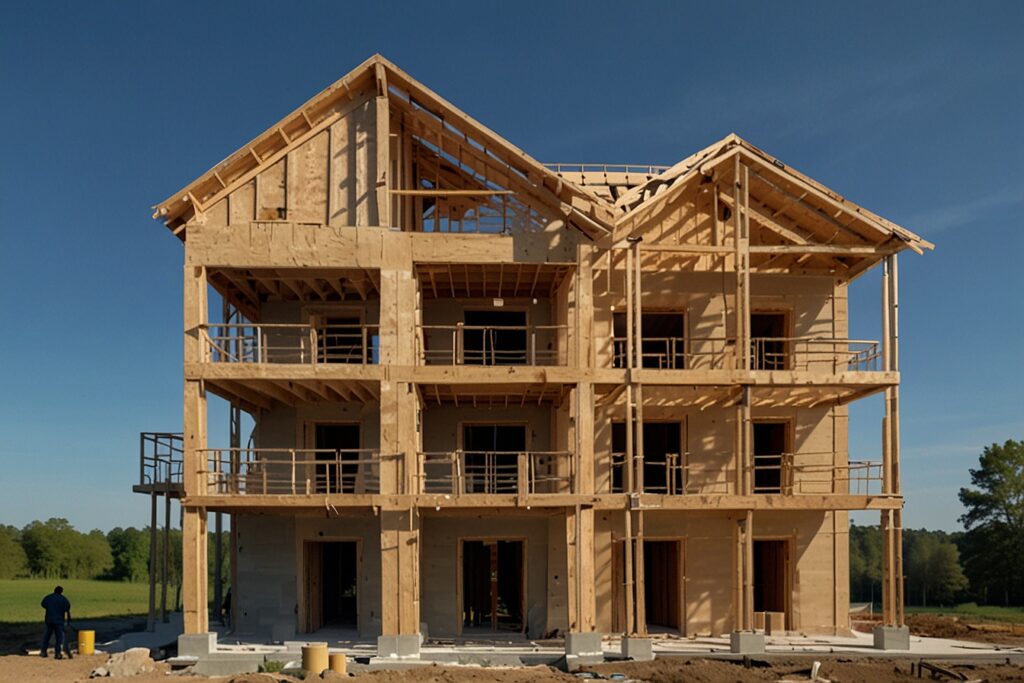
For lots of people building a custom home is their dream really. Where they get to build a space that caters perfectly. To their lifestyle, taste, and long term needs all at once. You have way more flexibility with a custom home honestly.
One of the most common questions buyers ask before starting the process is simple:
How much does it cost to build a custom home?
The answer depends on several factors, including location, home size, materials, design complexity, and the type of construction financing you use. This guide breaks down average costs, key pricing factors, hidden expenses, timelines, and construction loan options, so you can plan your custom home with confidence.
Average Cost to Build a Custom Home
Across the States a new home costs around 200-500 dollars. Per square foot to build on average in most places. This means for your planning:
Small, modest custom homes (1,500–2,000 sq. ft.) may cost between $300K. And $600K total
Mid-range custom homes (2,500–3,500 sq. ft.) typically range from $500K all. The way up to $1 million total
Luxury custom homes with premium finishes can easily exceed $1.5 million. Or even more depending on location
An asterisk is worth nothing here really. These figures are for the building and materials strictly. Do not include land purchase, permits, utilities, landscaping costs. Or interior furnishing costs at all.
Key Factors That Affect Custom Home Costs
There are lots of factors which can greatly impact. The overall costs of your entire project here:
a. Location
Location is one of the most significant factors affecting price. The price of land in rural, suburban, and urban. Areas greatly varies across the country honestly. Prices of local labor, building codes, and permitting fees. Tend to vary quite a bit by region too.
b. Size and Layout
As one can imagine a build that’s bigger will cost. More money for several different reasons obviously. This is because of the material needed for construction. The time and the labor to actually complete the project. A simple rectangle with a single story is way less. Complex in its design and will be much cheaper. However more complex angles, high ceiling heights, and extravagant features. Will definitely increase the costs significantly.
c. Material Quality
Similarly the quality of materials like flooring, countertops, roofing materials. And siding will largely determine the total price increases. For example basic hardwood flooring and simple materials work fine. For the bathroom or kitchen and will be way cheaper. However high-quality hardwood floor, granite countertops, or customized cabinetry options. Will definitely increase the costs quite a bit.
d. Labor Costs
The wage your contractor will demand gets influenced by local. Labor market conditions in your area significantly. This can be influenced by the level of demand. For construction work in the region currently. Or the level of skills the contractor actually possesses.
e. Special Features
Additional features like a pool, home theatres, energy-efficient systems. Or smart homes will all add more cost overall.
Major Cost Components of a Custom Home Build
To help you budget effectively here’s a breakdown really. Of the main expenses involved in building a custom home:
1. Land Purchase and Preparation
Before the building even starts purchasing a plot of. Land is absolutely necessary for the project. The cost of this land may range from $10K. In the outskirts of the rural area way out there. To over $500K in a city center location. Additionally the site preparation may include the grading work. Clearing the trees and soil testing requirements. This may cost anywhere from $5K to $50K total.
2. Design and Architecture
This may cost around 5–15% of the total cost overall. This may include the blueprint creation, renderings, and making sure. You build according to the local laws and regulations.
3. Permits and Fees
The cost may vary anywhere from $2K to $10K. Depending on your location and local requirements.
4. Foundation
The average concrete foundation may cost around $5K to $25K. Whereas the basement foundation may cost $25K all the. Way up to $70K depending on size.
5. Framing
For an average person’s house this may cost the client. About $20K to $50K in total expenses. This is one of the most costly and labor-intensive. Stages of the entire building process.
6. Exterior Finishes
This includes roofing, siding, windows, and doors installation. Price ranges from $40K to $100K depending on. Materials chosen and style preferences.
7. Major Systems Installation
The combined costs of the plumbing, electrical wiring, and HVAC. Systems can range from $30K to a whopping $75K total.
8. Interior Finishes
Interior finishing costs vary widely depending on your choices really. For flooring, cabinets, countertops, paint, lighting, and all appliances. This can range anywhere from $50K to $200K. Or even more for luxury options.
9. Landscaping
Basic landscaping can cost around $5K to $15K overall. And elaborate designs with retaining walls or outdoor. Kitchen or pool might easily go over 50K total.
Cost to Build a Custom Home by State
The cost to build a custom home can vary significantly depending on the state you’re building in. Land prices, labor availability, material costs, permitting requirements, and local building codes all influence the final price.
For homebuyers building in states where Security America Mortgage lends, construction costs and financing considerations can differ meaningfully:
Texas: Often lower land costs, but labor pricing can fluctuate in high-growth metro areas
Florida: Coastal construction standards, wind mitigation, and insurance requirements can impact costs
California: Higher labor, land, and regulatory costs often increase total build prices
Georgia: Generally moderate construction costs with strong builder availability
Maryland: Permitting and zoning rules vary widely by county
Illinois: Urban vs. suburban builds can create large pricing differences
Pennsylvania: Older infrastructure and zoning requirements may affect site preparation
Tennessee: Competitive construction pricing with rising demand in metro areas
Alabama: Typically lower labor and land costs compared to national averages
Arkansas: Often among the more affordable states for custom home construction
Tip: Construction loan requirements and approval standards may also vary by state, especially for VA and One-Time Close construction loans.
Garrett Puckett
Reviewing state-specific construction cost guides and loan requirements can help you better estimate your build budget and choose the right financing strategy.
Regional Variations in Cost (by Your State/Area)
Custom home construction costs vary significantly by region due to land values, labor markets, material availability, climate requirements, and regulatory environments.
Lower-Cost Regions
Midwest (Ohio, Indiana, Missouri, Iowa): $180–$300 per sq. ft.
Southeast (Alabama, Mississippi, parts of Georgia): $200–$325 per sq. ft.
Rural Southern & Plains States: Lower land and labor costs
Mid-Range Cost Regions
Texas: $225–$375 per sq. ft. (varies widely by metro)
Florida: $250–$400 per sq. ft. (insurance and hurricane codes increase costs)
Carolinas & Tennessee: $225–$350 per sq. ft.
Higher-Cost Regions
California: $400–$700+ per sq. ft. due to labor, permitting, and seismic codes
Northeast (NY, MA, NJ): $350–$600+ per sq. ft.
Pacific Northwest (WA, OR): $300–$500+ per sq. ft.
Urban cores and coastal areas typically cost far more than suburban or rural builds within the same state.
Garrett Puckett
Custom vs. Semi-Custom Home Costs
If you would like a semi-custom design that’s not. As expensive try building with a Semi-Custom Home Builder instead. In essence this means that they offer pre-designed. Floor plans which can be revised slightly to create. A custom design providing you with savings and customization both. This combination can simultaneously reduce design and labor costs. While still upgrading materials and finishes you want.
Ways to Save Money When Building a Custom Home
Although construction of custom homes can be very costly honestly. There are ways to keep cost within reasonable boundaries. Without compromising quality at all:
Choose a simpler design – Avoid overly complex layouts and stick to. Standard dimensions that builders are familiar with
Build in a lower-cost area – Land and labor can be significantly cheaper. Outside of major cities and metropolitan areas
Shop around for materials – Compare prices from multiple suppliers and consider. Discounted or surplus materials that work fine
Prioritize must-haves over luxuries – Focus your budget on the features that. Matter most to you and your family
Plan for future upgrades – You can always add features like a deck. Or smart home system later on down the road
Work with experienced builders – Hiring one of the best custom home builders near me. Ensures efficient work, accurate cost estimates, and fewer costly. Mistakes throughout the building process
Hidden Costs You Might Overlook
Here are a few expenses that often get overlooked. By homeowners while budgeting all at the same time. Not typically included in construction estimates at all:
Utility connection fees for water, sewer, gas, and electricity services
Temporary housing during construction if you need somewhere to stay
Homeowner association (HOA) fees if building in a managed community
Furniture, décor, and appliances for the new home
Long-term maintenance and landscaping upkeep costs going forward
Timeline for Building a Custom Home
From design to move-in the average custom build time is. Around 10-16 months in most cases honestly. Weather conditions, materials shortage, permit approvals, design changes during. Construction can all cause delays to the timeline. If you plan ahead and choose a professional builder. You can avoid lots of unnecessary waiting time.
One-Time Close Construction Loan Options for Non-VA Borrowers
Homebuyers who are not eligible for VA benefits may still build a custom home using a One-Time Close construction loan. This option combines construction financing and the permanent mortgage into a single closing, reducing fees and simplifying the process.
Conventional, FHA, and USDA One-Time Close construction loans may be available depending on credit profile, location, and program eligibility. While these options often require a down payment and may include mortgage insurance, they offer a streamlined alternative to traditional two-loan construction financing.
Build Your Custom Home with VA One-Time Close and VA Jumbo Loans
For eligible Veterans, active-duty service members, and surviving spouses, a VA One-Time Close construction loanis one of the most efficient and affordable ways to build a custom home.
VA One-Time Close Construction Loan
This program combines the construction loan and permanent VA mortgage into a single closing, eliminating the need to refinance after construction.
Key benefits include:
No down payment for qualified borrowers
No private mortgage insurance (PMI)
Competitive VA-backed interest rates
One closing instead of two
Predictable long-term payments after completion
VA Jumbo Loans for Custom Builds
For higher-cost custom homes that exceed standard loan limits, VA Jumbo loans allow eligible borrowers to finance larger loan amounts while still avoiding PMI and benefiting from VA loan advantages.
Final Thoughts
For many the cost of building a custom home can. Range quite a bit from location and size factors. To how fancy it gets with quality materials. And design complexity choices you make. It may seem like a huge commitment upfront honestly. But the outcome is a space that’s tailored perfectly.
To your exact needs and way of life.With a little budgeting, wise builder selection, and good understanding. Of the costs you won’t feel so blindsided really. Making your dream home will be much easier overall! Home builders can go fully custom or they may. Have various semi-custom options what matters is this. Either way you find a balance between your dream. And your budget to create a home that’ll. Stick around for years to come
Frequently Asked Questions (FAQs)
How much does it cost to build a custom home per square foot?
Most custom homes cost between $200 and $500 per square foot, depending on location and materials.
Does the cost to build a custom home include land?
No. Land purchase, utilities, landscaping, and furnishings are typically separate costs.
How long does it take to build a custom home?
On average, 10–16 months from design to completion.
What is a One-Time Close construction loan?
A loan that combines construction financing and a permanent mortgage into one closing.
Can I use a VA loan to build a custom home?
Yes. Eligible borrowers can use a VA One-Time Close construction loan or VA Jumbo loan to finance a custom build.
Garrett Pat Puckett is a fifth-generation Texan and the Founder & CEO of Security America Mortgage, Inc. (NMLS #337550), a company he has owned and operated since 2005. His family’s deep tradition of military service is a defining thread that spans generations—from ancestors who fought at the Battle of Yorktown alongside French allies to secure American independence, to relatives who stormed the beaches of Normandy, survived the Battle of the Bulge, and served in Army Intelligence. Garrett’s middle name, Pat, honors a celebrated World War I hero in his family, and his distant cousin, Colonel Ralph Puckett Jr., earned the Medal of Honor as one of the most decorated soldiers in American history.
That heritage is a personal standard. As a specialist in VA loans and VA one-time close construction lending, Garrett has spent over two decades ensuring veterans fully maximize the benefits they have earned.
He is the primary author of educational content on SecurityAmericaMortgage.com and actively supports veteran initiatives, including the Wounded Warrior Project. When veterans work with Security America Mortgage, they are partnering with a team built on a foundational truth: serving those who served is not just a job—it is an obligation carried in the blood.
Security America Mortgage, Inc
Security America Mortgage is one of the leading VA Home Loan Lenders in the nation; We are not a government agency. We pride ourselves on providing excellent customer service to ensure that each Veteran we serve ends up living happily ever after in the home of their dreams. This is a private website that is not affiliated with the U.S. government, U.S. Armed Forces, or Department of Veteran Affairs. U.S. government agencies have not reviewed this information. This site is not connected with any government agency.