


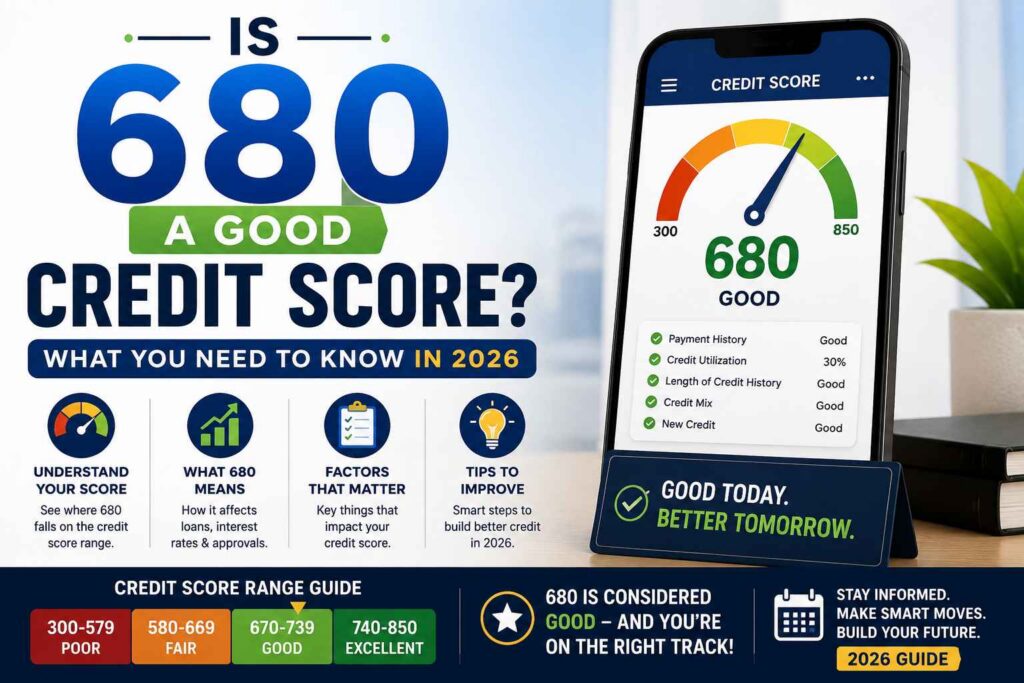
So, you checked your credit score, and it landed on 680. What does that actually mean for you in 2026? Is 680 a good credit score, or is it just okay? It’s a question a lot of people have, and the answer isn’t always a simple yes or no.
We’re going to break down what a 680 score signifies, how it stacks up against others, and what it means for getting loans, credit cards, and even the interest rates you might get. Let’s figure out if 680 is working for you or if there’s room to grow.
What Does a 680 Credit Score Mean?
A credit score is basically a three-digit number, usually between 300 and 850, that lenders use to get a quick idea of how likely you are to pay back borrowed money.
Think of it as a financial report card. A score of 680 falls into a category that’s often considered fair to good, depending on the specific scoring model and the lender’s own criteria. It’s not quite in the
The Impact of a 680 Credit Score on Loan Approvals
A credit score of 680 generally lands in the “good” category, which is a decent spot to be in. It means you’re likely to be approved for many types of loans, but it doesn’t always guarantee the best terms.
Lenders look at your score as a quick way to gauge your risk, and while 680 is better than average, it might not unlock the absolute lowest interest rates or the most flexible loan conditions.
Mortgage Applications with a 680 Score
When it comes to mortgages, a 680 credit score is often on the lower end of what’s considered ideal. While some lenders might approve you, you’ll likely face higher interest rates compared to someone with a score in the 700s. This can significantly increase your monthly payments and the total interest paid over the life of the loan.
For instance, a score of 670 is generally the minimum for a conventional mortgage, but aiming higher can make a big difference in your loan terms. You might also need a larger down payment or have fewer loan options available. Getting pre-approved can give you a clearer picture of what you can afford.
Getting pre-approved can give you a clearer picture of what you can afford. Knowing how long mortgage pre-approval takes helps you plan your home search timeline accordingly.
Auto Loans and Personal Loans with a 680 Score
For auto loans and personal loans, a 680 score is often considered “prime” by many lenders, which is good news. This means you have a solid chance of getting approved. However, just like with mortgages, the interest rate you’re offered will probably be higher than for someone with excellent credit.
This is the trade-off for having a score that’s good but not top-tier. It’s always a good idea to shop around with different lenders to compare offers, as rates can vary quite a bit.
Credit Card Approval with a 680 Score
Getting approved for credit cards with a 680 score is usually quite possible. You’ll likely qualify for a range of cards, including those offering rewards or cash-back programs. However, premium travel cards or those with the most generous sign-up bonuses might be out of reach.
Lenders use your credit score for loan approval, but they also consider other factors like your income and debt-to-income ratio. A 680 score is a strong starting point, but it might mean you won’t get the cards with the absolute best perks or the highest credit limits.
A credit score of 680 is a respectable number that opens doors to many financial products. However, it’s important to understand that it might not always secure the most favorable interest rates or terms. Being aware of this can help you set realistic expectations and plan your financial moves accordingly.
Here’s a general idea of what to expect:
- Mortgages: Approval is possible, but expect higher rates and potentially a larger down payment. Aiming for 700+ significantly improves your chances for better terms.
- Auto Loans: Generally considered prime, leading to likely approval, but rates might be higher than top scores.
- Personal Loans: Similar to auto loans, approval is probable, but interest rates could be less competitive.
- Credit Cards: Good chance of approval for many cards, but premium rewards cards might be harder to get.
Remember, the average credit score needed for loans can vary by lender and loan type. A 680 score puts you in a good position, but continuous effort to improve it can lead to even better financial opportunities.
Interest Rates and Terms Associated with a 680 Credit Score
So, you’ve got a credit score of 680. That’s generally considered ‘good,’ which is definitely a step in the right direction. But what does that actually mean when you’re trying to borrow money?
Well, it means you’re likely to get approved for loans and credit cards more often than someone with a lower score. However, it’s not quite in the ‘excellent’ category, and that can affect the interest rates and terms you’re offered.
Higher Interest Rates: The Trade-off for a 680 Score
Think of it like this: lenders see a 680 score as a decent indicator that you’re generally responsible with credit, but there’s still a bit of risk involved for them. Because of that perceived risk, they’ll often charge you a higher interest rate compared to someone with a score in the high 700s or 800s. This higher rate is how they make up for the possibility of not getting their money back.
Here’s a rough idea of how interest rates can vary, using mortgage rates as an example (though actual rates change daily and depend on many factors):
| Credit Score Range | Example Interest Rate (30-Year Fixed) |
|---|---|
| 800+ — Excellent | ~6.69% |
| 700–739 — Good | ~7.13% |
| 670–699 — Good | ~7.71% |
Note: These are illustrative examples based on past data and not current offers.
This difference might seem small, but over the life of a loan, especially a mortgage, it can add up to thousands, or even tens of thousands, of dollars more you pay in interest. It’s the same story with auto loans and personal loans, a 680 score might get you approved, but likely not at the rock-bottom rates the best credit holders get.
When you have a 680 credit score, lenders see you as a borrower who’s generally reliable but might still have some issues to work on. This means they’re willing to lend to you, but they’ll price that risk into the loan. You’re not in the ‘subprime’ category, but you’re also not getting the absolute best deals available.
Negotiating Better Terms
While a 680 score might not land you the absolute best rates, it doesn’t mean you’re completely out of options. Here are a few things to keep in mind:
- Shop Around: Don’t just go with the first lender you talk to. Different banks and credit unions have different criteria and might offer slightly better terms for a 680 score. Compare offers from multiple sources.
- Look at the Whole Picture: Lenders consider more than just your credit score. Your income, employment history, and the amount of money you’re putting down (for a mortgage or car) all play a role. A strong application in other areas can sometimes help offset a less-than-perfect score.
- Consider Credit Unions: Credit unions are often known for being more flexible with their members and might offer more favorable rates or terms than large national banks, especially if you have a history with them.
- Ask About Fees: Beyond the interest rate, look at other fees associated with the loan, like origination fees or prepayment penalties. Sometimes, a slightly higher interest rate might come with fewer fees, making it a better overall deal.
Improving your score even a little bit, say to 700 or 720, can often unlock noticeably better interest rates and terms. So, while 680 is good, aiming higher is definitely worth it.
Strategies to Improve Your Credit Score from 680
So, you’ve got a 680 credit score. That’s a “good” score, but we both know it could be better, right? The good news is, improving it isn’t some impossible mission. It just takes a bit of consistent effort and smart moves. Think of it like tending a garden, you water it, give it sun, and eventually, it blooms.
The biggest factor in your credit score is your payment history. Seriously, paying bills on time, every single time, is non-negotiable. Even one late payment can really set you back. If you’re struggling with a bill, don’t just ignore it, talk to the lender. They might be able to work something out.
Here are some key things to focus on:
- Keep Credit Balances Low: Aim to keep your credit utilization ratio, that’s the amount of credit you’re using compared to your total available credit, at 30% or less. So, if you have a credit card with a $10,000 limit, try to keep your balance below $3,000. This shows lenders you’re not over-reliant on credit.
- Don’t Apply for Too Much Credit at Once: Every time you apply for new credit, it can result in a hard inquiry on your report, which can ding your score a little. Space out your applications.
- Check Your Credit Reports Regularly: You can get free copies of your credit reports from the major bureaus. Look for any errors or inaccuracies and dispute them immediately. Sometimes, mistakes in your report can unfairly lower your score.
- Diversify Your Credit Mix: While not as impactful as payment history, having a mix of credit types (like credit cards and installment loans) can be beneficial over time. Just don’t open new accounts solely for the sake of a mix if you don’t need them.
Improving your credit score is a marathon, not a sprint. Be patient with yourself and celebrate the small wins along the way. Consistent, responsible financial habits are the foundation for building a stronger credit profile.
If you’re looking to buy a home and your credit score is around 680, you might be considering options like an FHA loan. These loans are designed for borrowers who may not have perfect credit and often require a lower down payment, sometimes as little as 3.5%. It’s a good stepping stone if you’re working on improving your score further.
Conclusion: Is 680 a Good Credit Score for You in 2026?
So, we’ve talked a lot about what a 680 credit score means and how it stacks up. Generally speaking, a 680 is considered a ‘good’ credit score, landing you in a decent spot for many financial decisions. It’s not quite in the ‘excellent’ category, but it’s definitely a solid foundation.
Think of it this way: with a 680, you’re likely to get approved for many loans and credit cards, which is a big plus. However, you might not always snag the absolute best interest rates or the most premium rewards. It’s a bit like being a good student, you get good grades, but maybe not the top scholarship.
Here’s a quick rundown of what a 680 score generally means:
- Loan Approvals: You’ll likely be approved for most standard loans, including auto loans and personal loans. Mortgage applications might be a bit trickier, but it’s certainly not impossible, especially if you have a good down payment and a stable income. Building a strong credit history is key.
- Interest Rates: Expect rates that are a little higher than those of someone with an ‘excellent’ score. This is the trade-off for being in the ‘good’ range. Over time, even small differences in interest rates can add up.
- Credit Cards: You should qualify for a good number of credit cards, possibly including some with decent rewards programs. Just be sure to read the fine print.
While a 680 score opens many doors, it’s also a great jumping-off point. It shows you’re managing credit responsibly, but there’s room to grow. Focusing on consistent, positive financial habits is the path forward.
Improving your score from 680 is totally achievable. It mostly comes down to sticking with good practices: paying bills on time, keeping your credit card balances low (aim for under 30% of your limit), and avoiding opening too many new accounts at once. It takes a bit of patience, but the payoff, better rates, more options, and overall financial peace of mind, is well worth the effort. You might even find yourself looking at options for building a custom home down the line with an even stronger financial profile.
What’s the Verdict on 680?
Alright, so we’ve talked a lot about the 680 credit score. The main takeaway here is that a 680 is definitely in the ‘good’ zone. It’s not quite top-tier, but it’s far from bad, and most lenders will see it favorably. You’ll likely get approved for loans and credit cards, though maybe not always with the absolute best interest rates out there. The good news? It’s totally possible to nudge that score higher.
By consistently paying bills on time, keeping your credit card balances in check, and just generally being smart with your money, you can definitely work your way up. Think of 680 as a solid foundation, you’ve got the basics down, and now you can build on it for even better financial opportunities down the road. Keep at it!
Frequently Asked Questions
Is a 680 credit score considered good?
Yes, a 680 credit score is generally considered a ‘good’ score. Most credit scoring systems place scores between 670 and 739 in the ‘good’ category. This means lenders will likely see you as a responsible borrower, though you might not always get the absolute best deals.
Can I get approved for a mortgage with a 680 credit score?
It’s possible to get approved for a mortgage with a 680 score, but it might not be for the lowest interest rates. Some lenders might require a higher score, especially for conventional loans. You might have better luck with government-backed loans like FHA, which can have lower credit score requirements.
What kind of car loan can I get with a 680 credit score?
With a 680 credit score, you’re often considered ‘prime’ by auto lenders, which is good! This means you should be able to get approved for a car loan and likely qualify for decent interest rates, though not always the lowest ones available.
Will a 680 credit score affect my credit card options?
A 680 score can get you approved for many credit cards, including some with rewards. However, you might not qualify for premium cards that offer the best perks and lowest interest rates. It’s still a solid score for general credit card use.
How much higher can my interest rates be with a 680 score?
Because 680 is considered ‘good’ but not ‘excellent,’ you might pay slightly higher interest rates on loans compared to someone with a score in the high 700s. This difference can add up over time, so improving your score can save you money.
What’s the fastest way to improve a 680 credit score?
The most effective ways to boost your score are to always pay your bills on time, keep your credit card balances low (ideally below 30% of your limit), and avoid applying for too much new credit at once. Building a solid credit history takes time and consistent effort.