

Complete List of Military Bases in Texas (2026 Guide)

Military-basis-in-texas

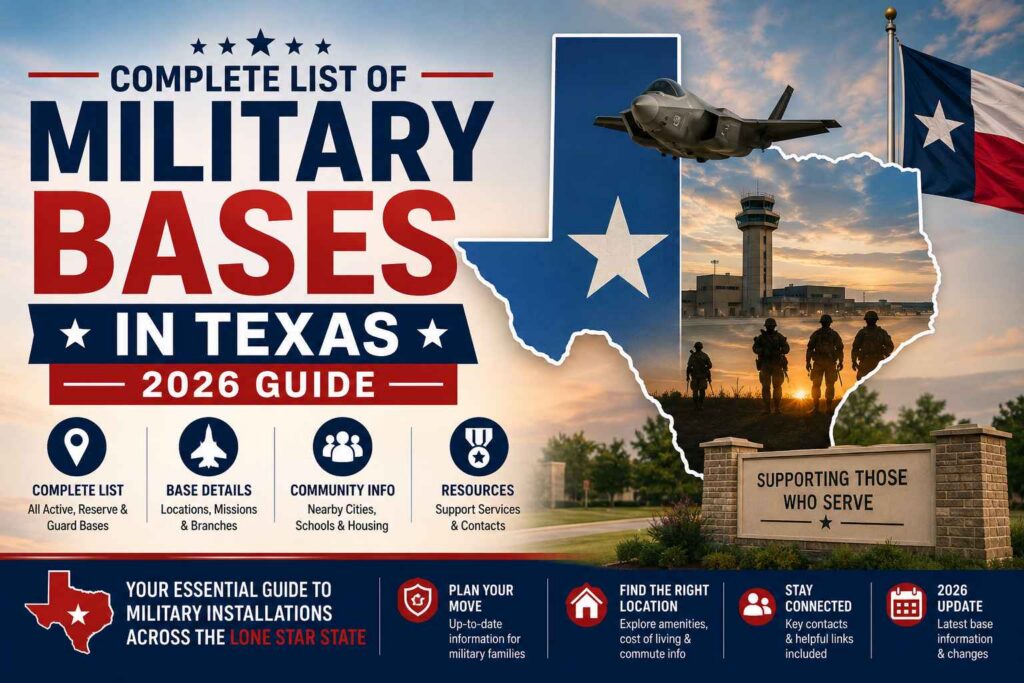
Texas plays a major role in the United States military infrastructure. The state is home to some of the country’s largest and most strategically important military installations, representing nearly every branch of the U.S. Armed Forces. Its vast land area, central location, and strong military support system make Texas a critical hub for training, logistics, aviation, and national defense operations. 

Why Texas is a Hub for Military Installations

Texas has long been a cornerstone of the U.S. military’s presence, and this is no coincidence. The sheer size of the state offers ample space for large-scale training and operations, which is critically important when you’re talking about modern military needs. Plus, its central location makes it a strategic point for moving resources and personnel across the country.

Beyond the geography, Texas has cultivated a genuinely military-friendly environment. This includes support for active duty members, veterans, and their families, which helps attract and retain a strong military community. This welcoming atmosphere is a significant factor in why so many branches choose to establish and expand their operations here.

Here’s a quick look at what makes Texas so appealing:

  • Vast Land Area: Provides room for extensive training grounds and large installations.
  • Strategic Location: Central positioning aids in national logistics and deployment.
  • Military-Friendly Culture: Strong community and state support for service members.
  • Diverse Facilities: Hosts everything from pilot training to heavy armor operations.

It’s also worth noting the significant presence of Navy installations in Texas, contributing to the state’s overall military importance. These facilities play a role in training and operational readiness, complementing the Army and Air Force bases.

The combination of physical space, strategic positioning, and a supportive community creates an ideal setting for military operations, making Texas a vital asset to national defense.

Veterans and active-duty service members stationed in Texas also benefit from some of the strongest state-level programs in the country, including the Texas Veterans Land Board loan program and access to free land for veterans in Texas through certain state initiatives.

Major Military Bases in Texas

Texas is a powerhouse when it comes to military installations, hosting major facilities for nearly every branch of the U.S. armed forces. These aren’t just small outposts; these include some of the largest and most vital bases in the country. It’s a big state, and it has big military needs, so it makes sense that so many key operations happen here.

🎖️ Major Military Bases in Texas
Base Location Branch Primary Mission
Fort Cavazos (Fort Hood) Killeen Army Armored warfare, III Corps HQ
Joint Base San Antonio San Antonio Multi-branch Training, medical, admin
Fort Bliss El Paso Army Air defense, large-scale training
Dyess Air Force Base Abilene Air Force Bomber & airlift operations
Sheppard Air Force Base Wichita Falls Air Force Pilot & technical training
NAS Corpus Christi Corpus Christi Navy Aviation training
Ellington Field JRB Houston Multi-branch Homeland security, disaster response
Camp Bullis San Antonio Army Medical & field training

Fort Cavazos (formerly Fort Hood)

Located in Killeen, Fort Cavazos is one of the biggest military installations globally. It serves as the headquarters of III Corps and is home to the 1st Cavalry Division. Originally established back in 1942, this base is set up to support heavy armored units and is a top-notch spot for training in armored warfare.

You’ll find units like the 1st Cavalry Division and the 3rd Armored Cavalry Regiment here, and it plays a big role in getting forces ready for missions overseas. It’s a prime example of the significant army bases in Texas.

Joint Base San Antonio (JBSA)

Joint Base San Antonio is a massive complex that actually combines three main installations: Fort Sam Houston, Lackland Air Force Base, and Randolph Air Force Base. This joint base is essential for training, medical services, and administrative support across all military branches. Fort Sam Houston is known as the “Home of Army Medicine,” and it’s where a lot of military medical education happens, including the Brooke Army Medical Center.

Lackland Air Force Base is the “Gateway to the Air Force,” and it’s the only place where new Air Force enlisted members get their initial training. It also handles specialized training for security forces and intelligence officers. The sheer scale of Joint Base San Antonio locations means it’s a huge part of the military presence in Texas.

Understanding military housing in South Texas gives families near JBSA a complete picture of both on-base and civilian housing options in the region. Liberty Military Housing manages privatized communities at several JBSA installations and is a key resource for on-base availability.

Naval Air Station Corpus Christi

While not as large as some of the Army or Air Force bases, NAS Corpus Christi is a key player for naval aviation. It’s a significant training center and supports various aviation operations. It’s one of the important Naval bases in Texas, contributing to the Navy’s readiness and capabilities along the Gulf Coast.

Dyess Air Force Base

Dyess Air Force Base, located in Abilene, is a major Air Force installation. It’s home to the 7th Bomb Wing and the 317th Airlift Wing, meaning it’s involved in both bomber and airlift operations. This base is vital for global power projection and rapid mobility missions. It’s a significant part of the Air Force bases Texas has to offer.

Sheppard Air Force Base

Sheppard Air Force Base in Wichita Falls is one of the busiest training bases in the Air Force. It’s responsible for training pilots and maintenance personnel for a variety of aircraft, including the T-6 Texan II and the T-38 Talon. It’s a critical part of the Air Force’s pilot production pipeline and a major hub for technical training. Sheppard is a standout among the Air Force bases Texas hosts.

Fort Bliss

Fort Bliss, situated in El Paso, is another massive Army installation, covering a huge amount of land. It’s primarily used as a training ground, especially for air defense artillery soldiers, and hosts a diverse range of units. Its remote location and vast space make it ideal for large-scale training exercises. It’s one of the most significant Texas Army posts.

Texas military bases are not just about training and housing troops, they are economic engines for their surrounding communities, providing jobs and stimulating local economies. The presence of these large installations also fosters a military-friendly environment, with many communities offering support and benefits to service members and their families.

Here’s a quick look at some of the major players:

  • Fort Cavazos (Fort Hood): Primarily an Army base, focused on armored warfare and large unit training.
  • Joint Base San Antonio (JBSA): A joint base combining Army and Air Force installations, offering extensive training, medical, and administrative support.
  • Naval Air Station Corpus Christi: A key Navy facility for aviation training and operations.
  • Dyess Air Force Base: An Air Force base with both bomber and airlift capabilities.
  • Sheppard Air Force Base: A major Air Force training base for pilots and technical personnel.
  • Fort Bliss: A large Army base in West Texas, crucial for air defense training and large-scale exercises.

These installations represent a significant portion of the army bases in Texas and the broader military infrastructure within the state, contributing greatly to national defense. For those looking to build a home near these bases, understanding the local real estate market and financing options, like VA loans, which offer flexible underwriting, can be really helpful.

Other Notable Military Facilities in Texas

Beyond the major installations, Texas hosts several other significant military facilities that play vital roles in national defense and community support. These Texas defense facilities, while perhaps not as widely known as the larger bases, are critical components of the state’s military landscape.

They contribute to specialized training, logistical support, and emergency response, making them important Texas military installations.

Camp Bullis

Camp Bullis, located northwest of San Antonio, is a training site that supports the medical education and readiness missions of Joint Base San Antonio. It’s primarily used for field training exercises, medical simulations, and maneuver training for various units.

The camp’s extensive training areas allow for realistic scenarios, helping to prepare service members for diverse operational environments. It’s a key part of the infrastructure supporting military medical personnel and combat units in the region.

Ellington Field Joint Reserve Base

Ellington Field Joint Reserve Base (JRB), situated southeast of Houston, is a unique facility that serves multiple branches of the military, including the Air National Guard, Army National Guard, and Coast Guard. This base is crucial for homeland security operations and emergency response, particularly along the Gulf Coast.

It supports a wide range of aviation activities and provides a staging ground for disaster relief efforts. Its strategic location and diverse tenant units make it a versatile asset for both state and federal missions. NASA also utilizes parts of Ellington Field, highlighting its importance in aerospace and defense.

The presence of these varied military facilities across Texas underscores the state’s broad commitment to national security. From specialized training grounds to joint reserve hubs, these installations contribute significantly to the readiness and operational capabilities of the U.S. armed forces.

These military facilities in Texas are not just training grounds, they are also economic engines for their local communities. They provide jobs, support local businesses, and contribute to a strong sense of civic pride. Understanding the scope of these Texas military installations gives a clearer picture of the state’s extensive role in the defense sector.

How to Choose the Right Texas Land for Your Home Build

So, you’ve got your sights set on building a custom home in Texas, maybe near one of those big military installations we talked about. That’s awesome! But before you even think about blueprints, you’ve got to find the right piece of land. It’s not just about picking a pretty spot, there’s a bit more to it than that.

First off, think about what you actually need. How much space do you want? Are you picturing a sprawling ranch or something a bit more cozy? Consider the terrain, too. Is it flat and easy to build on, or is it hilly and might require more work (and money) to level out? Also, check out the soil type. Some soils are better for building than others. You don’t want your foundation sinking later on.

🤠 Ready to find your land? Explore our guide: Best Places to Buy Land in Texas.

Here are a few things to keep in mind:

  • Location, Location, Location: How close do you want to be to work, schools, or shopping? If you’re tied to a military base, check out commute times. Sometimes, a slightly longer drive is worth it for a better price or more land.
  • Utilities: This is a big one. Does the land already have access to water, electricity, and sewer or septic systems? If not, getting those hooked up can be a major expense and hassle. You might need to budget for well drilling or septic system installation.
  • Zoning and Restrictions: Texas has a lot of freedom, but there are still rules. Make sure the land is zoned for residential building and check for any homeowner association (HOA) rules or deed restrictions that might limit what you can build. You don’t want to buy land only to find out you can’t build the house you dreamed of.
  • Flood Zones and Easements: Nobody wants to build a home in a flood-prone area. Check flood maps. Also, look for any easements – that’s basically a right for someone else to use part of your land, like for utility lines. You don’t want those running right through your backyard patio.

Finding the right land is like finding the perfect foundation for your house. It needs to be solid, suitable for your plans, and free of hidden problems. Taking the time to research and inspect thoroughly will save you a lot of headaches down the road.

🤠 Ready to find your land? Explore our guide: Best Places to Live in Texas.

When you’re looking at financing, remember that building on your own land often involves a specific type of loan, like a construction loan. It’s different from a regular mortgage. You’ll want to talk to lenders who specialize in construction loans to understand your options and what they’ll require. They’ll want to see a solid plan, so be prepared with details about your build.

Build Your Custom Home on Texas Land With the Right Loan

So, you’ve found that perfect piece of Texas land, and you’re ready to build your dream home. That’s awesome! But before you start picking out paint colors, you’ve got to figure out the money side of things. Building a custom home isn’t quite like buying an existing one, and the financing can feel a little different.

Most buyers will be looking at a construction loan. specifically designed for building projects, with funds released in stages called draws as the home is built. For eligible veterans and active-duty service members, the VA One-Time Close Construction Loan is the most powerful option available, combining construction financing and permanent mortgage into a single closing with zero down payment required.

Here are a few things to think about when you’re looking for the right loan:

  • Loan Types: There are a few options out there. You might hear about conventional construction loans, FHA construction loans, or even VA construction loans if you’re a veteran. Each has its own set of rules, like down payment requirements and credit score expectations. For example, FHA loans can be a good option if you have a lower credit score or a smaller down payment, but they often require construction to start pretty quickly after closing. You can explore FHA loans for land and building to see if that fits your situation.
  • Builder Approval: Lenders often want to know that your builder is reputable and experienced. They might need to approve your builder before they give you the loan. This is where doing your homework on local builders really pays off. Look for builders with good reviews and a solid track record.
  • Budgeting: Understanding the cost to build a house in Texas before you start gives you a realistic benchmark for your loan amount. It’s super important to have a realistic budget. Construction loans can sometimes have higher down payment requirements than regular mortgages. Make sure you factor in everything – the land, the actual building costs, permits, and even a little extra for unexpected things that pop up. It’s always better to be overprepared.

Getting the right financing in place is a big step. It sets the foundation for your entire building project. Taking the time to understand your options and working with a lender who understands construction loans will make a huge difference in how smoothly things go from breaking ground to moving in.

Don’t be afraid to shop around and talk to a few different lenders. They can explain the specifics of construction loans and help you find the best fit for your custom home build in Texas. Finding a reputable local builder is also key to managing costs and timelines effectively.

Impact of Military Bases on Texas Communities

Texas has a really deep connection with its military installations, and these bases do more than just serve national defense. They’re a big part of the local scene, affecting everything from jobs to the overall vibe of a town.

Think about it: thousands of service members and their families move to these areas, bringing new energy and needs. This often means a boost for local businesses, from restaurants and shops to housing markets. It’s not uncommon for towns near bases to see steady growth.

Here’s a quick look at some of the ways these bases make a difference:

  • Economic Boost: Military bases are major employers. Beyond the service members, there are civilian jobs in maintenance, administration, and support services. This injects a lot of money into the local economy through salaries and spending.
  • Infrastructure Development: To support the bases and the growing population, local communities often see improvements in roads, schools, and public services. Sometimes, the base itself contributes to these developments.
  • Community Integration: Many bases work hard to be good neighbors. They participate in local events, support schools, and encourage service members to volunteer. This helps build strong relationships between the military and civilian populations.
  • Specialized Services: Areas around bases often develop specialized services catering to military families, like healthcare providers familiar with military needs or businesses that understand the unique challenges of frequent moves. Veterans also benefit from expanded services, especially with legislation like the PACT Act, which helps those exposed to certain hazards during their service.

The presence of a military installation can significantly shape the character of a Texas community, creating a unique blend of civilian life and military culture. This relationship is often symbiotic, with the base providing economic stability and the community offering a supportive environment for service members and their families.

It’s also worth noting that for veterans looking to settle down, Texas offers a lot. The ability to use benefits like the VA loan multiple times means that homeownership is a real possibility throughout a veteran’s life, making these communities attractive places to build a future. Understanding your VA entitlement is key to making the most of this benefit.

Wrapping It Up

So, there you have it. Texas really is a huge player when it comes to the U.S. military. From the massive Army posts like Fort Cavazos and Fort Bliss to the Air Force bases focused on training pilots at Sheppard and Laughlin, these places keep our forces ready and able to do their jobs anywhere.

Whether they’re teaching new pilots, working on intelligence, or just moving supplies, Texas has been, and will keep on being, a really important part of America’s defense.

Frequently Asked Questions

Why does Texas have so many military bases?

Texas is a great spot for military bases because it’s a huge state with lots of space. It’s also in a good location in the country and has a culture that supports military families. These bases help train soldiers, fly planes, manage supplies, and do important research for the nation’s defense.

What’s the difference between the major military bases?

The bases in Texas do different jobs. For example, Fort Cavazos is big for training armored soldiers, while Joint Base San Antonio is a huge complex with training, medical, and support for all branches. Dyess Air Force Base has big bombers, and Sheppard Air Force Base is known for its technical training.

Are all military bases in Texas the same?

No, not at all! Texas has many types of military places. Some are for training recruits, others are for advanced pilot training, some focus on fixing equipment, and others are joint bases where different military branches work together. Each has its own special mission.

What is Joint Base San Antonio (JBSA)?

JBSA is like a super-base made up of three main parts: Fort Sam Houston, Lackland Air Force Base, and Randolph Air Force Base. It’s a massive operation that provides important training, medical care, and administrative help for everyone in the military.

How do military bases help the towns around them?

Military bases bring a lot of jobs to the area, which helps the local economy. They also create a strong sense of community, and many towns in Texas are very welcoming to service members and their families, offering support and programs.

Can the missions or units at a Texas base change over time?

Yes, they can. The military sometimes restructures, or its needs change. This means that the types of units stationed at a base, the aircraft they use, or their specific jobs can be updated over time.

Picture of Garret Puckett

Garret Puckett

Garrett Pat Puckett is a fifth-generation Texan and the Founder & CEO of Security America Mortgage, Inc. (NMLS #337550), a company he has owned and operated since 2005. His family’s deep tradition of military service is a defining thread that spans generations—from ancestors who fought at the Battle of Yorktown alongside French allies to secure American independence, to relatives who stormed the beaches of Normandy, survived the Battle of the Bulge, and served in Army Intelligence. Garrett’s middle name, Pat, honors a celebrated World War I hero in his family, and his distant cousin, Colonel Ralph Puckett Jr., earned the Medal of Honor as one of the most decorated soldiers in American history.

That heritage is a personal standard. As a specialist in VA loans and VA one-time close construction lending, Garrett has spent over two decades ensuring veterans fully maximize the benefits they have earned.

He is the primary author of educational content on SecurityAmericaMortgage.com and actively supports veteran initiatives, including the Wounded Warrior Project. When veterans work with Security America Mortgage, they are partnering with a team built on a foundational truth: serving those who served is not just a job—it is an obligation carried in the blood.

Security America Mortgage, Inc

Security America Mortgage is one of the leading VA Home Loan Lenders in the nation; We are not a government agency. We pride ourselves on providing excellent customer service to ensure that each Veteran we serve ends up living happily ever after in the home of their dreams. This is a private website that is not affiliated with the U.S. government, U.S. Armed Forces, or Department of Veteran Affairs. U.S. government agencies have not reviewed this information. This site is not connected with any government agency.

Contact Us Today! Call toll-free: (855) 701-2816

Cashflow

Lorem Ipsum has been the industry’s standard dummy text ever since the.

Most Popular to Date

START THE EASY APPLICATION PROCESS NOW!

Or Call Now For Help! (855) 701-2816

"*" indicates required fields

Step 1 of 4

More Calculators

Mortgage Calculator

VA Loan Calculator

Determine how much home you can afford.

Mortgage Calculator

 Funding Fee Calculator

Learn what it costs to fund a VA loan.

Mortgage Calculator

BAH Calculator

Calculate your Basic Housing Allowance.

Mortgage Calculator

VA Loan Limit Calculator

Find out how much you can borrow for $0 down.

Mortgage Calculator

Construction Loan Calculator

Obtain a construction loan for building or improving a home

Mortgage Calculator

VA Affordability Calculator

Estimate your loan preapproval amount based on your income and expenses.

Mortgage Calculator

VA Refinance Calculator

See if refinancing makes sense for you.

Mortgage Calculator

VA Construction Loan Calculator

Estimates your monthly VA mortgage payment