

Texas has no single ‘best’ city because the right place depends on what you need from daily life, your housing budget, commute, family priorities, military or VA connections, and the risks attached to a specific property. Families may prefer master-planned communities and established suburbs, Veterans may prioritize access to military installations and VA health care, and homebuyers may focus on job centers, housing variety, taxes, insurance, or future resale flexibility.
This 2026 guide narrows the search to nine Texas cities and communities that stand out for different reasons, while avoiding the mistake of treating a statewide ranking as a substitute for neighborhood-level research. Use the shortlist to identify a metro area, then compare the exact school assignment, commute, insurance quote, flood or storm exposure, property taxes, and monthly payment before making an offer.
Quick Answer: What are the best places to live in Texas for families, Veterans, and homebuyers?
For families, The Woodlands, Round Rock, and Allen offer strong combinations of suburban amenities, parks, and access to major employment centers. For Veterans and military households, San Antonio, Killeen, and El Paso stand out because of Joint Base San Antonio, Fort Hood, Fort Bliss, and nearby VA health care. For buyers prioritizing large job markets and broad housing choices, Austin, Dallas, and Houston each offer a different tradeoff between employment, commute, housing type, and ownership costs. The best choice is the one that fits your full monthly budget and daily routine, not simply the city with the strongest reputation. Veterans relocating to the state can also review VA loans in Texas before comparing their final housing budget.
Key Takeaways
A statewide shortlist is useful, but a 2026 homebuyer needs more than a list of names. These are the distinctions that matter most before you compare listings.
- The Woodlands is a master-planned community, not an incorporated city.
- Killeen is once again officially associated with Fort Hood as of 2025.
- Veteran access depends on both military bases and nearby VA health care.
- True affordability includes taxes, insurance, maintenance, HOA fees, and commuting costs.
- School quality should be evaluated by the exact property and assigned campus.
- Houston buyers should assess flood risk and property-specific insurance requirements.
- Texas Veterans may qualify for additional state-specific homebuying and tax benefits.
- Each location is presented as a best-fit option rather than a universal winner.
This guide therefore treats each location as a best-fit option for a particular type of buyer rather than declaring one universal winner.
How We Chose the Best Places to Live in Texas for 2026
This is not a ranking based on one third-party score. We use a homebuyer-first framework that reflects what actually changes the experience of owning a home after the moving truck is gone.
- Housing choice. Whether buyers can compare older homes, new construction, condos, townhomes, planned communities, or suburban inventory.
- Daily-life convenience. Access to parks, shopping, medical care, recreation, and the services households use every week.
- Employment and commute. Proximity to major job centers matters, but so does how long the drive feels during the hours you will actually travel.
- Family fit. Parks, youth programs, neighborhood design, school assignments, and routine logistics are more useful than a generic ‘family-friendly’ label.
- Veteran and military access. Military installations, VA health care, Veteran networks, and a community familiar with military life can meaningfully affect a move.
- Ownership risk and cost. Property taxes, insurance, flood, wind, hail, maintenance, HOA rules, and local hazards all affect affordability.
- Long-term flexibility. A good location should still make sense if work, family size, commuting, or resale needs change.
Because those factors can vary within the same city, the city-level recommendations below are the start of the search rather than the final answer.
What to Know Before Moving to Texas in 2026
Texas offers dramatically different climates, housing patterns, and ownership costs from one metro area to another. A buyer moving from out of state should build a monthly housing budget before comparing listing prices.
- Property taxes vary by location. Compare the actual taxing entities and exemptions for the specific property rather than assuming one citywide rate.
- Insurance needs are highly location-specific. Homeowners coverage, wind or hail, and flood insurance can differ materially between North Texas, Central Texas, the Gulf Coast, and flood-prone areas.
- Flood insurance is separate from most homeowners policies. The Texas Department of Insurance notes that most home policies do not cover flood damage.
- Commutes can change the value equation. A lower purchase price farther from the job center can be offset by longer travel time, fuel, tolls, and vehicle wear.
- New construction can shift the tradeoffs. Fast-growing suburbs may offer newer homes and amenities but can also bring construction traffic, changing school boundaries, and developing retail or road infrastructure.
- Veteran benefits should be checked before the offer. A property tax exemption, VLB option, or VA entitlement position can change the budget enough to affect which city or neighborhood makes sense.
The best Texas move is usually the one where the mortgage payment, taxes, insurance, commute, and neighborhood fit are evaluated together. VA buyers should understand VA homeowners insurance before comparing properties only by mortgage payment.
Best Places to Live in Texas at a Glance
The nine places below serve different buyers. The quick points first explain the strongest fit, while the table at the end of this section gives you a compact comparison.
- The Woodlands. Best for master-planned suburban living, green space, and Houston-area access.
- Round Rock. Best for families who want Austin-area employment access with a strong local parks and recreation network.
- Allen. Best for North DFW suburban living, organized recreation, and access to the broader Dallas-Fort Worth economy.
- San Antonio. Best for Veterans who want a major military community, VA health care, and big-city amenities.
- Killeen. Best for households that want direct proximity to Fort Hood and a Central Texas military community.
- El Paso. Best for Fort Bliss access, a large Veteran community, and a distinct West Texas lifestyle.
- Austin. Best for buyers prioritizing technology, culture, recreation, and a broad range of urban-to-suburban housing.
- Dallas. Best for buyers who want a large employment base and many neighborhood types across the DFW region.
- Houston. Best for a large, diverse job market and wide housing variety, with extra attention required for flood and insurance risk.
Buyers comparing military communities can also review this guide to military bases in Texas.
No row below should be read as a guarantee of affordability, school quality, commute time, or future resale. Those are property- and neighborhood-specific questions.
| Place | Best Fit | Why It Stands Out | What to Verify |
|---|---|---|---|
| The Woodlands | Families / planned community | Master-planned neighborhoods, parks, trails, Houston-area access | Commute, HOA/association rules, taxes |
| Round Rock | Families / Austin-area access | Parks, recreation, employers, suburban housing | Traffic, school assignment, growth |
| Allen | Families / North DFW | Suburban amenities, recreation, DFW access | Commute, newer vs older subdivisions |
| San Antonio | Veterans / military network | JBSA, VA health care, large-metro services | Distance between bases, taxes, commute |
| Killeen | Fort Hood access | Military community, VA clinic, Central Texas location | Smaller-city job mix, resale, commute |
| El Paso | Fort Bliss / Veterans | Fort Bliss, VA El Paso health care, West Texas lifestyle | Heat, distance to other Texas metros |
| Austin | Tech / urban lifestyle | Employment, culture, outdoor access, varied housing | Budget, commute, taxes |
| Dallas | Jobs / neighborhood variety | DFW employment centers and broad housing choice | Commute, tolls, neighborhood differences |
| Houston | Jobs / housing variety | Large employment base, urban and suburban options | Flood, drainage, wind/hail, insurance |
Use this table to choose two or three metros for deeper research. Then move to actual neighborhoods, because school boundaries, insurance quotes, commute routes, flood maps, HOA rules, and property condition can change within a few miles.
Best Places in Texas for Families
For families, the most useful factors are the ones that shape the weekly routine: parks, recreation, access to schools and medical care, neighborhood design, commuting, and the ability to choose among different home types. The following three places offer distinct suburban lifestyles near major Texas job centers.
1. The Woodlands: Best for Master-Planned Family Living
The Woodlands is a master-planned community about 27 miles north of downtown Houston, not an incorporated city. The Woodlands Township describes a community of more than 120,000 residents with about 150 parks and 220 miles of hike-and-bike trails, which helps explain why outdoor access is woven into daily life rather than concentrated in one central park.
For families, the strongest appeal is the combination of residential villages, green space, shopping, health care, employers, and recreation within one large planned area. Buyers should still compare villages individually because property age, commute routes, HOA or association requirements, school assignment, and access to I-45 can create very different experiences.
The Woodlands is a strong fit if you want a polished suburban environment with substantial trail and park infrastructure. It is less ideal if your household needs a short daily commute into central Houston and does not want to trade time for the planned-community lifestyle.
2. Round Rock: Best for Austin-Area Families
Round Rock sits north of Austin and has developed into a major employment and residential center in its own right. The city reports more than 130,000 residents, and its current parks system includes dozens of developed parks, thousands of acres of parkland and trail corridors, plus major recreation assets such as Old Settlers Park.
That combination makes Round Rock attractive to families who want suburban housing while staying connected to the Austin region. Dell’s global headquarters and a growing medical and technology base also mean the city is more than a bedroom community.
Before buying, compare exact school assignments, peak-hour traffic, property age, HOA rules, and whether the home is east or west of the major commute routes you expect to use. A five-mile difference can change both daily driving and neighborhood feel.
3. Allen: Best for North Dallas Suburban Living
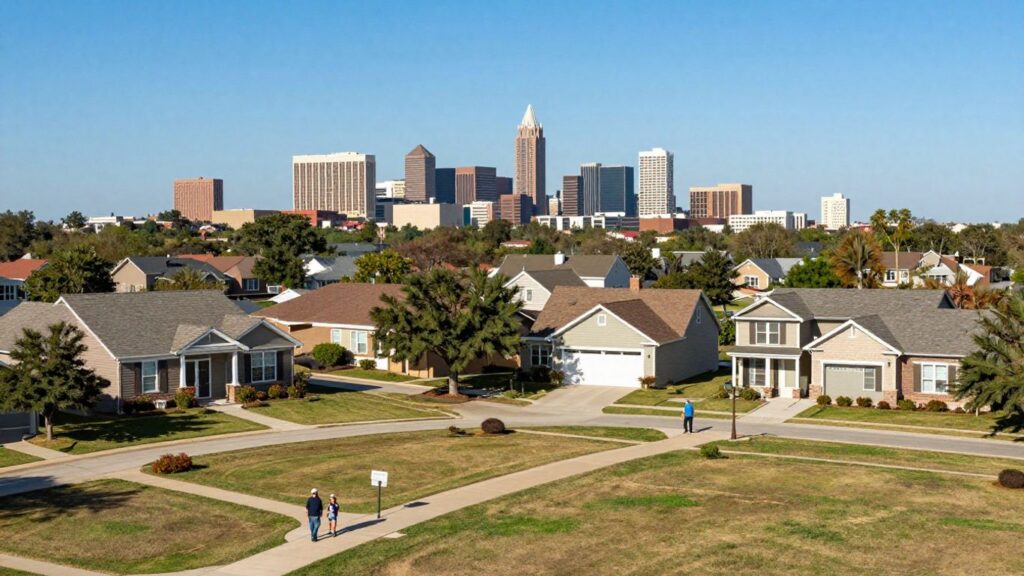
Allen offers a highly suburban environment north of Dallas with established neighborhoods, newer subdivisions, parks, athletic facilities, shopping, and access to the wider Dallas-Fort Worth employment market. It is a practical option for families who want organized suburban amenities without moving far outside the North DFW growth corridor.
The city should not be treated as one uniform housing market. A newer subdivision can have very different lot sizes, HOA rules, road access, and tax implications from an older neighborhood closer to established services.
For school-focused households, verify the exact assigned campus and current district information rather than relying on a citywide reputation. Also test the commute during normal work hours, because North DFW traffic can change the value of an otherwise attractive home.
Best Places in Texas for Veterans and Military Families
For Veterans, a city can be attractive for reasons that never appear in a generic cost-of-living ranking. Access to military installations, VA health care, Veteran networks, specialized employment, and a community familiar with military life can reduce friction after a PCS, transition, or retirement.
4. San Antonio: Best Overall Texas City for Veterans
San Antonio remains one of the strongest Veteran and military markets in Texas because Joint Base San Antonio ties together Fort Sam Houston, Lackland, Randolph, and Camp Bullis within a large metropolitan area. The city combines that military presence with broad health care, employment, cultural, and housing choices.
VA access is another major advantage. The South Texas Veterans Health Care System serves Veterans across southern Texas and includes the Audie L. Murphy Memorial Veterans Hospital in San Antonio plus community-based clinics.
The tradeoff is geography. San Antonio is spread out, and living near one base, employer, or medical facility can create a long drive to another. Veterans should choose the side of the metro based on the installation, hospital, job center, and family routine they expect to use most. Veterans considering the city should combine location research with their VA loan in Texas qualification and full monthly housing budget.
5. Killeen: Best for Direct Fort Hood Access
Killeen is closely tied to Fort Hood, the Army installation west of the city. The Army returned the installation from the Fort Cavazos name to Fort Hood in 2025, and current 2026 official Army pages use Fort Hood. That correction matters for relocation searches, base information, and property listings.
For Veterans and military families, Killeen offers direct access to the Fort Hood community and local VA care. The VA Central Texas Health Care System operates a Killeen VA Clinic, while the Olin E. Teague Veterans’ Center in Temple provides a wider range of hospital and specialty services.
Killeen is best for buyers who value military proximity more than a large-city job and entertainment market. Compare Killeen with nearby Harker Heights, Copperas Cove, Belton, and Temple if commute, resale, school assignment, or access to services matters more than the city label itself. Buyers considering housing around the installation can also review Fort Hood housing in Texas before choosing between Killeen and nearby communities.
6. El Paso: Best for Fort Bliss and West Texas Veteran Life
El Paso deserves a place on a Veteran-focused Texas shortlist because Fort Bliss is integrated into the city and the VA El Paso Healthcare System has its main clinic at Fort Bliss, next to William Beaumont Army Medical Center. That creates a concentrated military and Veteran health-care ecosystem on the far western edge of Texas.
The lifestyle is very different from Central or East Texas. Buyers get a desert climate, mountain views, a binational culture, and a metro area that is geographically distant from Texas’s other major cities.
El Paso is a strong fit for Veterans who want Fort Bliss access and prefer the West Texas environment. It is less convenient for households that expect frequent driving to Dallas, Austin, San Antonio, or Houston. Veterans considering this market can review El Paso VA resources for Veterans alongside home prices, commute, and financing options.
Best Texas Cities for Homebuyers and Job Access
Austin, Dallas, and Houston all provide large employment markets and wide housing choices, but the ownership risks are different. Choose among them by job location, desired home type, commute tolerance, and the insurance and property-cost profile of the exact neighborhood.
7. Austin: Best for Tech, Culture, and Outdoor Access
Austin remains a major technology and creative center with strong access to restaurants, music, parks, trails, and employers across the metro. Housing choices range from central condos and older homes to newer suburban development in communities north, south, and east of the urban core.
The main homebuying challenge is that location changes the value equation quickly. A buyer may gain space by moving farther from central Austin, but the tradeoff can be a longer commute, tolls, or reduced access to the neighborhoods and amenities that made Austin attractive in the first place.
Austin is best for buyers who want the metro’s employment and lifestyle enough to build the housing budget around location. Compare the city with Round Rock, Georgetown, Cedar Park, Leander, Pflugerville, Buda, and Kyle when space or commute direction matters. Buyers considering new builds outside the urban core may also want to explore new construction homes in Texas.
8. Dallas: Best for Employment and Neighborhood Variety
Dallas gives buyers access to one of the country’s largest metropolitan employment regions and an unusually broad menu of housing environments. The practical search extends beyond Dallas city limits into North Dallas, Plano, Richardson, Irving, Las Colinas, Garland, Allen, Frisco, McKinney, and other DFW communities.
That variety is the strength and the complication. A buyer can optimize for urban living, airport access, school district, lot size, newer construction, nightlife, or office commute, but rarely all of them at once.
The most important due diligence is a real peak-hour commute and a neighborhood-level ownership budget. Tolls, insurance, property taxes, HOA fees, and drive time can matter more than a small difference in purchase price. Before setting a purchase ceiling, buyers can use a VA loan affordability calculator to compare payment scenarios.
9. Houston: Best for Job Diversity and Broad Housing Choice
Houston combines a large employment base with an enormous range of housing, including urban neighborhoods, established suburbs, master-planned communities, townhomes, and newer development across the metro. Energy, health care, aerospace, manufacturing, logistics, and professional services all contribute to the region’s job diversity.
For homebuyers, flood, drainage, and insurance are part of the property search, not an afterthought. The Texas Department of Insurance notes that most homeowners policies do not cover flood damage, and coastal or Galveston Bay-area homes may also need separate wind or hail coverage. Veterans planning a purchase in the area can also review Houston home loans while comparing neighborhoods and monthly costs.
Houston is a strong fit for buyers who want a large job market and many housing choices and are willing to perform property-specific risk research. Check flood maps, prior claims where available, drainage, elevation, insurance quotes, roof age, and commute before comparing two homes only by list price. Buyers interested in building rather than purchasing an existing property can also compare best home builders in Houston.
Texas Veteran Homebuying Benefits to Consider Before Choosing a City
For a Veteran, the best city can change once financing and property-tax benefits are included. A home that appears slightly more expensive may have a better long-term budget if the buyer qualifies for a tax exemption or a state Veteran loan benefit.
VA Home Loan Benefits
Eligible Veterans, service members, and qualifying surviving spouses can use VA-backed financing for a primary residence. With full entitlement and lender approval, VA purchase financing can allow no down payment when the sales price does not exceed the appraised value, and VA loans do not require monthly private mortgage insurance.
For a current explanation, review Security America Mortgage’s VA Home Loan Guarantee guide.
Texas Veterans Land Board Home Loans
Texas also offers a separate state benefit through the Veterans Land Board. For 2026, the Veterans Housing Assistance Program allows eligible Texas Veterans and Military Members to finance up to $832,750 on qualifying fixed-rate home loans, and Veterans with a VA service-connected disability rating of 30% or greater can qualify for a discounted VLB interest rate.
A Texas Vet loan and a federal VA loan are not the same program. Compare eligibility, rate, down payment, property, and lender requirements before assuming one automatically produces the lower total cost.
Compare the programs in Security America Mortgage’s Texas Vet Loan vs. VA Loan guide.
Texas Disabled Veteran Property Tax Exemptions
Texas property-tax benefits can materially affect the monthly cost of owning a home. A qualifying Veteran receiving 100% VA disability compensation because of a 100% disability rating or individual unemployability can qualify for an exemption of the total appraised value of the Veteran’s residence homestead under Texas law.
Veterans with lower disability ratings may qualify for a partial disabled-veteran exemption based on the rating. The Texas Comptroller currently lists maximum exemption amounts of $5,000 for 10%-29%, $7,500 for 30%-49%, $10,000 for 50%-69%, and $12,000 for 70%-100%, subject to the specific statutory rules.
How to Compare Texas Neighborhoods Before You Buy
After you choose a metro area, the neighborhood decision should become much more detailed. Two homes in the same city can have different school assignments, insurance costs, tax bills, flood exposure, commute patterns, HOA restrictions, and resale dynamics.
- Calculate the full monthly housing cost. Include principal and interest, property taxes, homeowners insurance, flood or wind coverage when applicable, HOA dues, and a maintenance reserve.
- Test the commute at real travel times. Drive the route during the hours you expect to use it, including toll roads and school traffic.
- Verify the exact school assignment. District boundaries and assigned campuses can differ across nearby subdivisions.
- Get an insurance quote before the option period ends. Roof age, claims history, flood zone, wind exposure, and construction details can materially change the premium.
- Review flood and drainage information. Check FEMA flood maps, local drainage history, elevation information, and the property’s own history where available.
- Read HOA and deed restrictions. Rules affecting parking, rentals, exterior changes, fences, sheds, and home businesses can change how you use the property.
- Visit at different times. Traffic, noise, parking, lighting, nearby commercial activity, and neighborhood use can look different at night or on weekdays.
- Compare resale flexibility. A highly specific location can be perfect for your routine but may appeal to a narrower buyer pool later.
This process is more reliable than choosing a home because its city appears on a ‘best places’ list. The neighborhood and property are where the real ownership experience happens.
Common Mistakes to Avoid When Moving to Texas
Most expensive relocation mistakes come from underestimating the difference between the listing price and the real cost of living in a specific property. Texas markets can look similar on a map while behaving very differently in insurance, taxes, traffic, and weather exposure.
- Choosing a city before choosing a job or commute direction. A good metro can become a poor fit if the daily drive crosses the busiest part of the region.
- Relying on a citywide school reputation. Always verify the assigned campus and current information for the exact address.
- Ignoring homeowners insurance until closing. Insurance can change the payment and may reveal property issues that affect the purchase decision.
- Assuming homeowners insurance includes flood. Most Texas home policies do not cover flood damage.
- Using an outdated military-base name. In Central Texas, the current 2026 name is Fort Hood, not Fort Cavazos.
- Treating The Woodlands as an incorporated city. It is a master-planned community served by The Woodlands Township.
- Comparing homes only by list price. Taxes, insurance, HOA dues, maintenance, tolls, and commuting can erase an apparent price advantage.
- Making an offer before VA or VLB pre-approval. Veterans should confirm entitlement, qualification, and the financing structure before setting a hard purchase budget.
- Assuming every Veteran tax exemption is the same. Texas exemptions depend on disability rating, type of property, and statutory eligibility.
- Skipping property-level flood and drainage research. Houston and other Texas metros can contain very different risk profiles within the same city.
The safest relocation strategy is to narrow the state to a metro, the metro to a few neighborhoods, and then compare properties with the same financial and risk checklist.
Final Verdict: Where Is the Best Place to Live in Texas in 2026?
There is no single best place to live in Texas, but there is usually a best-fit metro for a specific household. The Woodlands, Round Rock, and Allen are strong family-oriented choices; San Antonio, Killeen, and El Paso stand out for military and Veteran access; and Austin, Dallas, and Houston give homebuyers three very different large-market options.
The final decision should happen at the neighborhood and property level. Compare the full monthly payment, insurance, taxes, flood or storm exposure, commute, school assignment, medical access, HOA rules, and resale flexibility before treating any city as the winner.
Planning to Buy a Home in Texas With VA Benefits? Security America Mortgage is licensed in Texas and specializes in VA home loans. We can review your eligibility, Certificate of Eligibility, entitlement, credit, income, target payment, and Texas homebuying options before you make an offer. Start your VA loan application or call (855) 701-2816.
Frequently Asked Questions
What are the best places to live in Texas for families in 2026?
The Woodlands, Round Rock, and Allen are strong family-oriented options because they combine suburban housing with parks, recreation, and access to major employment regions. The best choice still depends on the exact school assignment, commute, and monthly housing cost.
What is the best Texas city for Veterans?
San Antonio is one of the strongest all-around choices because of Joint Base San Antonio, a large military community, and the South Texas Veterans Health Care System. Killeen and El Paso are also strong options for proximity to Fort Hood and Fort Bliss.
Is Fort Cavazos still the name of the Army post near Killeen?
No. The Army returned the installation to the Fort Hood name in 2025, and current 2026 Army information uses Fort Hood.
Is The Woodlands a city?
No. The Woodlands is a master-planned community served by The Woodlands Township, a special-purpose local government north of Houston.
Is Austin a good place to buy a home in 2026?
Austin can be a strong fit for buyers prioritizing technology, culture, outdoor access, and the Austin-area job market. The decision should be based on the exact neighborhood, commute, taxes, insurance, and total monthly payment.
Is Dallas or Houston better for homebuyers?
Dallas offers a very broad DFW employment and neighborhood network, while Houston offers a large job market and extensive urban and suburban housing choices. Houston buyers should pay especially close attention to flood, drainage, and insurance.
Does homeowners insurance in Texas cover flooding?
Most homeowners policies do not cover flood damage. Buyers should evaluate whether separate flood coverage is required or appropriate for the property.
What should Veterans check before moving to Texas?
Check VA loan eligibility and entitlement, nearby VA health care, military-base access if relevant, Texas Veterans Land Board options, disabled-veteran property-tax exemptions, and the full monthly cost of the property.
Do 100% disabled Veterans pay property tax on a Texas homestead?
A qualifying Veteran receiving 100% VA disability compensation because of a 100% disability rating or individual unemployability can qualify for an exemption of the total appraised value of the residence homestead, subject to Texas eligibility rules.
What is the Texas Veterans Land Board home loan limit in 2026?
The Veterans Land Board currently lists up to $832,750 for eligible Veterans and Military Members under its home loan program, subject to program and credit requirements.
What is the most important thing to check before buying in Houston?
Check the property’s flood and drainage exposure, insurance options, prior property information, commute, and total monthly ownership cost rather than relying on the citywide housing market.
How should I choose between a Texas city and suburb?
Start with commute, budget, home type, school or service needs, and lifestyle. Cities can provide closer access to employment and entertainment, while suburbs may offer more space or newer housing. The better choice is the one that fits your routine and long-term plan.