

Buying a home is a big deal, and figuring out the right loan can feel like a puzzle. If you’re looking at government-backed options, you’ve probably heard of FHA and VA loans.
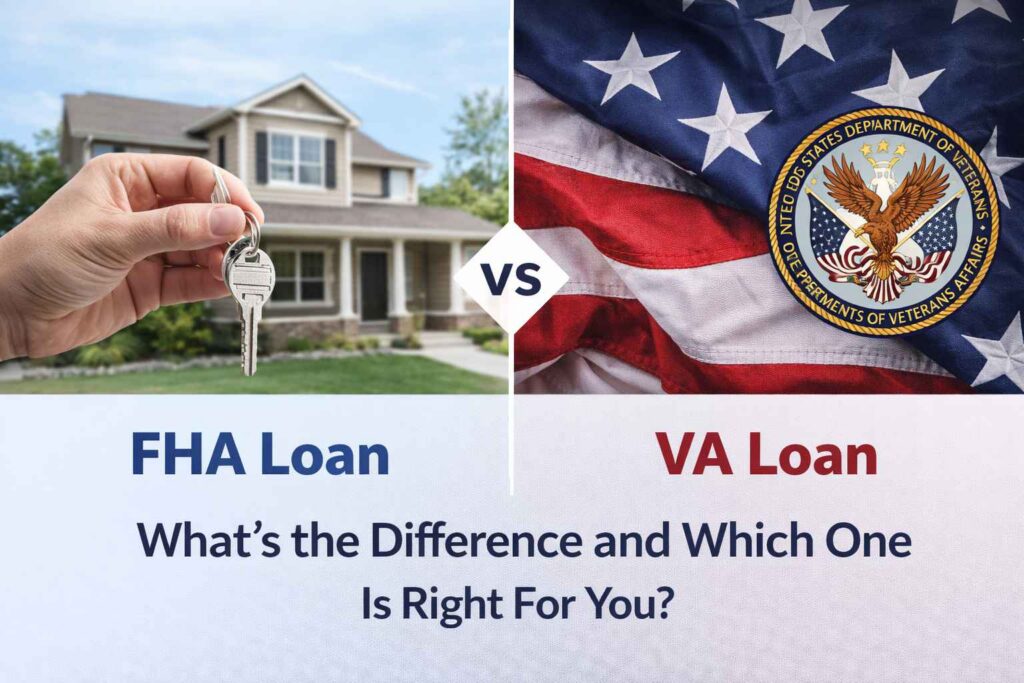
They both help people get into homes with easier rules than regular loans, but they’re not the same. We’ll break down the FHA vs VA Loan differences so you can see which one might be a better fit for you.
Understanding FHA Loans
Okay, let’s dive into FHA loans. They’re a big deal, especially if you’re trying to buy your first home or perhaps don’t have the best credit score right now. Essentially, an FHA loan is a mortgage that is insured by the Federal Housing Administration.
This insurance is what makes it possible for lenders to offer these loans with more flexible terms than you might find in a typical, conventional mortgage. They’re a common option, in part because they can help make homeownership more attainable.
What is an FHA Loan?
An FHA loan is a mortgage program aimed at helping folks win the keys to their own homes. These loans are insured by the Federal Housing Administration, an agency within the United States Department of Housing and Urban Development. What this means is that if the borrower defaults on the loan, then the FHA pays for any loss to the lender.
This insurance is a major factor behind the fact that FHA loans typically have smaller down payments or more forgiving credit score requirements. And that’s with good reason, they are a form of government-backed home loan that has made millions turn the keys on their own American dream.
Pros of FHA Loans
This is for some very good reasons, which is why an FHA loan may be right for you. Then there’s the down payment, which can be as little as 3.5%, for borrowers with credit scores of 580 or more. That’s a massive bonus if socking away a giant down payment seems out of reach at the moment.
Eligibility has relatively few restrictions compared to conventional loans, so they can be ideal for those with imperfect credit histories. In addition, the mortgage insurance premiums (albeit an extra cost) serve to protect the lender and enable you to purchase a home sooner. These are a few of the main FHA loan advantages.
- Lower Credit Score Requirements: You can frequently qualify with credit scores in the high 500s, significantly below what most conventional loans require.
- Low Down Payment: With a minimum 3.5% down payment, enter homeownership sooner rather than later!
- Assumable Mortgages: Depending on circumstances, an FHA loan can be passed on to a new buyer when you sell your home.
- Competitive Interest Rates: FHA loan rates are typically more competitive, locked in, given the lower risk of entry.
FHA loans, in particular, are great for those who may not be able to get approved for other mortgages because of credit history or limited funds for a down payment. They offer a path to homeownership that may otherwise be unattainable.
Cons of FHA Loans
Now, it’s not all sunshine and roses. MIP (mortgage insurance premium) is charged on FHA loans. There is an up-front premium that you pay at closing, and there’s also an annual premium that you can pay monthly. For loans made after June 3, 2013, if your down payment is less than 10 percent, that annual MIP usually continues for the life of the loan.
That can add a considerable amount to your monthly payment and the total cost of the loan over time. FHA loans also have limits on the loan amount, depending on where you live, and can only be used for primary residences. And you’ll have to satisfy certain FHA loan requirements, plus the property itself must conform to FHA standards, which may be tighter than for conventional loans.
- Mortgage Insurance Premiums (MIP): Mortgage insurance is required upfront and annually, adding to the costs.
- Loan Limits: Each loan product has a limit for how much you can borrow, and it might not cover all of your expenses if you’re in a high-cost area.
- Primary Residence Only: You cannot use an FHA loan to purchase a vacation home or an investment property.
Keep these points in mind when thinking about whether an FHA loan is a good match for you. And while it could be a great choice for many people, especially if you are seeking out the best home loan for first-time buyers, it’s always helpful to look at the costs and weigh whether it may help or hurt your chances of buying a home.
Understanding VA Loans
VA loans are an incredible home-buying option for veterans, and some of the VA loan benefits for veterans outweigh any other type of loan. They’re like a special thank you for your service from the government. These home loans are meant for military members, veterans, and eligible surviving spouses to purchase a home.
What is a VA Loan?
A VA loan is a type of mortgage that’s partially backed by the U.S. Department of Veterans Affairs (VA). This guarantee simply means that, in the event you, the borrower, default on the loan, the VA will reimburse a portion of your loss to the lender.
This drastically minimizes the risk for banks and other mortgage lenders, which is why they can provide ineligible service members and veterans with such favorable terms. It has one of the top mortgages for veterans.
Pros of VA Loans
Several compelling VA loan benefits make them a top choice:
- No Down Payment Required: Most borrowers with full entitlement can finance 100% of the home’s value. That’s a huge advantage, which frees up your cash for other expenses or investments.
- No Private Mortgage Insurance (PMI): VA loans do not require PMI, even with no down payment, unlike conventional loans and many FHA loans. This will also save a considerable amount of money monthly.
- Competitive Interest Rates: VA loans typically offer lower interest rates than other types of loans. Thanks to the VA guarantee, lenders consider them to be less risky.
- Limited Closing Costs: The VA caps some of the fees lenders can charge, and the seller may also be able to help cover some of your closing costs.
- No Prepayment Penalties: You won’t be charged a fee for paying off your mortgage sooner than planned.
Cons of VA Loans
While VA loans are great, there are a few things to keep in mind:
- VA Funding Fee: Most borrowers are required to pay a one-time VA funding fee, which varies depending on service history as well as whether it’s the first use. This fee supports the operation of the program and lowers costs to taxpayers. However, certain veterans with service-connected disabilities are exempt from this charge.
- Property Requirements: To consider your home safe, sound, and sanitary, it must meet the VA’s Minimum Property Requirements (MPRs). This can create problems sometimes if a seller isn’t cooperative in making necessary repairs
- VA Loan Requirements: While the VA doesn’t have a minimum credit score, most lenders do, usually around 620. You’ll also need the VA’s service requirements to obtain your Certificate of Eligibility (COE). Explore eligibility and VA loan requirements on the official VA website.
VA loans are a tremendous weapon for homeownership, but knowing the peculiarities, such as the VA funding fee and property standards, is essential. As always, it is wise to shop offers among different lenders to ensure you are getting the rate and terms that best fit your needs. Remember, these loans are a reward for your service, so you should be aware of all the home-buying options available to veterans.
Which Loan Is Better: FHA or VA?
When comparing government mortgage options, understanding how FHA loans differ from VA loans is a significant step forward. Both are intended to ease homeownership, but they target different people and come with their own rules. Age: So, let’s first try to compare FHA vs. VA mortgage eligibility and other key elements side by side.
Eligibility Requirements
This is likely the biggest difference. FHA loans are open to just about anyone with minimum acceptable credit and income. They’re a good choice if you are a first-time homebuyer or if your credit score isn’t so great.
On the other hand, VA loans are a perk exclusively for military members, including active-duty service people, veterans, and qualifying surviving spouses. It’s your service history, not just your credit score, that is the key to VA loan qualification.
If you’re wondering whether a family connection to military service qualifies you, see our guide on whether a child of a veteran can get a VA loan. Reserve and National Guard members also have a path to eligibility our reservist VA loan guide covers the specific service requirements.
Down Payment and Mortgage Insurance
Here is another big area in which they differ. With an FHA loan, you’ll need at least 3.5% down, provided your credit score is 580 or higher. Additionally, FHA loans require both an upfront mortgage insurance premium (UFMIP) as well as an annual mortgage insurance premium (MIP), which is included in your monthly payments.
| Feature | FHA Loan | VA Loan |
|---|---|---|
| Minimum Down Payment | 3.5% (580+ credit) | $0 for most eligible borrowers |
| Upfront Mortgage Insurance | Yes (UFMIP) | No (VA Funding Fee instead) |
| Monthly Mortgage Insurance | Yes — often for life of loan | No |
| Funding Fee | N/A | One-time, often financed into loan |
VA loans, in contrast, are known for their no-down-payment option. You can finance 100% of the home’s value for most eligible borrowers. Rather than monthly mortgage insurance, VA loans typically just charge a one-time funding fee that can often be included in the loan itself. This depends on your type of service and whether it is your first time using the benefit.
Interest Rates and Closing Costs
VA loans, in general, have lower interest rates than FHA loans. This is in part because VA loans have historically had lower default rates, making them less risky for lenders. Another big piece of support is the VA’s guarantee. Although both loan types may incur closing costs, you will save money over time with a VA loan because there’s no monthly mortgage insurance.
FHA loans, with the ongoing mortgage insurance premiums, may also add up to a considerable portion of your monthly housing expenses. When comparing these government-backed mortgage options, it’s helpful to look at the total cost over the lifetime of a loan, not just the starting numbers.
Credit Score Requirements
Neither program sets a hard minimum through the government itself, but lenders apply their own standards. FHA loans are generally accessible starting around 580. VA loans typically require around 620, though this varies by lender. Review the minimum credit score for a VA loan to understand how lender overlays affect your options.
Interest Rates and Total Cost
VA loans consistently carry lower interest rates than FHA loans — driven by the VA’s guarantee and VA loans’ historically lower default rates. When you combine the rate advantage with the absence of monthly mortgage insurance, the long-term cost difference between a VA loan and an FHA loan on the same purchase price can reach five figures over a 30-year term.
Use the VA loan calculator to model your specific scenario, and the VA loan affordability calculator to confirm how much home each option supports at your income level.
Debt-to-Income Ratio
Both programs evaluate your debt-to-income ratio as part of underwriting. VA loans also include a residual income requirement, a minimum amount left over each month after all obligations are paid , which is unique to the VA program and provides an additional financial safety net for borrowers.
Can You Switch from an FHA Loan to a VA Loan?
Yes and it’s often worth doing. If you currently have an FHA loan and have since become eligible for VA benefits, refinancing into a VA loan through an FHA to VA refinance eliminates your monthly mortgage insurance payment and may also lower your interest rate. That combination can meaningfully reduce your monthly payment and total loan cost.
The VA refinance calculator helps you estimate whether the savings justify the refinance.
Conclusion
Choosing between an FHA loan and a VA loan really comes down to your personal situation. If you’re a veteran, active-duty service member, or an eligible surviving spouse, the VA loan is usually the better deal, with no down payment, no monthly mortgage insurance, and often lower interest rates.
That can save you a lot of money over the years. But if you don’t qualify for VA benefits, FHA loans are still a solid option, especially if your credit isn’t perfect or you don’t have a big down payment saved up.
Frequently Asked Questions
Who can get an FHA loan versus a VA loan?
FHA loans are for anyone who can qualify, like first-time homebuyers or buyers with less-than-stellar credit. VA loans, on the other hand, are a special benefit for military members and veterans, and some surviving spouses. It’s like a thank-you for their service.
Do I have to put money down for these loans?
For VA loans, there is often no down payment at all (YAY!) For FHA loans, they typically have 3.5% down payment, but nonetheless, it’s relatively less than many other loans.
What about mortgage insurance?
This is a big difference. With FHA loans, you must pay both an upfront mortgage insurance premium and an annual one that you pay on a monthly basis. VA loans do not require monthly mortgage insurance. Instead, there is a one-time “funding fee,” which may sometimes be waived for some veterans.
Are interest rates different for FHA and VA loans?
Overall, VA loans usually have lower interest rates than FHA loans. The reason for that is that VA loans are better backed by the government, which makes them less of a risk to lenders. This lower rate can save you a ton over many years.
Can I use both an FHA loan and a VA loan at the same time?
You’re only eligible for one of each for a specific home purchase. You’ll need to choose the one that seems best for you. If you qualify for a VA loan, it typically makes the most financial sense because of the savings.
If I have an FHA loan now, can I switch to a VA loan later?
Yes, you absolutely can! Once you become eligible for a VA loan, refinance your FHA loan into a VA loan. That’s often a really good idea, since you can shed that pesky FHA mortgage insurance payment once and for all.