

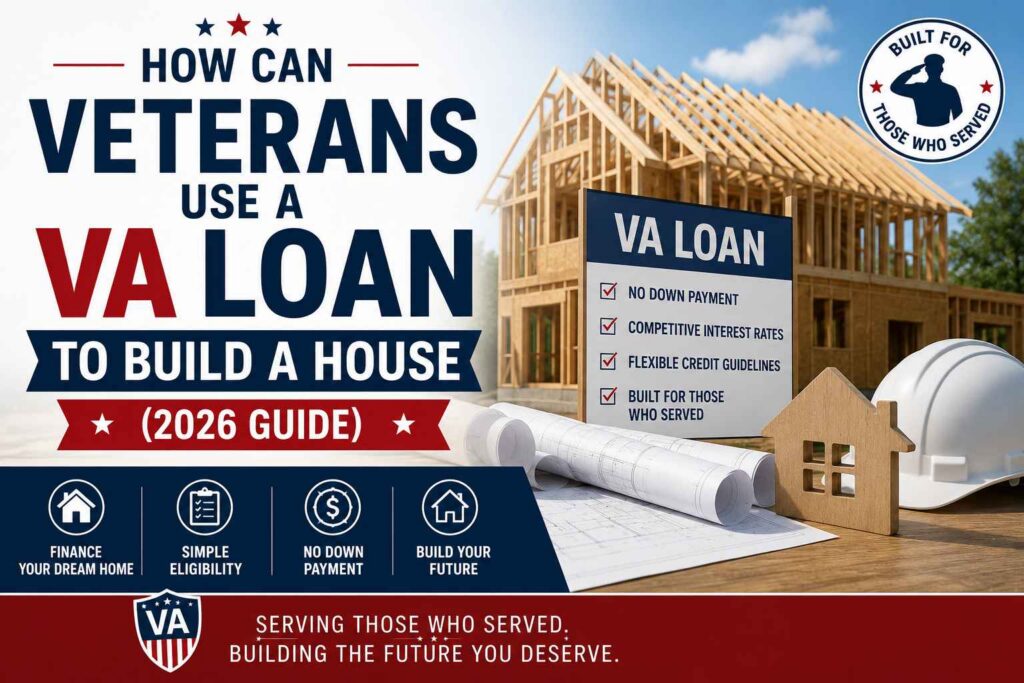
Thinking about building your dream home using your VA loan benefit? It’s totally possible, but the process is a bit different than just buying an existing place. You’ve earned these benefits, so let’s talk about how you can use a VA loan to build a house.
We’ll break down what you need to know to get started, from finding the right builder to understanding the loan itself. It might seem like a lot, but with a little planning, you can make it happen.
Understanding the VA Construction Loan
So you are considering building the home of your dreams instead of buying an existing one? This is where a VA construction loan comes in. This loan covers both the land purchase and construction costs under a single loan, so veterans don’t need separate financing for each stage, notably the land purchase, as well as construction costs. This is not unlike a VA loan you would get for a traditional house you purchase.
Consider it a VA-supported construction loan that gives you those same zero-down payment and no private mortgage insurance (PMI) advantages. This is a great option to have a home built exactly how you want it. In fact, you can use it to finance the cost of the land if you do not own land yet. In fact, this is an important aspect of using a VA mortgage for new construction.
VA Loan vs. VA Construction Loan: Key Differences
Although both have the same backing from the VA, there are significant differences between a standard VA loan and what is known as a VA construction loan.
- Description: A traditional VA loan is used to buy an existing home. Building a Home from the Ground Up
- VA Construction Loan Structure: A VA construction loan is typically structured as a “one-time close” (or also called a VA construction-to-permanent loan). This is the case because you only have to go through the closing process once, and then when your home is built, you simply turn into your permanent mortgage from construction financing. This differs from some traditional construction loans, which can offer you a separate closing for the permanent pay-per-use mortgage.
- Funding Disbursement: Unlike a conventional VA loan, where you receive the full amount of funds at closing. Construction loans are disbursed in phases (or “draws”) as construction continues and passes inspection.
- Appraisal: A VA construction loan needs an appraisal based on the property “as-completed,” meaning that the lender provides a value for what the home is expected to be worth after construction ends. It is the value that determines your loan size.
The VA construction-to-permanent loan is especially attractive because it streamlines the process. You will lock your interest rate before the construction begins, and you only have one set of closing costs. This can save you time, money, and a lot of hassle compared to re-qualifying for a mortgage after the build is complete!
Eligibility Requirements for a VA Construction Loan
Well, you are looking at using a VA construction loan to build your forever home. That’s awesome! However, before you start selecting paint colors, we should discuss who is really qualified. The silver lining is that if you’re eligible for a regular VA loan, then you probably qualify for a construction loan too.
There’s a standard of guidelines that can be found at the VA, but keep in mind that every lender is free to add their own specific requirements (which are sometimes called “overlays”). As is always a good idea, check with a couple of lenders to see what they are looking for.
Who Qualifies for a VA Construction Loan?
Generally, if you meet the basic service requirements for a VA loan, you’ll meet them for a construction loan. This includes:
- Active-duty service members: Currently serving in the military.
- Veterans: Those who have completed their required service time.
- National Guard and Reserve members: If you’ve completed enough service time.
- Eligible surviving spouses: Those whose spouse died during service or from a service-related disability.
Lenders will look beyond your service and examine your financial picture. Of course, they’ll pull your credit score, although the VA has no minimum threshold; most lenders shy away from low scores (generally mid-600s or above). It also depends on how stable your income is, as you will be expected to have had a steady income for a minimum of two years.
On top of that, there is a residual income test for the VA as well, which means you need to have so much money left after paying all your monthly bills. This figure varies depending on where you live and your family size.
And yes, remember that the home you build has to be your primary home. This isn’t for land with a vacation home or investment properties. The property itself must also qualify under VA guidelines known as Minimum Property Requirements (MPRs), which means it has to be safe, sanitary, and structurally sound. Your builder should know this inside out.
When you set out to build a new house, you’re going to need a fixed-price contract with your builder. This is different from buying a previously owned home. The Contract will cover everything needed for a certificate of occupancy, including labor, materials, site prep, and utilities.
For instance, if expenses increase and it is not a lump-sum contract, you would probably pay more for that. This is why having a fixed-price contract is such an excellent choice.
Certificate of Eligibility (COE)
This is one really important document. Your Certificate of Eligibility, or COE, verifies your VA loan entitlement status to the lender. This can usually be obtained online through the VA’s benefits platform, or a lender can often help you get your COE.
That is a simple requirement, but you will need it any time that you intend to move forward with any VA-backed loan, including home construction loans. It may help the speed of things quite a bit if you have your COE done upfront, even as this typically requires some lead time.
VA construction loan eligibility is based on your service, but the lender must prove you are financially acceptable and the builder is eligible. It is a layered process, but doable with proper preparation. This is a great choice for a VA loan from the home builders if you want to build your own home of custom design.
The Process of Using a VA Loan to Build a House
So, you’re thinking about building a house with a VA loan? That’s awesome! It’s a bit different from buying an existing home, but totally doable. Let’s break down how to get a VA loan for a new build.
Finding a VA-Approved Builder
Firstly, you need a builder, not just any builder, though. You’ll want to work with someone who specializes in VA construction loans. The VA no longer maintains a formal builder registration or approval program, but lenders do run construction background and license checks, as well as most financial certifications of the builder.
You should be mindful of working with builders who are knowledgeable in the VA loan process (or at least willing to learn). They will be required to submit plans for construction, an overall budget, and a contract for your lender’s review. As with any process, the results will vary based on your workflow, but finding the right builder is a significant key.
Securing Financing and Loan Approval
This is where you need to get serious about the financial detail. You will have to get pre-approved by a lender who provides VA construction loans. Just keep in that mind that not all VA lenders are creating these loans, so do your research. You will submit your info as if it were a normal VA loan.
Your lender will then evaluate the builder’s plans, contract, and budget.”They will even order an ‘as-completed’ appraisal to determine what the home will be worth once construction is finished. That education usually provides your acceptable appraisal number, which is often the maximum loan amount you can get. There’s quite a bit of legwork involved with this, but if you can get this approval, you’re one step closer.
Construction Phase and Draw Schedule
Now that you have closed on the construction loan, time to begin building! Your lender does not simply give you the whole pile. Instead, funds are disbursed in phases or as draws. Your builder may finish some phases of the build, and then the lender will send someone out to check the work.
When the pre- or final inspection has passed and meets VA standards as outlined in the approved plans, the lender will release a subsequent draw. This will happen several times throughout the build, normally. This is just a mechanism to keep the project on track, and funds are utilized correctly.
Creating a house is one of the largest commitments, and having a VA construction loan involves an extra step. However, you can build your dream home with some forethought and the ideal team. Do not be afraid to question your lender and builder at each phase.
Benefits of Using a VA Loan for Home Construction
So, you have the thought of constructing a house with your VA benefits? That’s pretty cool. This is a great way to get exactly the home you want rather than just what becomes available. When it comes to military financing for building your own home, you get a say in everything from the floor plan to the finishes!
Perhaps one of the greatest benefits is that it works with your VA loan as well. In other words, you almost always get into your custom home free-and-clear to construction (no down payment plus!), which is a huge advantage over most of those typical construction loans out there. And you won’t need to pay private mortgage insurance (PMI), which will save you money on a monthly basis. It certainly makes it seem more realistic to finance a new build with the VA benefits.
Here are some of the key advantages:
- Zero Down Payment Potential: Just like a regular VA loan, you can often build without putting any money down upfront, provided you’re fully entitled.
- No PMI: Forget those extra monthly costs associated with conventional loans. Your VA loan benefit means you avoid PMI.
- Competitive Interest Rates: VA loans typically come with lower interest rates than conventional mortgages, saving you money over the life of the loan.
- Customization: You get to design and build a home that perfectly fits your needs and lifestyle, something you can’t always do when buying an existing house.
- Potential for Lower Overall Costs: While it might seem more expensive upfront, avoiding PMI and getting a good interest rate can make building with VA financing more affordable in the long run.
Building with a VA construction loan means you get to design a home around your life — not settle for whatever is available on the market. Whether you have specific accessibility needs, want a custom floor plan, or have a clear vision of what home should feel like, this is one of the most powerful ways to use the benefit you earned through your service.
A VA construction loan can help make the home-building project simpler from a financing perspective. It helps you to further concentrate on the actual process of design and building, confident that your financing is organized in accordance with your goals. It is taking full advantage of your Service benefits and making homeownership happen on your own terms.
Potential Challenges and How to Overcome Them
It’s a bit involved to build a house with a VA loan, though it’s certainly one of the best options! While you may encounter some roadblocks, the majority of these can be handled with the right planning and team.
The biggest challenge most veterans face is locating a builder who is both good at what he/she does, and VA-approved to build for you, as well as approved through your lender. Some builders may be unaware of VA loan requirements and simply may not want to deal with the additional paperwork. And this means you should perform an extensive vetting of your builder. Request references, review their previous work, and ensure they are familiar with the VA process. This means arriving at VA projects for those builders who are already experienced or willing to learn.
Another complication is the appraisal process. The VA wants to ensure that the house meets specific standards, and your appraisal must match this amount with the loan. With new construction, this can get trickier since there may not be recent sales of equivalent homes nearby. So the appraiser benefits greatly from a thorough construction contract with plans.
Here are some common issues and how to tackle them:
- Builder Approval: Some lenders have a stricter list of approved builders. Always confirm your builder is on their list or can get approved before you get too far into planning.
- Land Ownership: If you already own the land, there might be specific requirements about how it’s titled and whether it can be rolled into the loan. Sometimes, you might need to own the land free and clear for a certain period
- Construction Timeline: Delays happen. Weather, material shortages, or unexpected issues on site can push back your completion date. Having a buffer in your budget and timeline is smart.
- Draw Schedule: You won’t get all the money up front. The loan is usually disbursed in stages, called draws, as construction progresses. You’ll need to coordinate with your builder and lender to make sure these draws happen smoothly and on time.
Although sometimes, when you start to actually build, that budget is not enough. There can be unforeseen expenses, particularly with custom builds. Make sure you have a buffer, an additional 5-10% in your total project cost is always good to keep aside as insurance. Such can avoid small surprises from turning out into a big hurdle.
Lastly, keep in mind that communication is everything. Make sure to maintain communication with your lender, your builder, and whoever else is involved in the transaction. Even asking the smallest questions will help prevent greater issues in the future. That may seem excessive, but with a little time and the right people rooting for you, there is no reason why you can’t use your VA benefits to get a dream home.
Wrapping Things Up
So, building your dream home with a VA loan is definitely possible. It might seem like a lot to figure out, especially with all the paperwork and finding the right people to work with. But remember, you earned these benefits.
Don’t be afraid to ask questions, whether it’s to your lender or your builder. Getting clear answers can make a big difference in making sure you end up with a home you love, on terms that work for you. It’s a big project, but with the right approach, it’s totally doable.
Frequently Asked Questions
Can I use my VA loan to build a house?
Yes, you can use your VA loan benefit to build a new home! It’s a great way to get the exact house you want, especially if finding a home to buy is tough right now. This type of loan is called a VA construction loan, and it covers the costs of buying land, materials, and paying workers to build your home from scratch.
What’s the difference between a regular VA loan and a VA construction loan?
A regular VA loan is for buying a house that’s already built. A VA construction loan is specifically for building a new house. It covers all the costs involved in construction, from buying the land to finishing the house. Think of it as financing the whole building project instead of just buying a finished product.
Do I need a special builder to use a VA construction loan?
You need to work with a builder who is experienced and qualified. While the VA used to have a specific ID for builders, they got rid of that rule. Now, your lender will check if your builder has the right licenses, insurance, and a good history of building homes. It’s important to find a builder who knows how to work with VA loan requirements.
What if I can’t find a lender who offers VA construction loans?
Finding a lender for a true VA construction loan can sometimes be tricky because it’s a bit more complex for them. If you run into this problem, you might consider getting a regular construction loan from a builder or another lender first. Then, once the house is built, you can refinance that loan into a permanent VA loan. Some veterans also use the equity in land they already own as part of their down payment for a construction loan.
Do I have to make payments during construction?
Usually, you’ll make interest-only payments on the money that has been used so far during the building process. As more of the house gets built and more money is paid out, your payments will go up a little. You’ll start making full principal and interest payments only after the house is completely finished and the loan becomes a regular mortgage.
What happens if the building costs more than expected?
If the construction costs go over the amount you agreed on, you’ll likely have to pay the extra money yourself. This is why it’s super important to have a contract with your builder that has a fixed price. This way, you know exactly how much the house will cost, and you won’t have unexpected bills popping up later. Always ask questions and make sure you understand the contract before signing.