

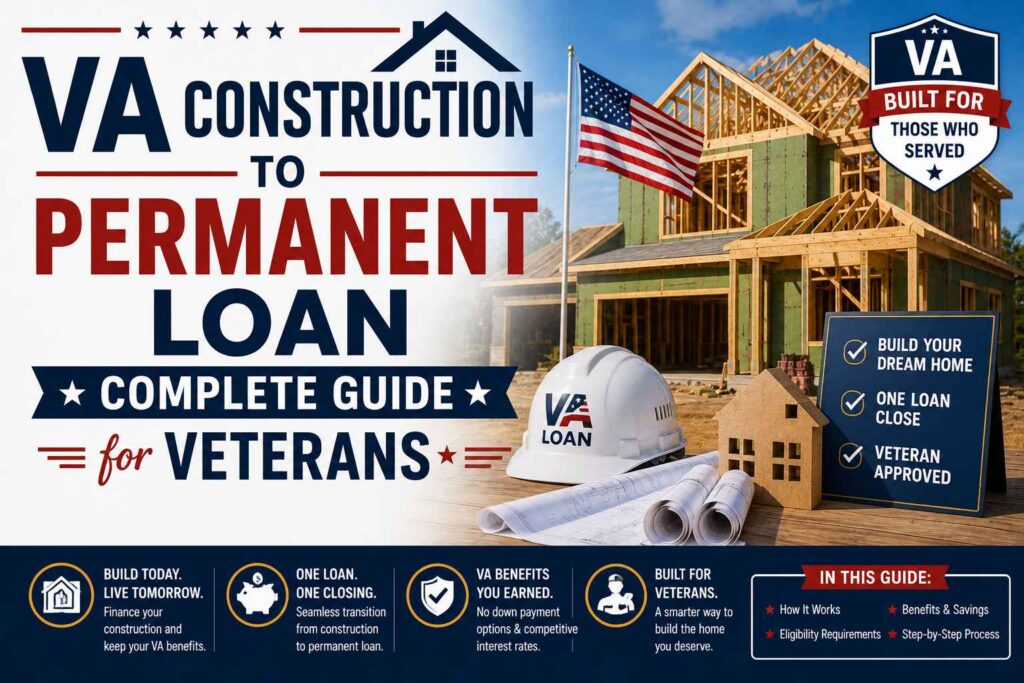
So, you’re thinking about building your own home using your VA benefits? That’s pretty cool. A VA Construction to Permanent Loan lets you build a place exactly how you want it, and it can be a really smart way to go if you’re having trouble finding something existing that fits the bill.
It’s a bit different from buying a house that’s already built, but the VA benefits you’ve earned still apply. Let’s break down what you need to know about the VA Construction to Permanent Loan process for 2026.
What is a VA Construction to Permanent Loan?
So, you’re a Veteran or active duty military and you have a vision for your dream home, one that is built your way. But, isn’t it like finding a needle in a haystack to find that ideal pre-existing home?
This is where a VA Construction to Permanent loan comes in handy. It’s a method to pay for building a completely new home from scratch with your VA home loan benefits.
How Does it Work?
Consider this loan to be a two-in-one or even two-step, loan, depending on the lender. The concept is that it pays for the house construction and then becomes your mortgage when the house is built. It is created to help make it easier to build a custom home for individuals who are eligible for a VA loan.
This usually occurs in one of two ways:
- One-Time Close: This is usually the easier path. The application and closing process is only done one time, prior to construction. The loan begins as your construction loan, and then seamlessly transitions to your permanent VA loan once the home is complete. Typically, the interest rate is fixed at the start, which is good if rates increase during the construction process.
- Two-Time Close: This is a situation where you get two closing times. Firstly, you receive a short-term construction loan to finance the construction expenses. After the home is constructed and inspected, you close again on your permanent VA mortgage, which will pay off the construction loan.
The money to build is usually paid out in increments, known as ‘draws,’ as the various stages of the construction process are finished and inspected, no matter how the funds are being paid for. This helps make sure the work is progressing as it should.
It’s important to remember that the VA itself doesn’t actually lend the money. These loans are provided by private lenders, with the VA guaranteeing a percentage of the loan. This is why you can receive benefits such as a zero down payment for qualified borrowers with this kind of loan that you may not find with conventional construction loans.
Key Benefits of a VA Construction to Permanent Loan
There are some pretty good benefits to using your VA benefit to build a home:
- Zero Down Payment: This is a great benefit for those who qualify. You can create the home of your dreams without having to have a ton of cash for a down payment.
- No Private Mortgage Insurance (PMI): As with a regular VA loan, you won’t have to pay for PMI, which can save you a significant amount of money per month.
- Personalization: You can design a home that is tailored to your preferences and requirements, including the layout and finishes. No more compromising on the features you want.
- Competitive Interest Rates: VA loans generally offer competitive interest rates when compared to conventional loans.
- Single Closing (with One-Time Close): This is a simpler form of closing and can save you closing costs as you pay them only one ti
Eligibility Requirements for VA Construction to Permanent Loans
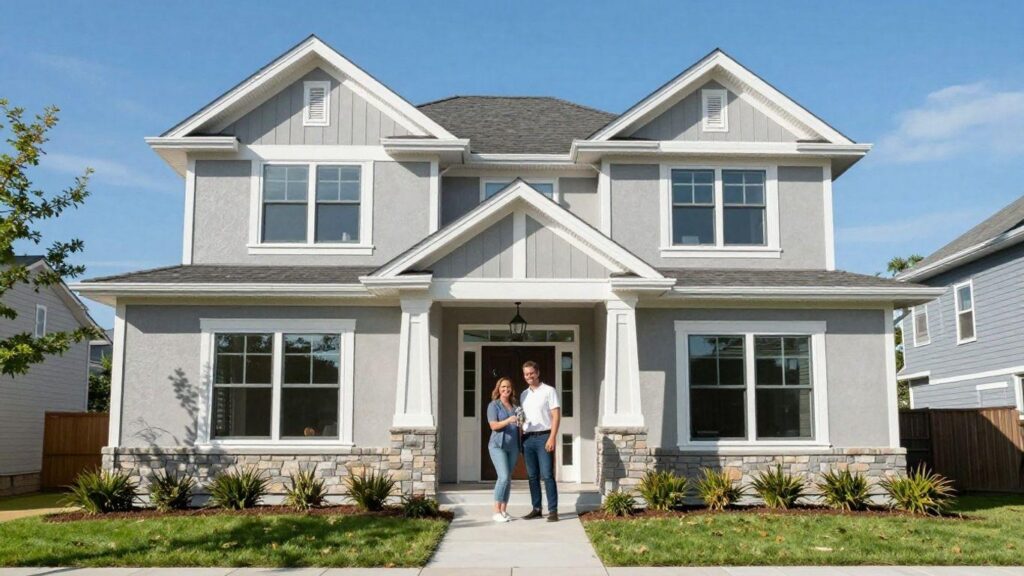
So, you’re thinking about building your dream home using VA benefits? That’s awesome! But before you start picking out paint colors, let’s talk about who actually qualifies for financing new construction with VA benefits. It’s not just about having served; there are a few other boxes you need to tick.
Who Qualifies?
First off, you’ll need to be an eligible Veteran, active-duty service member, National Guard or Reserve member, or a surviving spouse. This is usually proven with a Certificate of Eligibility (COE) from the VA. You’ve got to plan on living in the house yourself, too – it’s for your primary residence only. While the VA doesn’t set a hard minimum credit score, most lenders will want to see at least a 620.
They also look at your debt-to-income ratio, but here’s a cool part: the VA uses a residual income test. This means after all your monthly bills are paid, you need to have a certain amount of money left over. This amount changes based on where you live and how many people are in your household.
- Valid Certificate of Eligibility (COE): Proof of your military service entitlement.
- Primary Residence: The home must be where you’ll live.
- Credit Score: Generally 620 or higher, though lenders might consider lower scores with other strong financial factors.
- Residual Income: Sufficient funds left over each month after paying all major debts.
Building a house with VA benefits is a fantastic way to get into a home that’s exactly what you want. It’s a bit more involved than a standard purchase, but the payoff is huge.
Builder Requirements
This is where things get a little specific. You can’t just pick any builder off the street for a VA loan for custom homes. Your builder needs to be licensed and insured in the state where you’re building. They also need to have a good track record. While the VA used to require builders to have a special ID number, that’s not the case anymore, which simplifies things a bit.
However, your lender will still check out the builder’s experience and financial stability. They’ll also need to provide a one-year builder’s warranty on the work. And a heads-up: you can’t be your own builder; the VA doesn’t allow “self-builds” for these loans.
The construction contract also needs to be a fixed-price agreement, meaning all costs for labor, materials, and permits are set upfront. This helps prevent surprises down the road when you’re building a home with VA loan benefits.
The Application and Approval Process
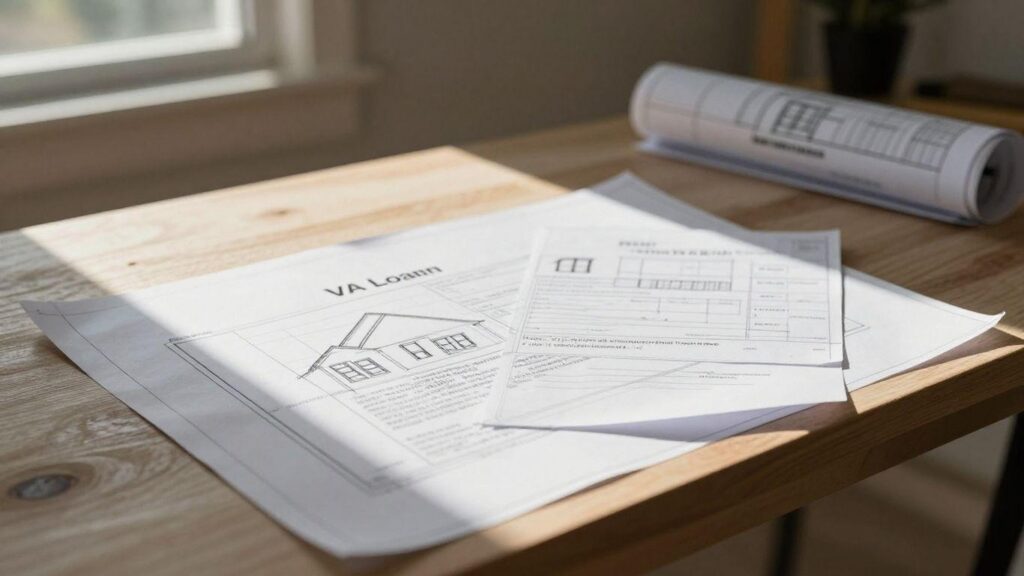
Alright, so you’re thinking about building your dream home with a VA construction loan. It sounds like a lot, but honestly, it’s pretty straightforward once you break it down. It’s not like buying a house that’s already standing; there are a few extra steps, but that’s part of what makes it work.
Step-by-Step Guide
Getting the ball rolling involves a few key stages. You’ll want to be organized, but don’t stress too much. Most lenders who handle these loans have done this a million times.
Get Pre-Approved: First things first, you need to know what you can afford. This is where you’ll connect with a lender experienced in VA construction loans. They’ll look at your finances – income, credit, that sort of thing – and give you a ballpark figure of your loan amount. This also involves getting your Certificate of Eligibility (COE) from the VA if you don’t already have it handy.
Find Your Builder and Finalize Plans: Now, for the fun part: picking your builder. It’s super important that your builder is VA-approved. Your lender can help verify this. You’ll also work closely with them to nail down the exact plans and specifications for your new home. Think blueprints, materials, everything. The VA has certain standards, called Minimum Property Requirements (MPRs), that the home needs to meet for safety and livability, so your plans have to line up.
Loan Underwriting and Appraisal: Once you’ve got your builder and plans sorted, the lender will submit everything for underwriting. This is where they do a deep dive into all the paperwork. At the same time, a VA appraiser will look at your plans and the proposed build to determine the home’s value once it’s finished. The VA will issue a Notice of Value (NOV), and the loan amount will be based on the lesser of the appraised value or the contract price.
Closing: This is a big one. You’ll officially close on the loan. Depending on the lender, this might be a “one-time close” where you sign all the paperwork for both the construction loan and the permanent mortgage at once, or a “two-time close” with separate closings. If it’s a one-time close, the funds for construction will be held in an escrow account.
Construction and Draws: With the loan closed, construction can begin! Your builder will start work, and as they hit certain milestones (like the foundation being poured, framing going up, etc.), they’ll request a “draw” from the lender. The lender will send an inspector out to verify the work is done correctly and meets VA standards before releasing funds. This usually happens multiple times throughout the build.
What to Expect During Construction
This is where your vision starts to take shape. It’s exciting, but also a period where communication is key.
- Draw Schedule: Funds aren’t just handed over all at once. They’re released in stages, tied to specific construction phases. Your lender will have a draw schedule, and each draw usually requires an inspection to confirm the work is completed according to the approved plans and VA guidelines.
- Inspections: Expect inspections at various points. The VA requires these to make sure the home is being built safely and meets their standards. Your lender will also conduct their own inspections to authorize fund releases.
- Change Orders: Sometimes, you might want to change something, or unexpected issues pop up. Any changes to the original plans and budget usually need lender approval. Be prepared for potential cost adjustments if you decide to make changes.
- Final Inspection: Once the house is all done, there’s a final VA inspection. This is to confirm that the finished home matches the approved plans and meets all the VA’s Minimum Property Requirements. It’s the last hurdle before your loan officially converts to your permanent mortgage.
Building a home is a significant undertaking, and the VA construction loan process is designed to protect both you and the VA. While it involves more steps than a standard mortgage, understanding each phase helps make the journey smoother. Staying in close contact with your lender and builder is your best bet for a successful build.
After the final inspection is passed and everything is squared away, your construction loan automatically converts into your permanent VA mortgage. No need for a second closing in most one-time close scenarios. You’ll then start making your regular mortgage payments on your brand-new home.
VA Construction to Permanent Loan Costs and Fees
When you’re looking into a VA construction-to-permanent loan, understanding the costs involved is pretty important. It’s not just about the price of lumber and labor, you know? There are several fees and costs associated with this type of VA homebuilding financing that you’ll want to be aware of.
First off, the big one is the VA funding fee. This is a one-time charge that helps keep the VA home loan program running without requiring a down payment. For a VA one-time construction loan, the fee is similar to a regular VA purchase loan. If it’s your first time using your VA benefit with no down payment, the fee is 2.15% of the loan amount.
If you’ve used it before, it goes up to 3.30%. Putting down at least 5% can lower this fee, and 10% or more brings it down even further. Veterans with a service-connected disability are typically exempt from paying this fee altogether.
Beyond the funding fee, you’ll have other closing costs. These can include things like the lender’s origination fee, which the VA caps at 1% of the loan amount. You’ll also likely see appraisal fees, title insurance, recording fees, and any prepaid taxes and insurance. Some lenders might also charge for a credit report or other processing fees.
Here’s a quick rundown of potential costs:
- VA Funding Fee (can often be rolled into the loan)
- Lender Origination Fee (max 1% of loan amount)
- Appraisal Fee
- Title Insurance
- Recording Fees
- Prepaid Taxes and Insurance
- Survey Fee (sometimes required)
One thing to keep in mind is the interest paid during the construction phase. With a VA one-time close construction loan, you usually only pay interest on the funds that have been drawn and used, not the entire loan amount. This interest is often financed into the total loan amount, meaning you might not have to make out-of-pocket mortgage payments while your home is being built. However, it’s a good idea to ask your lender exactly how this interest accrual works to avoid any surprises, especially if construction takes longer than expected.
It’s really about getting a clear picture of the total financial commitment. Talking through all these potential costs with your loan officer upfront can save you a lot of headaches down the road. They can help you understand which fees can be financed into the loan and which need to be paid at closing.
Comparing VA Construction to Permanent Loans with Other Options
So, you’re thinking about building a new home and wondering how a VA construction-to-permanent loan stacks up against other ways to finance your dream house. It’s a good question to ask, because not all loans are created equal, and what works for one person might not be the best fit for another.
The main difference often comes down to how many times you close and when you lock in your interest rate.
Let’s break down some common alternatives:
- Traditional Construction Loan + Separate VA Loan: This is often called a “two-time close” option. You get a short-term construction loan first to cover the building costs. Once the house is finished, you then apply for and close on a permanent VA loan. This gives you flexibility, but it means two sets of closing costs and you’ll have to qualify for the permanent loan after construction is done, which can be stressful if interest rates have gone up.
- Conventional Construction Loans: These work similarly to the traditional route but use conventional financing instead of VA benefits for either the construction phase or the permanent loan. They often require a down payment, which isn’t ideal if you’re trying to use your VA benefit to avoid that.
- Builder Financing: Some builders offer their own financing options. While this can sometimes simplify the process, it’s important to compare their rates and terms carefully against what a VA loan or other lenders offer. You might not get the same borrower protections.
Here’s a quick look at how the VA construction-to-permanent loan often stands out:
| Feature | VA One-Time Close Recommended | Traditional VA (Two-Time Close) | Conventional Construction | Builder Financing |
|---|---|---|---|---|
| Number of Closings | One | Two | One or Two | Varies |
| Interest Rate Lock | Before construction starts | After construction is complete | Varies | Varies |
| Down Payment | Typically none (using VA benefit) | May be required for construction loan | Often required | Varies |
| Closing Costs | One set | Two sets | One or two sets | Varies |
| Qualification | Once, before construction | Twice — construction then permanent | Varies | Varies |
The VA construction-to-permanent loan is designed to streamline the process. By closing just once, you lock in your interest rate early, which can be a big advantage if rates are expected to rise. Plus, you only deal with one set of closing costs and avoid the hassle of reapplying for a mortgage after your home is built.
Wrapping It Up
So, making a dream home with a VA construction loan may sound like a hassle, and, yep, it has steps. But consider it, you’re getting a home designed for you with all the VA benefits you have earned! It’s not as daunting as it sounds, particularly when you discover a great lender that is familiar with the VA procedure.
After the dust settles and the house is done, that loan becomes your permanent mortgage and you’re a homeowner! It’s a good approach to getting into a home that is truly suitable to your lifestyle because of the support that the VA provides
Frequently Asked Questions
What’s the difference between a one-time close and a two-time close VA construction loan?
A close loan is easier to do. You don’t have to sign another application, you just apply once and your construction loan magically becomes a regular mortgage when the house is complete. This means locking in your interest rate early, and paying closing costs just once. A two-time close will result in a construction loan being issued first and then getting a permanent mortgage loan once the house is constructed. This can be more expensive and could be different interest rates down the road.
What is the construction time for a VA Construction Loan?
The time taken to construct a house is typically 6 to 12 months. This varies with location of construction, intensity of builders activity, weather conditions and complexity of plans. Being prepared is a good thing to know what to come across this time to look forward to.
Do I need a down payment for a VA construction loan?
No, in general, you don’t need a down payment on a VA loan as with other VA loans, you may have your full VA entitlement and many of the time you don’t even need one. This is what allows you to cover up to 100% of the house’s value.
What are the qualifications of a VA Construction Loan for the builder?
VA Builder ID is no longer required by the VA, but lenders will be taking a close look at them. They must be licensed, insured and financially stable. Your lender will assess their expertise and ensure they are able to construct your home by the approved plans and VA standards.
How will the builder manage when there are construction issues?
If the inspector notices work not carried out in line with the approved plans or building codes, the funds for this stage of construction may be held in abeyance until it is corrected by the builder (this is known as a ‘draw’). This will save you from having to pay for poor work, but it can also result in delays. Choosing a builder with a great history is a lot important.
What are the average expenses and charges?
As when purchasing an existing home you will have closing costs, but sometimes these will be double with a two-time close. The VA Funding Fee is also a one-time fee that can be included in the loan amount. Your lender will provide you with a comprehensive list of all of the costs that you could face.
Ready to Build Your Home with a VA Construction Loan?
Security America Mortgage specializes in VA construction loans for Texas veterans. We’ll connect you with experienced builders in your area and structure the right one-time close loan for your build — at no cost to get started.
Get My Free VA Loan Consultation →