

A conventional one-time close construction loan combines interim construction financing and the long-term mortgage into one transaction that closes before the build begins. Instead of arranging a short-term construction loan and applying for a separate permanent mortgage later, the borrower, builder, plans, budget, land, and as-completed property value are reviewed upfront.
That single-close structure can reduce duplicate closing work and give the project a defined permanent-financing path, but it does not remove construction risk, draw controls, builder approval, appraisal requirements, or the possibility of updated underwriting at conversion in certain agency-eligible loans. This 2026 guide explains the conventional one-time close process in the order it happens and separates broad Fannie Mae/Freddie Mac rules from lender-specific requirements.
Quick Answer: What Is a Conventional One-Time Close Construction Loan?
A conventional one-time close construction loan, also called a single-close construction-to-permanent loan, finances the build and permanent mortgage with one initial closing. Security America Mortgage currently positions its conventional single-close option for stronger-credit borrowers, commonly around 680-720+ credit with roughly 10-20% down depending on the file, while agency-eligible conforming structures can have different maximum LTV rules. Funds are released through construction draws, the home is completed and inspected, and the loan then transitions to permanent financing under the loan documents. Exact down payment, rate-lock, requalification, property, builder, and conversion rules depend on the lender and investor program.
Key Takeaways
The single-close concept is simple, but the details are not. These are the points that should be clear before you pay for plans, sign a builder contract, or put land under a short closing deadline.
- One initial closing covers both construction financing and permanent mortgage financing.
- The lender evaluates the borrower, land, builder, plans, budget, appraisal, insurance, and construction timeline.
- Construction funds are released through controlled draws after progress and documentation are verified.
- Credit score and down payment requirements vary by lender, agency guidelines, and loan program.
- The 2026 national baseline conforming loan limit is $832,750 for a one-unit property, with higher limits in most high-cost areas.
- A one-time closing does not always eliminate later document updates or requalification requirements.
- Rate-lock and float-down options vary by loan program, so review the written terms carefully.
- Borrowers may be responsible for cost overruns, making contingency reserves and careful change-order management important.
The right loan is the one whose construction period, draw rules, required equity, conversion terms, and contingency structure match the actual build rather than an idealized budget.
What Is a Conventional One-Time Close Construction Loan?
A conventional one-time close construction loan combines the temporary financing used to build a home with the permanent mortgage intended to remain after construction. The note and security documents for the long-term financing are executed at the initial closing, and the lender controls construction proceeds while the home is built.
The word “conventional” means the loan is not insured or guaranteed by a government program such as VA, FHA, or USDA. A conforming conventional loan may be structured to meet Fannie Mae or Freddie Mac requirements, while a larger or more specialized project may use a jumbo or portfolio investor with different rules.
Security America Mortgage also offers a broader One-Time Close Construction Loan guide covering VA, FHA, USDA, and conventional options, which is useful if you want to compare eligibility before choosing a program.
Who Is a Conventional One-Time Close Loan Best For?
Conventional OTC financing usually makes the most sense when the borrower has stronger credit, meaningful savings or land equity, and a project that does not fit a government-backed program or exceeds the practical limits of those options.
- Strong-credit borrowers. Security America Mortgage currently markets conventional OTC financing around 680-720+ credit, while the exact minimum depends on the full risk profile and investor.
- Borrowers with 10-20% down or usable land equity. That is the current typical Security America Mortgage positioning, not a universal agency minimum.
- Custom-home buyers who want one financing structure from land or lot through permanent mortgage. This can reduce the need to refinance a temporary construction loan into a new mortgage later.
- Higher-value projects. Conforming loans are subject to 2026 FHFA limits, while jumbo construction-to-permanent options may be available under separate underwriting standards.
- Borrowers who do not qualify for VA, USDA, or another low-down-payment government program. Conventional financing can offer broader borrower eligibility and location flexibility when the file supports it.
If you are eligible for VA financing, compare the conventional numbers with the VA single-close option before deciding. The lower required equity and no monthly PMI can materially change total project cost.
How a Conventional One-Time Close Construction Loan Works
The cleanest way to understand the loan is to follow it from budget planning through permanent financing. Several tasks can overlap, but the builder and project generally must be fully documented before the initial closing.
Step 1: Pre-Qualification and Project Budget
The lender reviews credit, income, debts, assets, available cash or land equity, and a realistic target for total project cost. This is the right stage to compare conventional OTC with government-backed construction options before spending heavily on plans.
Step 2: Builder, Plans, Contract, and Budget Package
A lender-approved third-party builder submits licensing, insurance, experience, a fixed-price construction contract, detailed plans and specifications, an itemized budget, proposed draw schedule, and other project documents. Security America Mortgage does not originate owner-builder construction loans.
Step 3: As-Completed Appraisal
The appraiser values the lot and proposed home as if construction were complete, using the plans, specifications, contract, site, market, and comparable properties. That completed value is central to the final LTV analysis.
Step 4: Full Underwriting and the Single Closing
The lender underwrites the permanent financing and the construction project together. At the initial closing, the construction and permanent mortgage documents are executed, required equity is brought in or credited as allowed, liens on land may be handled, and the construction account is established.
Step 5: Construction Draws and Progress Inspections
Construction money is released in planned draws as milestones are completed. The construction administrator may require inspections, invoices, lien waivers, change orders, and other documentation before releasing each draw.
Step 6: Final Inspection and Completion Documents
When construction is finished, the lender verifies completion. Depending on the transaction, that can include a final inspection or completion report, certificate of occupancy, updated title work, final insurance, and confirmation that required project items are complete.
Step 7: Conversion to Permanent Financing
The loan leaves the construction phase and begins permanent amortization according to the loan documents. Single-close financing usually avoids a second loan closing, but Fannie Mae and Freddie Mac rules can require updated documents or requalification in defined circumstances, so “no second closing” should not be confused with “no possible underwriting update.”
For a broader construction-financing overview, see Security America Mortgage’s 2026 Construction Loan Guide.
Conventional One-Time Close Construction Loan Requirements
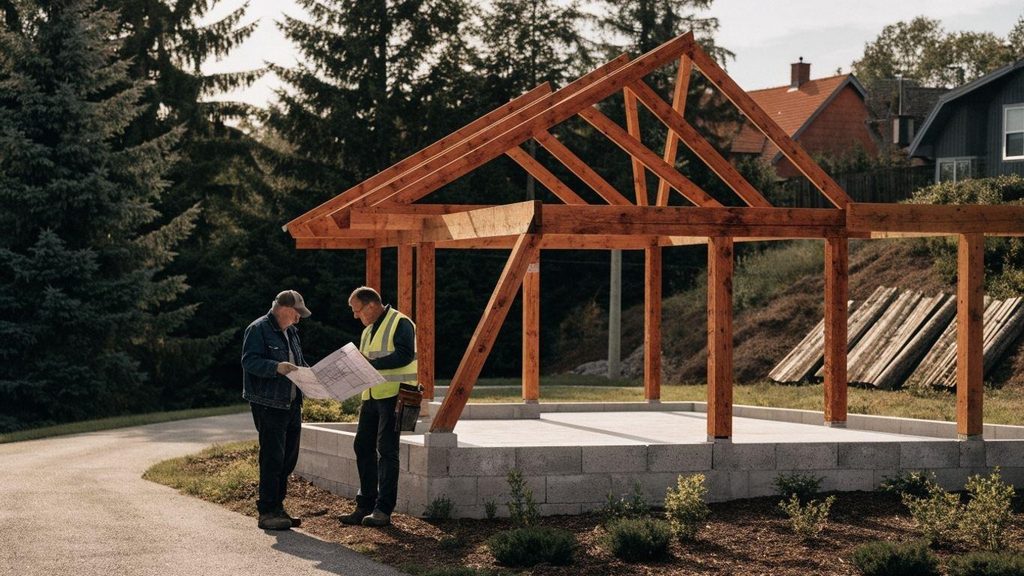
Conventional construction-to-permanent underwriting has two layers: the borrower must qualify for the long-term mortgage, and the proposed build must qualify as a financeable project. Security America Mortgage’s current conventional OTC guidance is useful for planning, but final approval depends on the actual investor, occupancy, LTV, property, and borrower profile.
Credit Score
Security America Mortgage currently positions its conventional single-close program around 680-720+ credit, with stronger profiles generally receiving better pricing and more flexibility. That is a lender planning range rather than a universal Fannie Mae or Freddie Mac minimum for every construction-to-permanent scenario.
Down Payment and Loan-to-Value
Security America Mortgage currently advertises conventional OTC down payments commonly in the 10-20% range, depending on credit and the file. Agency-eligible single-close construction-to-permanent loans can have different maximum LTV rules, including higher LTVs in some conforming scenarios, so the exact cash requirement should come from the lender’s project-specific calculation rather than a generic percentage.
For more detail on how equity requirements vary by program, review the construction loan down payment guide.
Private Mortgage Insurance (PMI)
Conventional financing may require private mortgage insurance when the final LTV is above the lender or investor threshold for avoiding PMI, commonly when equity is below 20%. The cost and cancellation rules depend on the permanent mortgage and insurer, so include PMI in the long-term payment comparison rather than looking only at cash to close.
Income, Employment, and Debt-to-Income Ratio
The lender verifies stable, documentable qualifying income and compares recurring monthly obligations with the proposed housing payment. Construction lending can be less forgiving of marginal files because the borrower must remain financially stable through a long build, not just through a normal 30-day purchase closing.
Cash Reserves and Contingency
Borrowers should expect the lender to review reserves, project contingency, and cash needed for items that are not financed. Security America Mortgage’s current single-close guidance describes a typical contingency reserve of roughly 5-10% of the construction budget, although the required amount depends on the project and loan program.
Land Ownership and Land Equity
If you do not own the lot before the first construction advance, a conforming single-close transaction can be structured as a purchase that finances the land and construction together. If you already own the lot before the first advance, agency treatment can shift to a limited cash-out refinance structure, and eligible land equity may contribute to the required equity depending on valuation and lender rules.
If land is part of your financing plan, read the land and construction loan guide before signing a land contract with a short closing window.
Builder Approval
Security America Mortgage requires a qualified third-party builder. Current site guidance calls for state licensing, general liability and workers’ compensation coverage, project history, builder profile information, and lender acceptance. Owner-builder and self-build structures are not part of Security America Mortgage’s standard single-close offering.
Fixed-Price Construction Contract
A fixed-price contract helps the lender match the approved budget to a defined scope and reduces uncertainty around open-ended construction costs. Major change orders after closing usually require lender review because they can affect budget, contingency, loan amount, appraisal, or completion timing.
Plans, Specifications, Budget, and Draw Schedule
The lender needs complete plans, material specifications, cost breakdowns, and a construction schedule that can be reconciled to the builder contract and appraisal. Inconsistent numbers across the contract, plans, budget, and draw schedule are a common source of delays.
Property and As-Completed Appraisal
The appraisal evaluates the property based on the proposed completed home, not just the vacant lot or partially built structure. For Fannie Mae single-close transactions, the appraisal is subject to specific age and completion-update requirements, including a completion report at the end of construction.
Builder’s Risk and Homeowners Insurance
Construction projects generally need builder’s risk or equivalent coverage required by the lender or construction administrator, while permanent homeowners insurance must be in place when the completed home transitions to long-term financing. Ask which party is responsible for each policy and when coverage must begin.
Use Security America Mortgage’s Construction Loan Requirements guide as a pre-application checklist, then confirm the exact conventional OTC overlays for your project.
2026 Conventional Conforming Loan Limits

If the permanent mortgage is intended to be conforming and sold to Fannie Mae or Freddie Mac, FHFA loan limits matter. For 2026, the baseline conforming limit for a one-unit property in most of the United States is $832,750. The one-unit ceiling in most high-cost areas is $1,249,125, with special statutory limits in Alaska, Hawaii, Guam, and the U.S. Virgin Islands.
A project above the applicable conforming limit may still be financeable through a jumbo or portfolio construction-to-permanent product, but underwriting, equity, reserves, appraisal, rate-lock, and builder requirements can be materially different. Do not assume a conforming program can simply stretch above the county limit.
How Payments and Interest Work During Construction
Payment structure during construction is product-specific. Many construction loans charge interest only on funds that have actually been disbursed, while other one-time close structures may handle construction-period payments differently. The source draft correctly treated this as something to verify rather than a universal rule.
- Ask what balance accrues interest. Confirm whether interest is charged on drawn funds only or another defined amount.
- Ask when payments start. The first payment date and construction-period schedule should be in the note or construction rider.
- Ask how the permanent payment is calculated. The final principal-and-interest payment depends on the permanent balance, rate, term, and any approved modification.
- Ask how unused contingency is handled. Do not assume leftover funds are automatically paid to the borrower.
A good estimate separates construction-period cash flow from the permanent monthly mortgage. Security America Mortgage’s construction loan calculator can help with planning, but final numbers come from the approved loan documents.
Use the Security America Mortgage Construction Loan Calculator
Construction Draws, Inspections, and Change Orders
The construction budget is typically held in a controlled account and released in stages. The builder requests a draw after reaching an approved milestone, and the lender or construction administrator verifies progress before funds are released.
- Draw schedule. The approved schedule ties dollar amounts to stages such as site work, foundation, framing, mechanical rough-ins, drywall, finishes, and completion.
- Progress inspections. An inspector confirms that enough work has been completed to support the requested disbursement.
- Lien waivers and invoices. The construction administrator may require documentation showing subcontractors and suppliers are being paid.
- Change orders. Changes to materials, scope, builder pricing, or plans should be documented and approved before the work is performed when the loan requires approval.
- Cost overruns. Contingency may absorb smaller overruns; larger overruns can require borrower cash, a documented loan modification if allowed, or another lender-approved solution.
Keep every contract revision, invoice, draw request, inspection, and approval. Construction lending is document-heavy because the collateral is changing every week.
What Happens When Construction Is Complete?

Completion is more than the builder saying the house is finished. The lender must confirm that the approved project has been completed and that the property is ready to serve as the collateral for the permanent mortgage.
- Final inspection or completion report. The lender verifies that the work matches the approved plans and identifies any remaining items.
- Certificate of occupancy or local equivalent. The local authority may need to confirm that the home can legally be occupied.
- Final title and lien review. Outstanding construction liens or unresolved title issues must be handled before the permanent phase is finalized.
- Permanent homeowners insurance. Coverage must meet the permanent lender’s requirements.
- Final loan review. If agency or investor rules require updated income, employment, credit, assets, appraisal, or requalification, those conditions are resolved before conversion.
Once the conversion conditions are satisfied, the loan begins permanent amortization under the final approved terms. This transition normally does not require a second purchase-style closing, but specific modification documents may be required depending on how the loan was structured.
Does a One-Time Close Loan Require Requalification After Construction?
Not always, but the safest answer is “sometimes.” The main advantage of a one-time close is that the construction and permanent financing are underwritten and documented together at the beginning. That can eliminate a completely separate permanent-loan application and second closing.
However, Fannie Mae single-close rules require requalification at conversion in certain situations, including when updated credit documents are required, the LTV rises because property value declined, or loan terms change beyond allowed tolerances. Freddie Mac also updated one-time close documentation and conversion rules in 2026. Therefore, “one closing” should be marketed as one initial closing, not as a promise that no later financial update can ever be requested.
Are Conventional One-Time Close Rates Locked Before Construction?
Security America Mortgage’s current single-close guidance describes conventional one-time close programs as locking permanent financing before construction begins. That can protect the borrower from having to obtain an entirely new market-rate mortgage after the home is complete.
Agency rules also permit certain defined modifications to permanent financing in single-close transactions, and some lenders offer float-down or modification options. Get the rate-lock period, construction-phase rate, extension cost, float-down rules, and conversion mechanics in writing before closing. A 9- to 12-month build creates a very different rate-risk question from a three-week resale purchase.
One-Time Close vs. Two-Time Close Construction Loans
A one-time close finances construction and permanent financing in one initial closing. A two-time close uses separate interim construction financing and a later permanent mortgage. The difference affects fees, rate exposure, qualification timing, and flexibility after the build.
Before comparing the table, run both structures using the same lot price, construction contract, estimated completion date, permanent loan term, expected closing costs, and realistic rate assumptions. A cheaper construction rate can be offset by a second closing or worse permanent rate later.
- One-time close favors certainty. You establish the permanent-financing path before construction and usually avoid a second full mortgage closing.
- Two-time close favors later flexibility. You can shop permanent financing after construction, but you also face future rates, another underwriting process, and another set of closing steps.
- Both structures still require project discipline. Builder delays, cost overruns, title problems, inspections, and change orders do not disappear because the financing structure changes.
| Feature | One-Time Close | Two-Time Close |
|---|---|---|
| Number of closings | One initial closing | Construction closing + later permanent closing |
| Permanent financing | Set/documented at initial closing; may allow defined modifications | Chosen and underwritten later |
| Second full mortgage application | Usually avoided, subject to conversion rules | Required |
| Rate exposure | Potentially reduced by upfront permanent financing / lock structure | More exposure to future permanent rates |
| Closing costs | One primary closing structure | Two sets of closing events/fees may apply |
| Flexibility after build | Lower; major changes may require approval | Higher ability to choose permanent lender/product later |
| Requalification risk | Can still arise in specified conversion circumstances | Expected for new permanent mortgage |
| Best fit | Borrowers prioritizing certainty and fewer closings | Borrowers prioritizing later financing flexibility |
Neither structure is automatically cheaper. The better choice is the one that produces the best total cost and the most manageable risk for the actual construction timeline.
Costs to Budget Beyond the Down Payment
A construction loan budget should not stop at “down payment plus builder price.” Some costs may be financed, some may be part of the construction contract, and some may need to be paid separately depending on the loan and project.
- Appraisal and completion inspections. New-construction valuation and final completion verification can create appraisal-related charges.
- Builder or project review. Lenders or construction administrators may charge for builder, contract, or project review.
- Draw and inspection administration. Progress inspections and draw processing can carry fees depending on the construction administration structure.
- Title, settlement, recording, and lender closing costs. A single close avoids duplicating an entire second closing, but the initial closing still has normal mortgage and construction-related costs.
- Builder’s risk and homeowners insurance. Coverage requirements change as the property moves from construction to completed residence.
- Permits, utility connections, site work, surveys, and engineering. Whether these are financed depends on the approved budget and investor rules.
- Contingency and borrower-paid overruns. Keep accessible funds for changes that exceed the approved contingency or are outside the loan scope.
- PMI when applicable. Conventional permanent financing may carry mortgage insurance at higher LTVs.
For early planning, compare the full project cost rather than the builder contract alone. Security America Mortgage’s custom-home cost guide can help identify categories that buyers frequently miss.
Read the Cost to Build a Custom Home guide
Pros and Cons of a Conventional One-Time Close Construction Loan
A single-close structure can simplify financing, but it front-loads more project review. The advantages are strongest when the builder, design, budget, and schedule are already well defined before closing.
Pros
- One initial closing. Construction and permanent financing are documented together instead of requiring a separate mortgage closing after the build.
- Potentially lower duplicate closing costs. Avoiding a second full transaction can reduce duplicated settlement, underwriting, and closing expenses.
- Permanent financing is addressed upfront. You do not have to reach the end of construction with no long-term mortgage path in place.
- Land and construction can be coordinated in one structure. Eligible purchase transactions can combine lot acquisition and construction financing.
- Structured draws create project controls. Funds are released based on progress rather than paid all at once.
These benefits are most valuable when the project is stable enough to be fully documented before construction begins.
Cons
- Stricter upfront project approval. The lender must approve the builder, plans, budget, appraisal, and borrower before closing.
- Higher credit and equity expectations than some government options. Security America Mortgage currently positions conventional OTC for stronger-credit borrowers with meaningful down payment or land equity.
- Less flexibility for major changes. Changing builders, scope, loan amount, or permanent terms after closing can trigger reapproval or may not be permitted.
- Long construction periods create rate-lock and documentation complexity. The longer the build, the more important conversion, extension, and updated-document rules become.
- Cost overruns remain real. A single close simplifies financing, not construction budgeting.
If the plans are still changing, the builder is not finalized, or the budget is only a rough estimate, it may be too early to lock the project into a single-close structure.
Typical Conventional One-Time Close Timeline
Security America Mortgage’s current single-close guide describes pre-approval in roughly 1-3 business days, full underwriting and project approval around 30-45 days, and custom-home construction commonly around 6-12 months. Those are planning ranges, not guarantees.
- Pre-approval: about 1-3 business days. Borrower financial profile and preliminary project budget are reviewed.
- Builder/project underwriting: often 30-45 days. Plans, contract, budget, builder documents, appraisal, and loan qualification are completed.
- Initial closing: after final approval. The construction and permanent financing documents are signed.
- Construction: commonly 6-12 months. Actual timing depends on permitting, design complexity, builder capacity, weather, inspections, and supply chain.
- Completion/conversion: after final conditions. The lender verifies completion and finalizes permanent financing according to the loan structure.
For conforming Fannie Mae single-close transactions, the total construction-loan period may not exceed 18 months and no single period may exceed 12 months. Lenders can set shorter limits, so the project schedule must fit the actual program before closing.
Documents You Should Have Ready
Construction loans move faster when the borrower and builder submit a complete package rather than sending documents one at a time. Exact requirements vary, but these are common categories.
- Borrower income documents. Pay stubs, W-2s, tax returns when required, self-employment records, or other qualifying-income evidence.
- Asset statements. Funds for down payment, closing, reserves, contingency, and any borrower-paid costs.
- Land documents. Purchase contract, deed, payoff statement, survey, title information, and evidence of lot ownership when applicable.
- Builder package. License, insurance, experience, references or project history, company information, and required lender forms.
- Fixed-price construction contract. Scope, price, allowances, draw schedule, start/completion expectations, and change-order provisions.
- Plans and specifications. Complete architectural plans and material/specification package used by the builder and appraiser.
- Detailed budget. Line-item costs that reconcile with the contract and appraisal.
- Permits and site reports. Required by the lender or local authority based on property and project stage.
Ask for the lender’s builder and project checklist before signing a nonrefundable design agreement or land contract. Missing builder documents can delay the loan even when the borrower is fully qualified.
Common Conventional One-Time Close Construction Loan Mistakes to Avoid
The most expensive mistakes happen when a borrower treats a construction loan like a normal purchase mortgage. The lender is financing a project that does not exist yet, so small documentation gaps can become major approval or draw problems.
- Assuming 10% or 20% down is a universal rule. Security America Mortgage publishes typical conventional OTC ranges, but the actual minimum depends on LTV, credit, occupancy, property, investor, and land equity.
- Using the wrong 2026 conforming loan limit. The national baseline one-unit limit is $832,750, not the 2025 limit of $806,500.
- Assuming one closing means no later requalification can ever happen. Agency single-close rules can require updated underwriting at conversion in defined situations.
- Signing a cost-plus or open-ended contract without lender approval. Security America Mortgage’s standard single-close guidance requires a fixed-price contract.
- Using an unapproved builder. Security America Mortgage requires a qualified lender-approved third-party builder and does not offer owner-builder construction loans.
- Underestimating site work and soft costs. Utility connections, engineering, permits, surveys, grading, and contingency can materially change the total project cost.
- Making major plan changes after closing. Scope changes can affect appraisal, budget, draw schedule, loan amount, and conversion eligibility.
- Ignoring the rate-lock expiration. A long build can create extension or modification costs if the construction period exceeds the original lock structure.
- Treating land equity as automatic cash replacement. The lender determines how lot value, liens, seasoning, and transaction type affect recognized equity.
- Failing to keep draw records. Invoices, lien waivers, inspections, approvals, and change orders should be organized from day one.
A good construction file is boring in the best way: the plans match the contract, the contract matches the budget, the budget matches the appraisal, and every change is documented before money moves.
Final Verdict: Is a Conventional One-Time Close Construction Loan Worth It?
A conventional one-time close can be an excellent fit for a well-planned custom build when the borrower has strong credit, sufficient equity or savings, an approved builder, complete plans, and a budget that can survive normal construction surprises. The biggest benefit is not that construction becomes easy. It is that the construction financing and long-term mortgage are coordinated before the build begins.
The most important 2026 decision is to compare the actual lender terms rather than relying on generic online rules. Verify the down payment, recognized land equity, PMI, builder requirements, draw fees, contingency, construction-period payments, rate-lock and modification options, completion deadline, and any conversion requalification conditions before closing.
Planning a Conventional Custom Home Build? Security America Mortgage can compare conventional, VA, FHA, and USDA one-time close options, review your builder and project structure, and help you model the land, construction budget, down payment, and permanent financing before you commit. Start with the Construction Loan Guide or call (855) 701-2816.
Frequently Asked Questions
What is a conventional one-time close construction loan?
It is a construction-to-permanent mortgage that finances the construction phase and long-term conventional mortgage through one initial closing. Construction funds are drawn in stages, and the loan later transitions to permanent financing under the approved documents.
What credit score do I need for a conventional one-time close loan?
There is no single universal score. Security America Mortgage currently positions its conventional OTC program around 680-720+ credit depending on the file, while exact investor and lender requirements vary.
How much down payment is required?
Security America Mortgage currently markets conventional OTC down payments commonly around 10-20%. Agency-eligible structures can have different LTV limits, and land equity may affect the required cash contribution.
Can I use land I already own as equity?
Potentially. The lender must verify title, liens, value, and transaction structure. Under conforming rules, owning the lot before the first construction advance can change the transaction from a purchase to a limited cash-out refinance structure.
Can I buy the land and build with the same loan?
Yes, an eligible single-close purchase can finance the lot purchase and construction together when the borrower does not own the lot before the first construction advance.
Do I make payments during construction?
It depends on the loan structure. Many construction loans charge interest on disbursed funds during the build, but you should confirm the exact payment schedule in your Security America Mortgage loan documents.
Does one-time close mean I never requalify?
Not always. A second full mortgage closing is usually avoided, but Fannie Mae and Freddie Mac rules can require updated documents or requalification at conversion in specified circumstances.
How are construction funds paid to the builder?
Funds are normally released through scheduled draws after progress is documented and any required inspection, invoice, lien-waiver, or draw conditions are satisfied.
Can I be my own builder?
Not with Security America Mortgage’s standard single-close construction programs. The company requires a qualified third-party lender-approved builder.
What happens if construction costs go over budget?
Contingency may cover smaller overruns. Larger increases can require borrower cash or a lender-approved loan modification if the program permits it. Do not assume the loan amount can simply increase.
How long can construction take?
Security America Mortgage describes many custom builds as roughly 6-12 months. Fannie Mae conforming single-close rules cap the total construction-loan period at 18 months, with no single period over 12 months.
Is a one-time close better than a two-time close?
It is better when you value one initial closing and a permanent-financing path set upfront. A two-time close can provide more flexibility to shop permanent financing later, but exposes you to a second application, closing, and future rate environment.
What is the 2026 conventional conforming loan limit?
For most U.S. counties, the 2026 one-unit baseline conforming loan limit is $832,750. The one-unit ceiling in most high-cost areas is $1,249,125. County-specific limits and jumbo options should be confirmed for the property.