

Yes — if you already own your land, a VA One-Time Close construction loan can finance building your home on it with one loan and one closing. The loan closes as a refinance: any lot loan is paid off through the loan, your land equity isn’t paid out as cash but can lower your VA funding fee, and you make no mortgage payments during construction.
Key facts
| Credit | 640+ is the typical benchmark; 620–639 may be considered; 620 is the minimum for all VA One-Time Close loans, including manufactured homes |
|---|---|
| Payments during construction | None — interest during construction is included in the construction budget |
| Build time | Up to 11 months |
| Land you already own | Closes as a refinance; any lot loan is paid off; land equity is not paid out as cash but can lower the VA funding fee |
| Eligible homes | Site-built, modular, manufactured and barndominium (the appraisal must find comparable sales) |
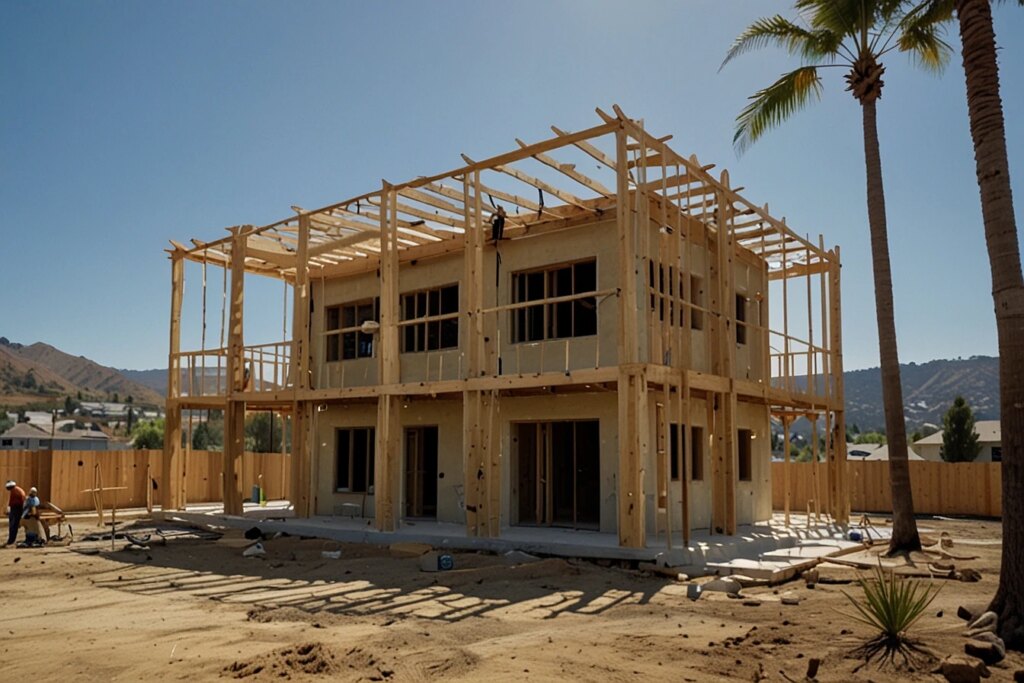
| Not eligible | Condos and co-ops, renovations, homes already past the foundation stage |
When you already own land, a construction loan may finance your home build and an eligible existing lot-loan payoff. Your land’s appraised value, existing liens, construction budget and chosen loan program affect the financing structure. This guide explains land equity, project documents, construction draws and the difference between a one-time-close construction loan and separate construction and permanent loans.
Prepare to Build on Land You Own or Plan to Buy
Start with your land situation, project budget and intended construction timeline. Depending on eligibility and availability, a one-time-close construction loan may use conventional, FHA, USDA or VA financing. Military service is required for VA eligibility, not for every construction-loan option.
If You Already Own the Land
Gather your deed or ownership information and the balance of any land loan. The land and completed home are considered together as the property securing the construction mortgage. Ask SAM to review how existing liens, land equity and the proposed project affect your financing before committing to construction.
If You Plan to Buy Land Soon
Before committing to a parcel, review the proposed land purchase and home build with SAM. Confirm legal access, zoning and utility or septic requirements with the appropriate local professionals. Ask whether the land purchase can be included in the approved construction financing or whether a separate purchase would be needed.
Your Construction Readiness Checklist
- Land: property address or parcel number, ownership or purchase status, and any existing loan balance.
- Location and site: state and county, road access, available utilities, and known zoning, floodplain, well or septic questions.
- Builder: the builder’s name and whether you have requested a proposal or contract.
- Plans and budget: available plans, estimated construction and site-work costs, and any costs not yet included.
- Timing: when you expect to acquire the land and when you want construction to begin.
- VA financing, if applicable: whether you have used your VA benefit before and whether you have a Certificate of Eligibility.
Own land or expect to buy soon? Request a construction financing review and tell us your property state, land status, builder status and target start date. A review does not guarantee loan approval.
For the general VA benefit, see the VA purchase-loan guidance. SAM program terms and lender requirements are reviewed separately for your project.
Planning to build this year or next year? Review financing before committing to a parcel or builder contract. Program availability, acreage requirements and site eligibility need confirmation for the property and state. Compare SAM’s one-time-close construction options, or read the VA-specific construction guide if you are an eligible veteran or service member.
Understanding the Basics of Construction Loans
So, you want to build your own? Your dream home? That’s awesome! But before you go out picking paint colors, let’s discuss the money part. A construction loan is much different than the mortgage you’d get for an existing house. Consider it a building-specific, short-term loan. Rather than receiving all the cash at once, the funds are disbursed in intervals, referred to as ‘draws,’ based on progress with your project. That way, you aren’t paying interest on unused funds, which is a nice perk.
A construction loan requires a detailed plan, budget and review of your finances and property. Equity requirements depend on the loan program. Eligible veterans with full VA entitlement may qualify for a VA construction loan without a down payment, subject to appraisal and lender requirements; substantial existing land equity is not a universal requirement.
Here’s a quick rundown of what you’ll typically need:
- Detailed Building Plans: You can’t just wing it. You’ll need blueprints and a clear construction schedule.
- Reputable Contractor: Lenders usually want to see that you’re working with an experienced and licensed builder.
- Proof of Funds/Equity: This is where your land equity construction loan comes into play. Owning your land outright can be a big plus.
- Financial History: Like any loan, they’ll check your credit and income.
Homeowner construction lending is a niche market. It’s meant to fund the costs of new construction, which is very different than purchasing an already-built home. A phased release of funds, a relatively standard process, is an important component in terms of risk mitigation for both you and the lender.
Key Differences: Construction Loan vs. Traditional Mortgage
You are considering constructing a home, and you have already purchased land. That’s a great head start! But how is financing a build different from simply buying a finished house? Here’s how construction loans differ from mortgages you might be familiar with.
Loan Disbursement and Draw Schedules
This is likely the biggest difference you’ll see immediately. When you take out a traditional mortgage to purchase an existing home, you receive all of your money at the closing table, typically in one large lump sum. Simple enough. But with a construction loan, it’s more like a payment plan.
Rather than receiving all the cash upfront, the lender disburses funds over time as your project progresses. These stages are called “draws.” It’s almost like paying your contractor when they finish individual phases. You’ll usually have multiple draws, four to six maybe, that are spread throughout the building process.
At each significant phase of completion, like when the foundation is poured or the framing goes up, the lender will inspect the work. If all looks good, they’ll disburse the next tranche of loan funds. This helps the lender ensure that the funds are actually being spent on construction and is a way of managing their risk. It also means you’ll not have full access to the money all at once, so planning is important.
Payments During Construction
Many construction loans require interest-only payments while the home is being built. With Security America Mortgage’s VA One-Time Close construction loan, you make no mortgage payments during construction; the interest during construction is included in the construction budget. Your regular mortgage payments begin after the home is complete.
You can estimate your permanent mortgage payment using our construction loan calculator to better plan your monthly budget.
The Role of Your Land Equity
So, you own the land where you want to build. Well, that’s quite something when you want to apply for a construction loan. View it like this: your land isn’t just a space for you to build on; it’s also an asset. Lenders are able to see this, and it’s a huge plus in your favor.
If you purchased land separately and plan to build later, you may also benefit from reviewing our loan to buy land and build a house guide to understand how financing works in phases.
How Owning Land Impacts Loan Approval
When you own the land free and clear, it demonstrates that you’re serious about the project. You have already had a bit of skin in the game, so to speak. That often means lenders consider you to be a lower risk. Why? Because a large portion of the total project cost (the land itself) has already been covered.
Owning land does not guarantee approval, a lower interest rate or a faster closing. The lender still reviews credit, income, assets, existing land debt, the proposed home and the completed-property appraisal. For a VA loan, eligibility and available entitlement also matter.
Valuing Your Land for the Loan
You have to establish how much your land is worth. They will usually have an appraisal done. This appraisal establishes the market valuation of your property. This figure is then included in the overall loan-to-value ratio for your build.
In other words, the more valuable your land is, the more equity you have and the less risk taken by the lender. It’s a relatively simple concept, but before you get started with lenders at all, it’s key to have an accurate idea of how much leverage your land will give you in getting a mortgage.
Example: You own land worth $100,000 free and clear, and your builder’s contract is $300,000. Your VA One-Time Close loan finances the build, plus eligible closing costs if the appraisal supports them. Because you already own the land, the loan closes as a refinance; if you still owed money on the lot, that balance would be paid off through the loan. Your land equity isn’t paid out as cash, but it can lower your VA funding fee. Ask your loan officer for a written estimate for your own project.
Note: This is only an example. Your individual case will vary based on the land’s location, size, zoning, and existing market conditions. Each lender will have their own particular methods of calculating these numbers.
If you already have land secured, that can help streamline things a good bit. It means you get to focus even less on the challenges of purchasing the property itself and more on building something cool. It’s a firm base, literally and figuratively, for the dream house.
Building on Land You Own With a VA Construction Loan
If you’re an eligible veteran or service member, a VA One-Time Close construction loan lets you build on land you already own with one loan and one closing. Here’s how owning your land works with the VA program at Security America Mortgage:
- Existing lot loan: an existing land-loan balance may be paid off through the construction loan, subject to approval of the title, payoff and total project financing.
- Land equity: if you’re required to pay the VA funding fee, the equity in your land can count as a down payment and may lower the fee. You can’t take cash out of that equity.
- Down payment: 0% down is available for eligible veterans with full VA entitlement, subject to appraisal and lender requirements. Closing costs or other cash requirements may still apply.
- Site-built credit: a credit score of 640 or higher is the typical qualifying benchmark for our site-built VA One-Time Close construction program. We submit files from 620–639 for individual review; 620 is the minimum score for all VA One-Time Close loans. Approval depends on the full credit, income, assets, VA entitlement and project review; a review does not guarantee approval.
- Payments during construction: under SAM’s VA One-Time Close program, you do not make borrower mortgage payments during construction. Construction-period interest is builder-paid and included in the approved project budget. Regular mortgage payments begin after completion and conversion.
- Builder and timeline: your builder must be approved by the lender, the build can take up to 11 months, and the foundation can’t already be completed before your loan closes.
For the full checklist, see our VA construction loan requirements.
VA Construction Questions Answered by Jason Noble
Common questions from veterans, answered by Jason Noble, COO and VA Loan Specialist, Security America Mortgage, NMLS #352672. These answers describe SAM’s program requirements and Jason’s lending experience. Answers have been lightly edited for clarity.
What’s the biggest misconception veterans have about building on land they already own?
Jason: “One of the biggest misconceptions veterans have is that land they already own somehow remains separate from the home they’re building. Think about purchasing an existing home. You’re not financing the house separately from the land beneath it. The lender uses the property—including the land and improvements—as collateral. The same principle applies to a VA construction loan. The land and the home being built are considered together as the property securing the loan. Another misconception is that veterans must have land equity to qualify or that land equity automatically reduces construction costs. When the appraisal is completed, the appraiser considers the site value as part of the property’s overall value. That value helps inform the loan structure, but it doesn’t automatically reduce the cost of building the home.”
If I already own land, what decides whether my property and home plan qualify?
Jason: “The biggest factors are permitting, survey, site placement, and appraisal value.”
Apart from lowering the funding fee, does equity in owned land reduce what the veteran brings to closing? Can closing costs be financed?
Jason: “Land equity does not directly provide cash for the veteran to bring to closing. However, it helps with the appraised value, which can help with financing closing costs. Eligible closing costs can be financed when the appraised value is high enough and the program requirements allow it.”
Land equity is not a cash-out payment. Your loan specialist must review the appraisal, existing land debt, eligible costs and applicable loan requirements to determine your actual cash needed at closing. See our VA construction loan guide for the broader financing process.
What is the typical timeline from application to closing, including builder and project preparation?
Jason: “It depends on whether the person has land, house plans and a builder, but on average it is about 120 days from application to closing. About 30 days is financing. Most of the other time is spent waiting for the borrower and builder to decide on house plans and negotiate the contract.”
This is Jason’s experience-based estimate, not a guaranteed closing date or a separate builder-approval turnaround. Application-to-closing time is also separate from the time needed to build the home. Review our builder approval guide when preparing your project.
What credit score do I need for a VA manufactured home construction loan?
Jason: “For VA One-Time Close manufactured construction, the minimum is 620, with nothing below 620. VA purchase financing for an existing manufactured home allows for lower scores.”
The 620 minimum here applies specifically to VA OTC manufactured construction and does not guarantee approval. Lower-score review tiers discussed for site-built construction do not override this manufactured-home minimum. Existing-home purchase financing is a separate program. This answer does not establish the requirements for modular homes.
What have 10 years of VA construction lending taught you about preparation?
Jason Noble, COO and VA Loan Specialist, Security America Mortgage, NMLS #352672: “I have been doing VA construction loans for 10 years. Preparation is the key word. Planning ahead of action.” Jason estimates that he has closed well over 100 VA One-Time Close loans; this is his experience estimate, not an audited production total. He explains that an early conversation helps organize the steps and avoid problems caused by rushing or insufficient planning.
Why can a site plan matter when you already own the land?
Jason’s firsthand example: A veteran owned land and already had a survey, but had not paid for a site plan. Jason explained what the plan would show. Once prepared, it revealed that the proposed home location was inside a drainage easement—an issue neither the veteran nor the builder had identified. Finding it before closing and construction allowed the team to change the placement and plan accordingly.
The lesson is to review the home’s proposed location and site constraints before committing to construction. A survey and a site plan can serve different purposes; ask the builder and appropriate local professionals which documents your project needs.
What if I find land before I have a builder or house plans?
Jason’s answer, lightly edited: You can apply before finding land, and an approved construction loan may include its purchase. To move the construction financing forward, however, the land, house plans and builder must be ready for review. If a seller needs an immediate closing and those pieces are missing, a separate lot loan may be an option. SAM can later review an eligible lot-loan payoff as part of the construction financing once the plans and builder are ready.
A later construction loan or lot-loan payoff is not guaranteed. Review the separate lot loan’s costs, terms and exit plan before committing to it. See VA construction financing and other one-time-close options.
Should I wait until I have land, plans and a builder before applying?
Jason: “I advise all my clients applying for financing first is the best thing to do.” His recommendation is to start the conversation early so he can help create a plan and timeline based on the borrower’s needs. Applying early is different from having a project ready to close; final financing still requires borrower, property, builder and project approval.
Can you give a real example of land value helping with closing costs?
Jason’s firsthand example: A qualified veteran owned land free and clear and wanted to preserve cash. The proposed loan included eligible closing costs. The completed appraisal confirmed enough value to support that structure and reduce the veteran’s out-of-pocket expense. Jason emphasizes that owning land does not guarantee a particular appraisal value.
Land equity is not cash handed to the borrower. The appraisal, eligible costs, existing liens and loan requirements determine what can be financed. Ask for a written estimate of the cash needed for your own project.
These additional experience-based answers were published October 23, 2026 and lightly edited for clarity. Examples are anonymized; individual results vary. Meet Jason Noble.
Discuss your land and build plans with SAM. Include your state, land ownership or purchase status, builder and plans status, budget and intended start date.
VA Construction Loan Acreage Requirements: Can You Build on a Large Lot?
SAM’s VA One-Time Close construction program follows lender-specific acreage and property requirements. Ask SAM to review your parcel against the applicable program guidelines before buying land or committing to construction. VA’s general rule does not set a maximum acreage limit, but that does not override a lender’s acreage limits or make every parcel eligible. The site, planned home and project must meet the requirements of the lender and program used for your application.
Is there a minimum lot size for the home I want to build?
Start with local zoning, setbacks and the space needed for your home, access and any well or septic system. Ask the appropriate local professionals to confirm that the parcel supports your plans. Acreage alone does not establish eligibility.
What should I send SAM before buying land or starting a build?
- The acreage, property address or parcel number, and state and county.
- Whether you already own the land, have it under contract or are still shopping, plus any existing land-loan balance.
- Your intended residential use, any agricultural or business use, and known access, utility, survey or site-work questions.
- Your proposed builder, estimated total project budget and target construction start date.
Request a VA construction financing review before committing to a parcel. Ask SAM to confirm the acreage and property requirements for the specific program available to you. A review does not guarantee loan approval. See our VA One-Time Close construction guide for the financing process.
Primary sources: VA Lenders Handbook, Chapter 12, Topic 2: Marketable Real Estate Entity, and Chapter 11, Topic 11: Farm Residences. VA guidance and lender-specific construction program requirements are separate.
The VA Construction Loan Process Step-by-Step
Well, you have the land and are ready to build. That’s awesome! But how do you actually obtain the money to make it happen? The construction loan process can seem a bit overwhelming, but it is actually just a series of logical steps. Consider it like constructing the house itself; you begin with the base and grow.
In order to get the funds for your new home build, there are some important steps. It’s not exactly like walking into a bank for a car loan, but it’s also not rocket science. Take a look at just another normal construction loan process for owners.
If you’re a veteran or active-duty service member, you may qualify for a VA construction loan in Texas, which can allow eligible borrowers to build with little or no down payment.
You can also review how the full VA loan to build a house process works, including inspections and draw schedules.
Application and Pre-Approval
This is where you start. You’ll have to hunt down a lender who does. As with any type of loan, it is wise to shop around and compare lenders. You will have to collect a lot of paperwork. This typically includes detailed plans and specifications for your house, a budget (the cost breakdown), and information about the builder you plan to hire.
Lenders want to know this is something you’ve thought out. They’ll also consider your financial history, credit score, income, and savings. Getting pre-approved at this stage is extremely beneficial, as it lays out how much you can borrow and what the general terms might be. It shows that you mean business on the project.
Appraisal and Inspection
Once your loan application is underway, the lender will want to better understand the value of your project. This is known as an appraisal, which essentially values how much your home will be worth once it’s built. Since you already own the land, its cost would also be included. Once the loan is approved and construction starts, inspections are a big deal.
VA Lenders do not simply deposit all the funds into one single lump sum. Instead, they release money in stages, known as “draws,” as various elements of the construction project are finished. An inspector will check out the site prior to each draw, verifying that what has been done meets the plans and specifications. Here’s how this process works, it’s a crucial part of your construction loan process.
Closing and Funding
This is where all the final decisions are made. You will sign all of the official loan documents. If you are using a construction-to-permanent loan, this closing may encompass both the construction period and the switch to your long-term mortgage. When closing is done, the initial disbursement of funds is generally released so your builder can hit the ground running.
Payment obligations depend on the financing structure. A separate interim construction loan may require interest-only payments during the build. Under SAM’s VA One-Time Close program, you do not make borrower mortgage payments during construction. Construction-period interest is builder-paid and included in the approved project budget. Regular mortgage payments begin after completion and conversion.
Dealing with the flow of funds in construction is crucial. Borrowers request draws in a schedule related to project milestones that are confirmed by inspections, assuring the lender that the loan isn’t misspent and the project doesn’t fall behind schedule. This disciplined method offers risk mitigation for both them and you.
Here’s a quick rundown of the typical steps:
- Find a Lender: Research banks and credit unions specializing in construction financing.
- Get Pre-Approved Builder: Understand your borrowing power and loan terms.
- Submit Application: Provide detailed plans, budget, builder info, and financial documents.
- Appraisal & Underwriting: Lender assesses project feasibility and property value.
- Loan Closing: Sign the paperwork and prepare for construction to start.
- Construction Draws: Funds are released in stages after inspections confirm progress.
This process is a core part of the construction financing process for landowners. It might seem like a lot, but taking it one step at a time makes financing new home construction much more manageable.
Converting Your Construction Loan to a Permanent Mortgage
So you’ve triumphed over all the building and your house is finally done! That’s fantastic. So what about that construction loan? Normally, it is structured to be temporary. The next step is turning it into a conventional, long-term mortgage. This is also referred to as a take-out loan, because it effectively takes out the construction loan.
Conversion from a construction to permanent loan is an important part of financing a home built on owned land. This means you’ll transition from paying interest only during construction to a regular principal and interest payment schedule. Consider it a graduation from a temporary loan to more of a permanent one. It’s how you’ll keep your home for thirty-plus years.
Here’s a general rundown of what to expect:
- Final Inspection: The lender will want to see the finished product. An inspector will visit the property to confirm that construction is complete according to the original plans and that everything meets local building codes.
- Underwriting Review: You’ll go through another underwriting process, similar to when you first applied for the construction loan, but this time it’s for the permanent mortgage. They’ll re-verify your income, credit, and overall financial situation to make sure you qualify for the long-term loan.
- Closing: Once approved, you’ll attend a closing for the permanent mortgage. This is where the new loan officially replaces the construction loan. You’ll sign all the final paperwork, and the construction loan will be paid off.
The conversion is one of the most important steps in a house with your own land loan. It’s the transition period between the construction phase and life inside your custom-designed abode.” In some cases, this is a one-time close loan, which means the conversion is built into the original loan agreement and makes things easier. Sometimes it takes a separate closing with another set of closing costs, but sometimes it offers more flexibility in selecting your permanent mortgage terms.
This transition is very significant if you’ve been looking to procure a mortgage for any custom builds you are considering. It plays a critical role in home build financing where you already own the land and is a significant step to building a house with an existing land loan.
Note that qualifying for the permanent mortgage is based on your financial position post-construction. You may run into trouble if your income or credit situation has changed substantially. Keeping solid financial habits during the building phase is why you might consider your financial behavior all along.
Construction-to-permanent loans, also called one-time close loans, combine the construction financing and the permanent mortgage into one loan with one closing. That simplifies the process and saves you a second set of closing costs. VA, FHA, and conventional one-time close loans all work this way. For eligible veterans, the VA One-Time Close loan adds $0 down with full entitlement and no payments during construction. If you’re not using a VA loan, see our FHA one-time close and conventional one-time close options.
Wrapping Up Your Construction Loan Journey
So, you’ve got the land, and you’re ready to build. We’ve walked through how construction loans work, especially when you already own the ground you’re building on. Remember, owning your land is a plus, often acting as equity and showing lenders you’re serious. The process involves detailed plans, a solid budget, and meeting lender requirements.
Funds come in stages, not all at once, and inspections keep things on track. Once the dust settles and your project is complete, you’ll typically convert the loan to a more traditional mortgage. It might seem like a lot, but with good planning and communication, building your dream project is totally achievable.
Frequently Asked Questions
What is a construction loan when I already own the land?
A construction loan is a type of special loan for new homes or buildings. If you already own the land, this can help to facilitate obtaining this loan at times because the lender recognizes you have invested in the project. Even a piece of your land can count in the value of the loan.
How is a construction loan different from a regular mortgage?
A conventional mortgage is typically used to purchase an existing home. A construction loan is solely for the construction portion of the project. And rather than receiving all the money at once, you receive it in stages as construction progresses. Construction loans are generally for a shorter period, too.
How does owning land help me get a construction loan?
Land equity may contribute to the financing structure, but its treatment depends on the loan program, existing liens and appraisal. Owning land does not guarantee approval or better loan terms. A lender must review both your financial qualifications and the proposed construction project.
Does owning land guarantee approval?
No. Owning land can strengthen your file, but you still need to qualify based on credit, income and debt-to-income, and the builder and project must be approved.
Can I build with a VA construction loan if there are already tiny homes or other living units on my land?
Jason Noble, COO and VA Loan Specialist, Security America Mortgage, NMLS #352672: “Not while they’re on the property. The VA does not allow other living areas on the property besides the home being financed — size doesn’t matter, and it doesn’t matter whether they sit on a foundation. A VA loan is for your primary residence, not for adding rental units. If the existing units are removed before closing, we can help. Barns, sheds and garages are fine.”
What documents do I need to apply for a construction loan?
You’ll have to present the lender with your building plans, a detailed budget for the entire project, proof of your income, and information about what you own and what you owe. Sometimes, they’ll also want to see a contract with your builder and proof of the land you own.
How do I get the money from a construction loan?
You’re not handed all of your loan money at once. It’s paid in stages, referred to as “draws,” as various portions of the building are completed. At each stage, the lender will ensure that the work is being done to plan before releasing the next payment.
What happens after the building is finished?
It depends on the type of loan. With a two-time close construction loan, you refinance into a permanent mortgage, which means a second closing and a second set of closing costs. With a one-time close loan, including the VA One-Time Close construction loan, the construction loan converts into your permanent mortgage once the home is finished. There’s no second closing, and your regular monthly payments begin after conversion.
Can I use a VA loan to build on land I already own?
Yes. A VA One-Time Close construction loan can finance the build on land you already own. If you still owe on the lot, that balance is paid off through the loan. If you’re required to pay the VA funding fee, your land equity can count as a down payment and may lower the fee, though you can’t take cash out of the equity. You’ll need a lender-approved builder, a build of 11 months or less, and the foundation can’t already be completed before your loan closes. See the full VA construction loan requirements.