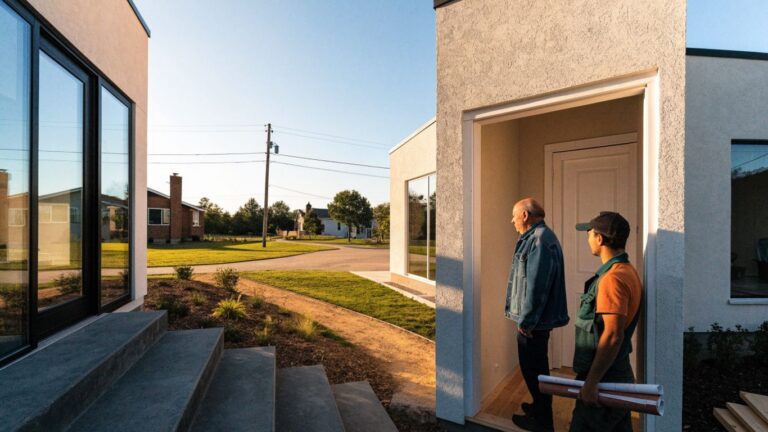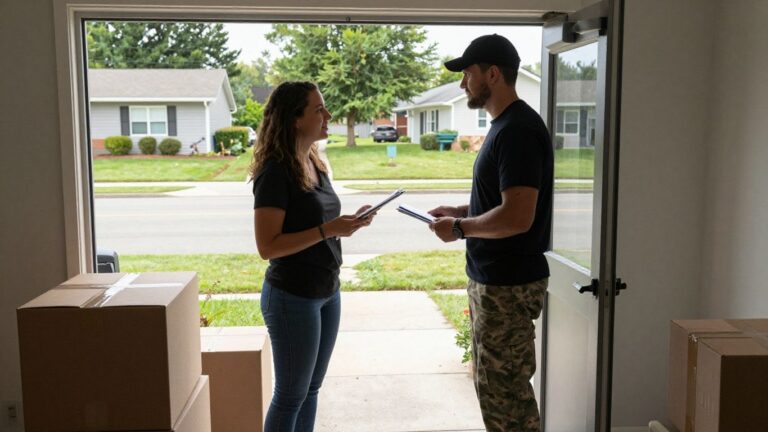



A VA loan termite inspection, more accurately called a wood-destroying insect or WDI inspection, is required in many parts of the United States when a VA-backed purchase is located in an area with significant termite risk. It is separate from both the VA appraisal and a general home inspection, and it is designed to identify active infestation, visible damage, or other wood-destroying insect concerns that can affect the property’s condition.
Current VA rules are more flexible about cost than many older articles suggest: since 2022, a Veteran may pay a required pest inspection fee and may also pay qualifying repairs needed to satisfy VA Minimum Property Requirements. The exact requirement depends on the property location, construction type, condominium style, appraisal findings, and Notice of Value, so confirming the rule early can prevent treatment, re-inspection, and closing delays.
Quick Answer: When Is a Termite Inspection Required for a VA Loan?
A VA termite or wood-destroying insect inspection is not required in every state, but VA requires wood-destroying insect information in many states and in specific counties of several others. If a state is not on VA’s local-requirements list, the inspection is generally not required unless the appraisal identifies a potential infestation issue. For existing or new construction where the condition applies, VA commonly uses Form NPMA-33 or an acceptable state form, and the inspection report is generally valid for 90 days. The Veteran may pay the required inspection fee and MPR-related repairs, although these costs can also be negotiated with the seller.
What Is a VA Loan Termite Inspection?
A VA loan termite inspection is a specialized review of accessible areas for evidence of termites and other wood-destroying insects. In VA guidance, the broader term is wood-destroying insect information because state forms and pest-control rules can cover more than one insect species or type of wood damage.
A qualified pest control operator typically looks for live insects, mud tubes, damaged wood, exit holes, frass, previous treatment evidence, conducive moisture conditions, and other visible signs within the scope allowed by the report. The inspection is limited to accessible areas, so blocked crawl spaces, sealed wall cavities, stored materials, or inaccessible structural components can require follow-up access or additional documentation.
The report helps the lender determine whether the property satisfies VA Minimum Property Requirements and whether any treatment, repair, or verification is needed before the loan can close. It does not guarantee that every concealed defect or future infestation will be found.
Why Does the VA Require Wood-Destroying Insect Information?
Termites and other wood-destroying insects can damage framing, subfloors, joists, sill plates, decks, and other structural components before the problem becomes obvious during a normal home tour. VA property standards are designed to support a home that is safe, structurally sound, and suitable as collateral for the mortgage.
The purpose is not to require a perfect house or to eliminate every sign of previous pest activity. The key question is whether there is active infestation, structural damage, or an unresolved condition that affects the property’s value or compliance with VA Minimum Property Requirements.
Is a Termite Inspection Required for Every VA Loan?
No. VA uses local wood-destroying insect requirements rather than one nationwide inspection rule. The current VA local-requirements page says that only the listed states and counties require WDI information as a standard condition; if a state is not listed, a WDI inspection is generally not required unless the appraisal identifies a specific infestation concern.
VA currently requires wood-destroying insect information throughout Alabama, Arizona, Arkansas, California, Connecticut, Delaware, the District of Columbia, Florida, Georgia, Hawaii, Illinois, Indiana, Kansas, Kentucky, Louisiana, Maryland, Massachusetts, Mississippi, Missouri, New Jersey, New Mexico, North Carolina, Ohio, Oklahoma, Puerto Rico, Rhode Island, South Carolina, Tennessee, Texas, the U.S. Virgin Islands, Virginia, West Virginia, Guam, American Samoa, and the Commonwealth of the Northern Mariana Islands.
VA also requires the information only in listed counties or jurisdictions in Colorado, Iowa, Nebraska, Nevada, New York, Pennsylvania, Utah, and Wisconsin. Because these lists can change, the lender or closing team should confirm the current VA locality rule rather than relying on an old state map.
You can verify the current location-specific rule on VA’s Wood-Destroying Insect Local Requirements page.
What This Means in States Security America Mortgage Serves
Security America Mortgage currently lists lending licenses in Alabama, Arkansas, California, Florida, Georgia, Illinois, Maryland, Pennsylvania, Tennessee, and Texas. The VA local-requirements list makes pest-inspection planning especially relevant across that service area.
- Statewide WDI requirement. Alabama, Arkansas, California, Florida, Georgia, Illinois, Maryland, Tennessee, and Texas are currently listed as entire-state WDI-information states by VA.
- County-specific requirement in Pennsylvania. Pennsylvania is not statewide. VA lists specific counties where WDI information is required, so the property county should be checked before the contract timeline is set.
- Appraisal-specific exception still matters. Even where a standard local requirement does not apply, an appraiser can identify a potential infestation issue that creates a property condition requiring additional pest documentation.
For buyers in these states, a lender should confirm the WDI requirement as soon as the subject property is known so the inspection can be ordered at the same time as other property due diligence.
Existing, New, and Proposed Construction: Which VA Pest Forms Apply?
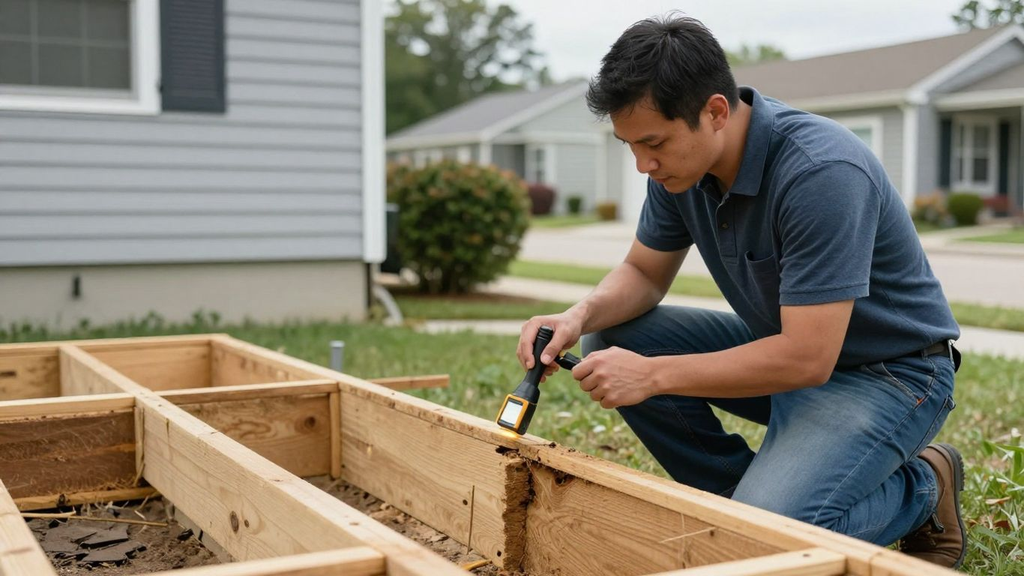
VA uses different documentation depending on the construction stage. This distinction is easy to miss because a newly built home can still be treated differently from a property that is only proposed and has not yet reached the same stage of completion.
For existing or new construction when WDI information is required, the VA Notice of Value condition calls for an inspection by a qualified pest control operator using Form NPMA-33 or another VA-acceptable collection method. State-mandated inspection forms are acceptable when the state requires them for transactions.
Existing or New Construction
The pest control operator must meet applicable state requirements. The report documents the inspection findings, and any infestation or structural damage affecting the property’s value must be corrected to VA’s satisfaction before settlement. The Veteran receives a copy of the report.
Proposed Construction
For proposed construction in a WDI-required area, VA can require a properly completed NPMA-99A, Subterranean Termite Protection Builder’s Guarantee. If the treatment method requires it, NPMA-99B, New Construction Subterranean Termite Service Record, is also completed by the licensed pest control company.
A soil-treatment guarantee is different from a standard inspection report and can remain valid longer than the 90-day inspection-report period. The lender should confirm which construction status and NOV condition applies to the property.
Do VA Condos Need a Termite Inspection?
Condominium treatment depends on the building style. The current VA Lender’s Handbook says a WDI inspection is not required for units in low-rise or high-rise condominiums where units are vertically stacked, unless the appraiser notes a potential infestation problem.
Site condominiums and villa or townhome-style condominiums where units are not vertically stacked are treated differently. When the property is in a WDI-required locality, the inspection condition generally applies unless the homeowners association can provide acceptable evidence of a treatment guarantee.
Who Can Perform a VA Termite Inspection?
The inspection should be performed by a qualified pest control operator who meets the licensing or certification requirements of the property state. A general home inspector should not be assumed to satisfy the VA WDI condition unless that person is separately qualified and can issue the required state or VA-acceptable pest report.
The final report should correctly identify the property, inspection date, inspector or pest-control company, areas examined, visible findings, and any recommended treatment or repair. If key areas cannot be accessed, the lender may require additional inspection or evidence before the condition can be cleared.
How Long Is a VA Termite Inspection Good For?
The current VA Lender’s Handbook states that wood-destroying insect inspection reports are valid for 90 days. That makes timing important when a transaction has an extended closing date, new construction delays, or repairs that take several weeks to complete.
A report that expires before closing may need to be updated. Schedule early enough to leave time for treatment and repairs, but not so early that the report becomes stale before the loan is ready to settle.
VA Appraisal vs. Home Inspection vs. Termite Inspection
These three reviews are often confused because all can occur during the same purchase. They have different purposes, different providers, and different consequences for the loan.
Start with the basic distinction: the VA appraisal is part of the VA loan valuation process, the private home inspection is buyer due diligence that VA strongly recommends, and the WDI inspection is a pest-specific condition required in applicable localities or when a property-specific concern is identified.
- VA appraisal. A VA-approved appraiser develops an opinion of value and checks the property against applicable Minimum Property Requirements.
- Private home inspection. A home inspector evaluates a broader range of systems and components for the buyer. VA recommends it, but it is not the same as the VA appraisal.
- WDI or termite inspection. A qualified pest professional evaluates accessible areas for wood-destroying insect activity, damage, and related findings using the required report method.
The comparison table below is a quick reference only. A single professional can sometimes hold more than one qualification, but the required report still has to meet the applicable VA and state standards.
| Review | Who Performs It | Main Purpose | VA Requirement | Possible Loan Effect |
|---|---|---|---|---|
| VA appraisal | VA-approved appraiser | Value + VA property requirements | Required for most VA purchase loans | Can create repair/value conditions |
| Home inspection | Buyer-selected home inspector | Broader condition and systems review | Not required by VA, strongly recommended | Buyer may renegotiate or investigate |
| WDI / termite inspection | Qualified pest control operator | Wood-destroying insects and visible damage | Required in listed localities or when property concern is noted | Treatment/repairs may need clearance before closing |
A termite report cannot replace the general home inspection, and a clean home inspection cannot substitute for the required NPMA or state WDI report when the VA locality condition applies.
For broader property guidance, review Security America Mortgage’s VA appraisal checklist.
How Much Does a VA Termite Inspection Cost in 2026?
VA does not publish one national termite-inspection price because WDI fees are set by local providers and can vary with property size, state reporting requirements, crawl-space access, outbuildings, travel, and whether a clearance or repeat visit is needed.
Current 2026 consumer cost data puts a professional termite inspection at roughly $75 to $325 nationally, with an average around $100 and real-estate or home-sale inspections often around the mid-$100s. A VA transaction can fall below or above those figures depending on the market and the exact report required.
- Initial inspection fee. Usually the smallest pest-related cost and should be supported by the provider’s invoice when charged in the VA loan file.
- Treatment cost. Separate from the inspection. National consumer estimates vary widely by treatment method and infestation severity, commonly several hundred dollars and potentially much more for extensive treatment.
- Structural repair cost. Also separate. Replacing damaged framing, subfloor, siding, or other components can cost far more than the inspection or treatment itself.
- Re-inspection or clearance. A follow-up visit can create another fee if the lender needs professional verification after treatment or repairs.
The correct budgeting approach is to treat the inspection, pest treatment, structural repair, and clearance visit as separate line items. Do not assume the inspection price includes remediation.
Who Pays for a VA Termite Inspection?
This is one of the most important rule changes to understand. Older VA guidance and many older mortgage articles said the Veteran generally could not pay a required termite inspection fee. VA changed that policy in June 2022 through Circular 26-22-11.
Under current VA policy, the Veteran may be charged a required wood-destroying pest inspection fee when the Notice of Value requires it. The current VA State Fees and Charges Deviations list, updated in 2026, continues to recognize this non-state-specific variance. The Veteran may also pay repairs required to bring the property into compliance with VA Minimum Property Requirements.
- Veteran or buyer may pay. The current VA variance permits the required WDI inspection fee to be charged to the Veteran.
- Seller may pay. The inspection and repair costs remain negotiable in the purchase contract, and VA encourages Veterans to negotiate these costs with the seller.
- Lender or other credits may help when permitted. The final Loan Estimate and Closing Disclosure should show who actually paid each cost and whether any lender or seller credit was applied.
- Invoice support is required. VA requires documentation supporting itemized third-party fees. The lender should maintain an invoice that identifies the Veteran and property when the pest fee is charged to the borrower.
Do not rely on an old rule that says the seller must always pay the termite report. The current transaction should be structured under the latest VA fee guidance and the purchase contract.
For current borrower-payable closing-cost guidance, see Security America Mortgage’s 2026 VA Allowable Fees guide.
What Happens If Termites or Wood-Destroying Insects Are Found?
A positive WDI report does not automatically kill a VA purchase. It creates a property condition that has to be understood and resolved to the lender’s and VA’s satisfaction before settlement when the infestation or damage affects the applicable property requirements or value.
The next steps depend on whether the report identifies active infestation, previous treatment, structural damage, inaccessible areas, moisture conditions, or another issue needing specialist review. The lender should translate the report into a written list of conditions instead of leaving the parties to guess what documentation will clear the loan.
Treatment and Repair Rules
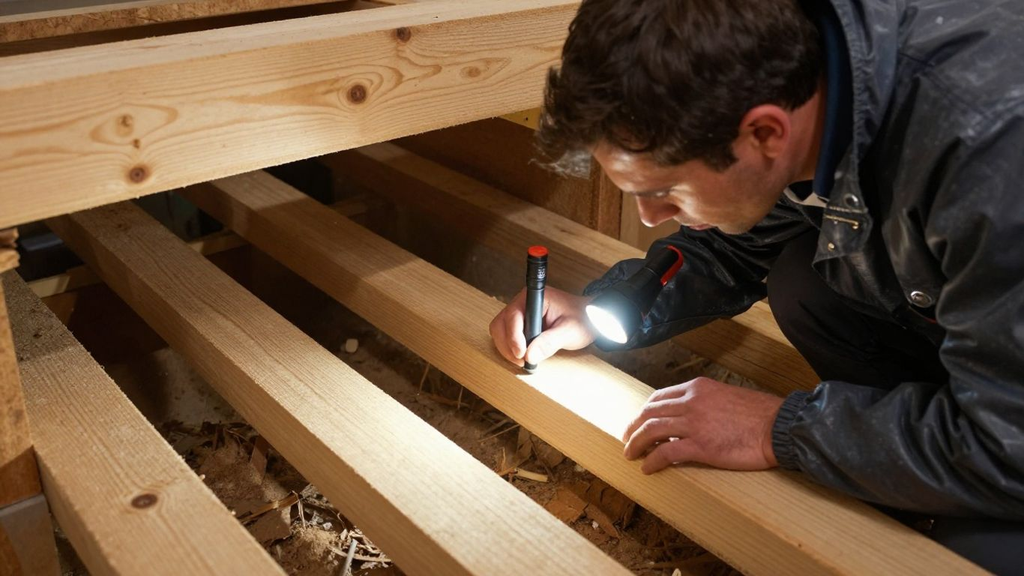
Current VA guidance requires reported infestation or structural damage affecting value to be corrected to VA’s satisfaction before loan settlement. Treatment should address the active pest problem, while damaged building components may require separate repair.
- Treat active infestation. Use a properly qualified pest-control provider and keep treatment invoices, service records, warranties, and any treatment diagram or certification.
- Repair qualifying structural damage. Replace or repair damaged framing, joists, subfloor, trim, or other affected components when required by the lender or appraisal condition.
- Correct contributing conditions when required. Moisture, earth-to-wood contact, poor access, or other conditions noted by the pest professional may need correction when they are part of the lender’s property condition.
- Document completion. The lender may require invoices, photos, contractor records, a clearance letter, or a formal re-inspection depending on the findings.
- Do not cover damage before it is documented. Cosmetic patching can make verification harder if the pest inspector or appraiser still needs to see the repaired area.
The goal is not just to show that money was spent. The closing file needs evidence that the condition identified by the inspection has actually been resolved.
Who Pays for Termite Treatment and Repairs on a VA Loan?
VA now permits the Veteran to pay repairs that are required to ensure compliance with Minimum Property Requirements. That does not mean the buyer should automatically accept every treatment and repair bill. The purchase contract and negotiations still determine how the economic burden is shared.
In many transactions, the seller completes treatment and repairs before closing because the seller still owns the property and can coordinate contractor access. In other transactions, the Veteran may agree to pay some or all qualifying work if the lender confirms the arrangement is acceptable and the work can be completed before the loan condition is cleared.
Is a Re-Inspection or Termite Clearance Required?
A follow-up inspection is not automatically identical in every file, but it is common when the original WDI report identifies active infestation, unresolved damage, or work that needs professional verification. The lender may require a clearance report or re-inspection before removing the property condition.
A paid invoice by itself may not prove the problem is resolved. Keep the original inspection, treatment record, repair documentation, and final clearance together so the lender can trace the condition from discovery through correction.
VA Termite Inspection Process: Step by Step
The cleanest process starts before the inspection is ordered. Confirming the locality rule and correct form first prevents paying for the wrong report or discovering late that a separate pest professional is required.
Step 1: Confirm the property’s VA WDI requirement
Ask the lender to verify the state or county requirement and whether the appraisal or NOV creates any property-specific pest condition.
Step 2: Hire the correct qualified pest professional
Use a provider authorized under state or local rules and able to issue the required NPMA-33 or state-approved report.
Step 3: Schedule the inspection early
Leave enough time for treatment, repair, contractor scheduling, and a possible re-inspection, while keeping the 90-day report validity in mind.
Step 4: Make all important areas accessible
Clear safe access to crawl spaces, basements, garages, exterior wood, attics, and other areas within the inspection scope.
Step 5: Review the report with the lender and agent
Separate active infestation, old evidence, structural damage, and recommended work. Ask the lender which findings are actual loan conditions.
Step 6: Negotiate responsibility in writing
Document who will pay for treatment, structural repairs, re-inspection, and any related work rather than relying on a verbal promise.
Step 7: Complete required treatment and repairs
Use qualified contractors or pest providers and preserve invoices, warranties, treatment records, photos, and repair evidence.
Step 8: Obtain clearance or re-inspection if required
Do not assume a receipt clears the condition. Ask whether the original inspector or another qualified professional must verify completion.
Step 9: Confirm the lender has cleared the condition
Make sure the WDI requirement is marked complete before the final closing package is prepared.
If you are still at the pre-approval stage, you can start a VA loan application with Security America Mortgage and have the property requirements reviewed with your loan file.
Common VA Termite Inspection Mistakes to Avoid
Most pest-related closing delays come from using outdated rules, ordering the wrong report, or waiting too long to resolve findings. These mistakes are avoidable when the WDI requirement is treated as its own closing track.
- Assuming every VA loan needs a termite inspection. The requirement depends on the current VA locality list, condominium type, and property-specific appraisal findings.
- Assuming the seller must always pay. Current VA policy allows the Veteran to pay required WDI inspection fees and MPR-related repairs.
- Using an unqualified inspector. A normal home inspection report may not satisfy the lender’s required WDI form or state licensing standard.
- Ordering the report too early. The standard VA WDI inspection report is generally valid for 90 days.
- Confusing a clean appraisal with a pest clearance. The appraisal does not substitute for a required NPMA or state WDI report.
- Treating an invoice as automatic clearance. The lender may still need a re-inspection, clearance letter, or repair verification.
- Fixing only the insects and ignoring damaged wood. Treatment can stop active pests, but damaged structural components may still require repair.
- Hiding or blocking access to crawl spaces and other areas. Limited access can produce an incomplete inspection and another required visit.
- Ignoring condominium style. Vertically stacked condo units have different WDI rules from site condos, villas, and townhome-style units.
- Relying on an outdated online fee list. VA changed pest-fee policy in 2022. Use the current VA variance and 2026 fee guidance for who may pay.
The lender should be able to identify the exact WDI condition, acceptable report, payment treatment, and required clearance before the buyer commits to an inspection provider or repair arrangement.
Final Answer: VA Termite Inspection Requirements in 2026
A VA termite inspection is not a universal requirement for every VA loan, but it is a routine property condition in many termite-prone states and counties. The lender should verify the current VA locality rule, the correct inspection form, the property type, and the report date before the closing timeline is set.
The biggest 2026 takeaway is that the Veteran is allowed to pay a required WDI inspection fee and can also pay qualifying repairs needed to satisfy VA Minimum Property Requirements. When an inspection finds active infestation or structural damage, treatment, repair, and any required professional clearance should be completed and documented before the property condition is considered resolved.
Need Help Confirming a VA Termite Requirement? Security America Mortgage can review the property location, VA appraisal conditions, allowable pest-inspection charges, and closing requirements as part of your VA loan file. Start your VA loan application or call (855) 701-2816.
Frequently Asked Questions
Is a termite inspection required for every VA loan?
No. VA requires wood-destroying insect information in listed states and counties, and it can also be required when the appraisal identifies a potential infestation issue. If the property state is not listed, the standard locality requirement generally does not apply.
What states require a VA termite inspection?
VA currently requires WDI information statewide in many states and territories, including Texas, Florida, California, Georgia, Tennessee, Alabama, Maryland, and others. Colorado, Iowa, Nebraska, Nevada, New York, Pennsylvania, Utah, and Wisconsin have county-specific requirements.
Can the Veteran pay for the termite inspection?
Yes. Since VA Circular 26-22-11, Veterans may be charged a required wood-destroying pest inspection fee when the Notice of Value requires it. The current 2026 State Fees and Charges Deviations list continues this variance.
Can the Veteran pay for termite repairs?
Yes. VA permits the Veteran to pay repairs required to ensure compliance with Minimum Property Requirements, although buyers should still negotiate costs with the seller when practical.
How much does a VA termite inspection cost?
VA does not set one national price. Current 2026 consumer market data commonly places professional termite inspections around $75 to $325, with local real-estate reports often near the mid-$100s. Property size, location, access, and report type can change the price.
How long is a VA termite inspection valid?
VA’s current Lender’s Handbook states that wood-destroying insect inspection reports are valid for 90 days.
What form is used for a VA termite inspection?
For existing or new construction, the NOV condition generally calls for NPMA-33 or another VA-approved collection method, with state-required forms also acceptable. Proposed construction can require NPMA-99A and, when applicable, NPMA-99B.
Is a VA termite inspection the same as a VA appraisal?
No. The VA appraisal develops an opinion of value and checks VA property requirements. The WDI inspection is completed by a qualified pest professional and focuses on wood-destroying insect activity and damage.
Is a VA termite inspection the same as a home inspection?
No. A private home inspection looks broadly at the home’s systems and condition. A WDI report is a specialized pest inspection, and VA strongly recommends a private home inspection even when other required reviews are completed.
What happens if termites are found?
The purchase can still proceed, but qualifying infestation and damage conditions must be treated or repaired to the lender’s and VA’s satisfaction. A clearance or re-inspection may be required before closing.
Do condos need a VA termite inspection?
Vertically stacked low-rise and high-rise condo units generally do not require the WDI inspection unless the appraiser notes a potential infestation. Site condos and non-stacked villa or townhome-style condos are treated differently in required localities.
Can an old termite report be used for a VA loan?
Possibly, if it still meets the lender, state, and VA requirements, but VA states that inspection reports are valid for 90 days. Confirm the report date and form before relying on it.